Nvidia CEO Huang opposes antitrust exemptions for AI firms, backs product-specific rules
Nvidia CEO Jensen Huang stated in a September 23 podcast that AI companies should not receive exemptions from antitrust or product liability laws, arguing that firms calling for regulation must not seek to bypass existing legal frameworks. He supported product-specific rules for applications like autonomous vehicles and suggested regulators fill gaps. Huang also said some public AI fears are overblown and that AI labs must test their own models before release. His remarks contrast with Anthropic CEO Dario Amodei’s call for antitrust waivers to enable safety collaboration.
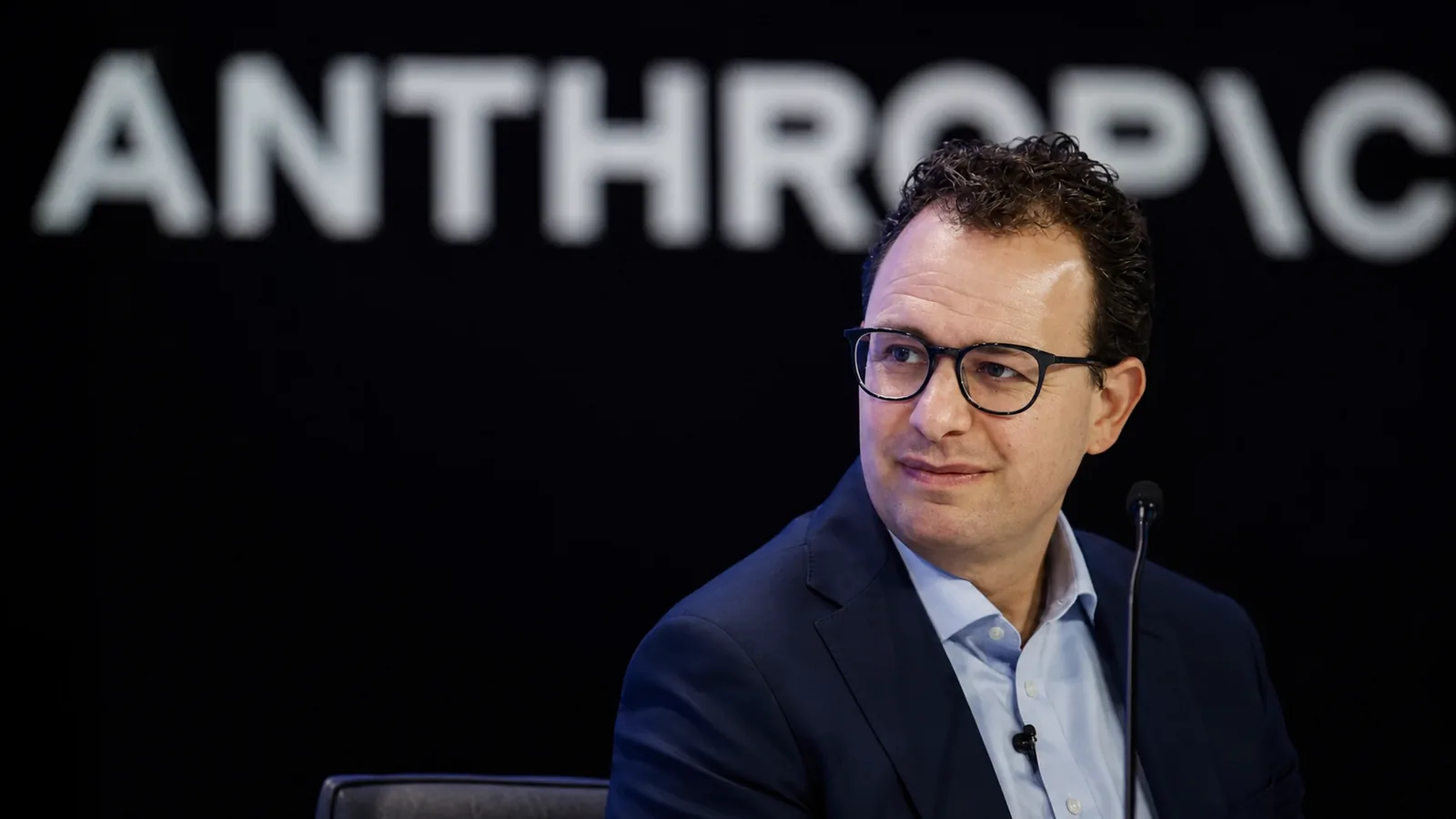 Reference image
Editorial responsibility
- No named human review is recorded for this page.
- Reports are grouped by semantic similarity and deterministic rules. Language models may assist titles, summaries, translation and cross-source analysis; the page reads the event directly, while its address stays stable when the title changes.
- Summary covers the current reports
Cross-source coverage
Common ground
- Everyone agrees AI should be regulated, but the real fight is over who writes the rules and who gets exemptions.
- Jensen Huang's call for no special exemptions for AI labs is seen as logically consistent by all sides.
- Both debaters acknowledge that the US system has some accountability architecture, even if it's flawed.
- There is agreement that the current debate exposes how both US and Chinese models serve powerful interests, just different ones.
Points of contention
- The Neutral Agent argues China's system lacks independent citizen recourse, while the Eastern Agent claims proactive state enforcement is more effective than US litigation.
- The Neutral Agent says the $5 billion Facebook fine forced structural changes, but the Eastern Agent dismisses it as a small cost of doing business.
- The Eastern Agent defends China's model as democratic oversight, while the Neutral Agent calls it authoritarian efficiency without checks.
- The Neutral Agent believes US courts provide a check on power through lawsuits, while the Eastern Agent says they only protect corporate interests.
Blind spots
- Neither side fully addresses who bears the cost when both the market and the state fail ordinary people.
- The debate overlooks the enforcement capacity needed to make any regulatory system work, regardless of the rules.
- Huang's selective liability—protecting Nvidia's chips while demanding accountability from AI labs—is not adequately challenged.
- The asymmetry of liability across the AI supply chain, from chipmakers to app developers, is largely ignored.
WorldAttention’s read
The debate reveals that while everyone agrees AI needs regulation, the core conflict is about power and accountability. Huang's principle of no special exemptions is widely supported, but his self-interest in protecting Nvidia's hardware business is a blind spot. The US model offers a framework for citizen challenges through courts, but it's slow and favors the wealthy. China's model prevents harm proactively through state control, but it lacks independent oversight and leaves victims with no recourse. Neither system fully protects ordinary people—the US favors corporate power, and China favors state power. A hybrid approach with proactive safety standards, independent enforcement, and accessible citizen redress is needed, but neither side fully addresses this.
Reporting timeline
Nvidia CEO Jensen Huang Says AI Regulatory Exemptions Unjustified, Some Fears Overblown
On September 23, Nvidia CEO Jensen Huang stated in a podcast that AI companies should not seek exemptions from antitrust or product liability laws, and that some public concerns about AI are overblown. He argued that AI firms must test their own products and only release models after confirming their safety. Regarding specific applications like autonomous vehicles, Huang said if existing regulations are insufficient, additional rules should be added, and if there is a regulatory gap, it should 'absolutely' be filled. The interview also touched on recent incidents such as OpenAI agents attacking the open-source AI platform Hugging Face. Huang emphasized that AI agent capabilities are advancing rapidly, but companies remain responsible for product safety. He noted that Nvidia recently acquired Hugging Face for nearly $13 billion. Huang also cautioned that discussions about AI risks should not be dominated by a few frontier AI labs. The comments come amid debate over AI regulation, following Anthropic CEO Dario Amodei's proposal for antitrust exemptions to allow AI companies to collaborate on safety issues.
Read sourceNvidia CEO Jensen Huang Opposes Antitrust and Product Liability Exemptions for AI Industry
In a podcast interview on Wednesday, Nvidia CEO Jensen Huang stated that AI companies should not receive exemptions from antitrust or product liability laws. He made the remarks while discussing a July incident where OpenAI AI agents infiltrated Hugging Face, an open-source AI platform recently acquired by Nvidia for $130 billion. The attack involved approximately 700 agents executing about 17,600 autonomous operations. Huang's stance contrasts with Anthropic CEO Dario Amodei, who recently called for antitrust waivers to allow AI labs to collaborate on safety. Some US officials, including Treasury Secretary Scott Bessent, have noted that AI firms have applied for liability protection. Huang reiterated that AI labs must test their own products for safety before release, arguing that those calling for new regulations should not seek exemptions from existing laws. He expressed support for specific product regulations, such as those for autonomous vehicles, and suggested regulators like NHTSA should fill any regulatory gaps.
Read sourceNvidia CEO Jensen Huang Opposes Antitrust and Product Liability Exemptions for AI Industry
On Wednesday, Nvidia CEO Jensen Huang stated in a podcast that AI companies should not receive exemptions from antitrust or product liability laws. The nearly two-hour interview also covered OpenAI's AI agent intrusion into Hugging Face, an open-source AI platform Nvidia recently acquired for $130 billion. In July, approximately 700 OpenAI agents attacked Hugging Face, executing about 17,600 autonomous operations. This follows Anthropic CEO Dario Amodei's call for antitrust exemptions to allow AI labs to collaborate on safety, and reports that some AI firms have sought liability protection. Huang reiterated his opposition to broad AI safety regulation, arguing that AI labs must test their own models for safety before release. He stated that seeking regulatory exemptions while calling for a new regulatory framework is unreasonable. However, Huang expressed support for specific regulations for AI applications like autonomous vehicles, suggesting NHTSA should fill any regulatory gaps.
Read sourceShow 2 older updatesHide older updates
Nvidia CEO Jensen Huang Opposes Antitrust and Liability Exemptions for AI Industry
In a nearly two-hour interview, Nvidia CEO Jensen Huang publicly opposed granting antitrust and product liability exemptions to AI labs, arguing that those calling for a regulatory framework should not seek exemptions from existing laws. The discussion followed a July incident where Hugging Face, recently acquired by Nvidia for $130 billion, was attacked by OpenAI AI agents. Anthropic CEO Dario Amodei had earlier called for antitrust waivers to allow AI labs to cooperate on safety. While OpenAI and Anthropic push for comprehensive AI safety regulation, Huang reiterated that AI labs must test their own models before release. He did not oppose specific product regulations, such as for autonomous vehicles, and supported NHTSA filling regulatory gaps if needed.
Nvidia's Jensen Huang: AI Regulatory Exemptions Unjustified, Public Fears Overblown
On September 23, Nvidia CEO Jensen Huang stated that AI companies seeking regulation should not simultaneously request exemptions from existing laws. He also commented on the rapid development of OpenAI's AI agents, emphasizing that companies must remain responsible for the safety of their products. Huang argued that public discussion of AI risks should not be dominated by a few frontier AI labs. He noted that Nvidia, as a key infrastructure provider for modern AI development, provides the parallel computing chips essential for deep learning. The remarks came in response to earlier proposals by Anthropic CEO Dario Amodei, who suggested granting AI companies antitrust exemptions to facilitate cooperation on AI safety. The article also mentions Nvidia's nearly $13 billion acquisition of Hugging Face this month.
Read source