Novo Nordisk partners with Anthropic to use Claude AI for drug discovery R&D
Novo Nordisk has partnered with Anthropic to integrate its Claude AI models, including Claude Science, into drug discovery and development workflows. The collaboration aims to accelerate R&D, automate clinical-trial report generation, and address complex biological challenges. Novo Nordisk CEO Mike Doustdar stated the company aims to become the world's "most AI-driven healthcare company." Financial terms and specific drug targets were not disclosed. The partnership expands Novo's existing AI collaborations with OpenAI and Amazon Web Services.
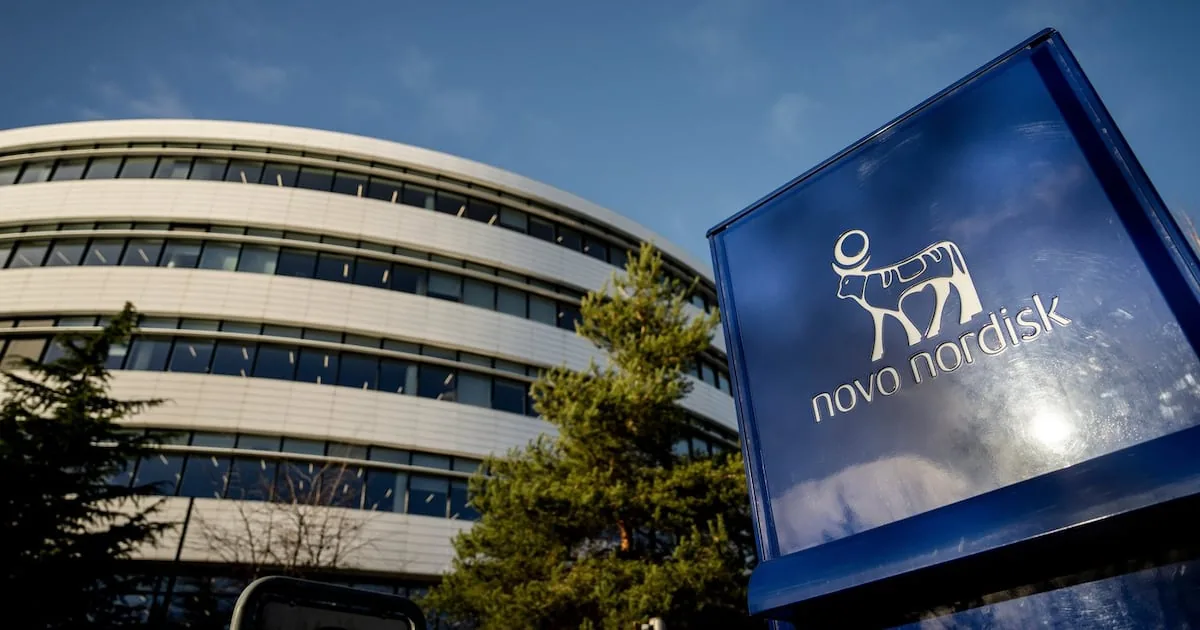 Reference image
Editorial responsibility
- No named human review is recorded for this page.
- Reports are grouped by semantic similarity and deterministic rules. Language models may assist titles, summaries, translation and cross-source analysis; the page reads the event directly, while its address stays stable when the title changes.
- Summary covers the current reports
Cross-source coverage
Common ground
- All sides agree that the Novo Nordisk-Anthropic partnership is a pilot project with vague terms and no disclosed milestones, financial details, or specific drug targets.
- Everyone acknowledges that Claude is a general language model, not a specialized drug discovery tool, and its main use is for operational tasks like literature mining and report generation.
- There is shared recognition that both Western and Chinese pharmaceutical systems have failed to ensure equitable access to medicines for the Global South.
Points of contention
- The Neutral Agent sees the partnership as a low-commitment pilot that is not material, while the Western Agent argues its narrative power can move markets and demands immediate regulatory scrutiny.
- The Eastern Agent claims China's state-directed model prioritizes public health and equitable access, while the Western and Neutral Agents counter that China has no verifiable AI-discovered drugs and its patent system is similarly monopolistic.
- The Western Agent views the partnership as a sign of Novo Nordisk's desperation due to weak fundamentals, while the Eastern Agent sees it as evidence of Western pharma's declining competitiveness and reliance on outsourcing.
Blind spots
- All sides overlook the actual technical limitation that Claude cannot perform core drug discovery tasks like molecular dynamics or protein docking, making the partnership's impact on breakthrough drugs minimal.
- The debate focuses on systems and narratives rather than the specific problem Claude is solving that existing computational methods cannot.
- No one addresses the lack of independent verification or audits of Anthropic's actual capabilities in drug discovery, relying instead on press releases and assumptions.
WorldAttention’s read
This partnership is a low-commitment pilot project where Novo Nordisk is testing whether Anthropic's general language model, Claude, can reduce operational friction in tasks like literature mining and report generation. It is not a revolutionary breakthrough in drug discovery, as Claude cannot perform the core computational work of molecular simulations or protein docking. The vague terms and lack of disclosed milestones suggest the deal is not material to Novo's finances, but its announcement still shapes market narratives. Both Western and Chinese pharmaceutical systems have failed to ensure equitable global access to medicines, and neither side has provided concrete evidence of AI-discovered drugs reaching patients. The most honest conclusion is that we don't yet know if this partnership will produce anything meaningful, and the debate has largely been about projecting pre-existing worldviews onto a press release.
Reporting timeline
Novo Nordisk Partners with Anthropic to Use AI in Drug Discovery and R&D Workflows
Novo Nordisk has partnered with Anthropic to integrate Claude AI models into its drug discovery and development workflows, initially focusing on scientific problems where AI can have the greatest impact. The company already uses Claude to automate clinical-trial report generation, reducing patient-documentation timelines from months to minutes. The partnership aims to strengthen Novo's pipeline amid increasing competition in obesity drugs, particularly from Eli Lilly. Novo's Q2 adjusted sales rose 7% to DKK 78.5 billion, but it recorded DKK 6.3 billion in impairments on pipeline assets, highlighting the need for improved R&D productivity. The deal expands Novo's AI strategy, which already includes partnerships with OpenAI and Amazon Web Services. However, the financial impact remains uncertain as specific drug targets, milestones, and cost savings have not been disclosed. The article notes that faster research may not translate into better medicines, and AI cannot eliminate clinical failure or competitive pressure. For Novo, the partnership is seen as a potential pipeline and productivity catalyst rather than an immediate earnings driver.
Novo Nordisk Partners with Anthropic to Use AI for Faster Drug Discovery
Novo Nordisk will use Anthropic's Claude Science AI model to accelerate drug development, CEO Mike Doustdar announced on Wednesday, stating the move would 'accelerate' its R&D efforts and that the company aims to become the world's 'most AI-driven healthcare company.' The partnership comes as Novo Nordisk's blockbuster drugs Ozempic and Wegovy face competition from cheaper generics in Europe and the US early next decade, and after a series of high-profile pipeline failures for next-generation medicines. Last year, Anthropic posted that Novo Nordisk had used Claude to automate clinical study reports and protocols. Novo Nordisk also collaborates with OpenAI across manufacturing and R&D. Anthropic earlier signed an agreement with Bristol-Myers Squibb, while Google's Isomorphic Labs partners with Novartis and Eli Lilly. Anthropic CEO Dario Amodei stated that AI could eventually 'compress a century of biological and medical breakthroughs into ten years.'
Read sourceNovo Nordisk Partners With Anthropic on AI Drug Discovery as Stock Struggles
Danish pharmaceutical company Novo Nordisk (NVO) has partnered with AI firm Anthropic to use its frontier AI models, including Claude Science, to accelerate drug discovery and R&D. The collaboration aims to address complex biological challenges, streamline software engineering, and shorten drug development timelines for chronic diseases. The announcement comes as NVO stock is down about 20% year-to-date. The author, Wajeeh Khan, notes the partnership represents a long-term efficiency play that could lower clinical costs and expand Novo's pipeline beyond GLP-1 treatments, though AI tools do not yield immediate revenue. Khan reports that NVO trades at a forward P/E of about 13x, cheaper than rival Eli Lilly at over 31x, but cautions that the technical setup is weak with shares below major moving averages and an RSI in the early 30s. Management's guidance for adjusted sales to be down 6% to flat in 2026 further dampens the risk-reward profile. Wall Street consensus rates NVO a 'Hold' with a mean price target of about $45, implying roughly 10% upside.
Show 4 older updatesHide older updates
Novo Nordisk Partners with Anthropic to Accelerate Drug Discovery Using Claude AI
Novo Nordisk, the manufacturer of Ozempic and Wegovy, announced a partnership with Anthropic to use its Claude Science platform for drug discovery and development. The collaboration aims to address scientific problems with high practical impact, leveraging AI to improve R&D efficiency and shorten time from research to product launch. Novo Nordisk CEO Mike Doustdar stated that AI tools can bring new opportunities for scientific research and help understand human biology and drug mechanisms. Anthropic CEO Dario Amodei expressed potential to compress biological breakthroughs into a decade. The partnership includes testing Claude Science for scientific problem-solving and using Anthropic's models for AI-driven software development. Both parties emphasized strict data governance and human oversight. This follows Novo Nordisk's earlier partnerships with OpenAI and Amazon. The article notes that while AI has not yet produced a fully AI-discovered approved drug, it has shown benefits in automating routine tasks like literature summarization and data analysis, as well as screening clinical trial patients.
Read sourceNovo Nordisk partners with Anthropic to accelerate drug development using Claude Science
Novo Nordisk, the pharmaceutical company known for the diabetes and weight-loss drug Ozempic, has announced a partnership with AI company Anthropic. The collaboration aims to accelerate drug development by leveraging Anthropic's AI model, Claude Science. This partnership signals a growing trend of major pharmaceutical firms integrating advanced artificial intelligence into their research and development pipelines to improve efficiency and speed in bringing new therapies to market. The announcement was made via a post on the Polymarket platform, indicating a public disclosure of the strategic alliance.
Read sourceNovo Nordisk Partners with Anthropic to Use Claude AI for Drug Development R&D
Cailian Press reports on September 16 that Danish pharmaceutical giant Novo Nordisk has announced a collaboration with AI company Anthropic to advance drug development. As part of the partnership, Novo Nordisk will utilize Anthropic's Claude AI model to support its research and development workflows. The announcement highlights a growing trend of pharmaceutical companies integrating advanced artificial intelligence tools to accelerate drug discovery and development processes. No further details on the financial terms or specific scope of the collaboration were provided in the report.
Read sourceNovo Nordisk partners with Anthropic to use Claude AI for drug discovery research
Novo Nordisk (NVO.N) has announced a partnership with Anthropic to leverage the Claude AI model for advancing drug discovery. The pharmaceutical company will utilize Claude's scientific capabilities to conduct research and development workflows. The collaboration aims to apply artificial intelligence to accelerate the drug development process, though specific financial terms or project timelines were not disclosed in the announcement. This partnership highlights the growing integration of AI models into pharmaceutical research and development.