Bomb threats force at least 14 European flights to divert as officials call them hoaxes
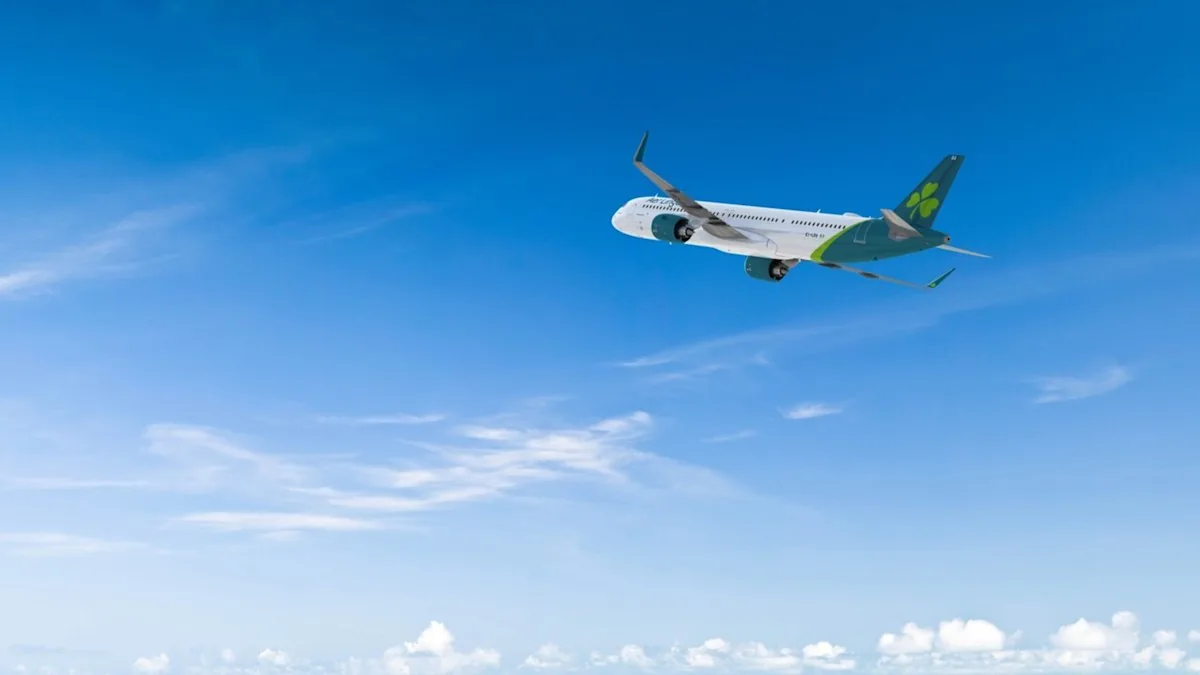
A wave of bomb threats targeted at least 14 European flights on Thursday, the third day of such incidents in a week, forcing diversions and fighter-jet escorts in France, Italy, Bulgaria, Austria, Czechia, Romania and Denmark. An Aer Lingus Dublin-Rome flight was diverted to Évreux military airfield in France with 151 passengers and six crew aboard; Italian jets escorted a Finnair Helsinki-Rome flight; three Ryanair flights bound for Bulgaria were escorted, one diverting to Plovdiv. No explosives were found in any case, and authorities including the EU said links between the threats remain unclear.
 Illustration
Editorial responsibility
- No named human review is recorded for this page.
- Reports are grouped by semantic similarity and deterministic rules. Language models may assist titles, summaries, translation and cross-source analysis; the page reads the event directly, while its address stays stable when the title changes.
- Summary covers the current reports
Cross-source coverage
Reporting timeline
Bomb Threats Target Passenger Planes at Airports Across Europe
Multiple European flights were hit by bomb threats for the second time this week, with backgrounds still unknown. A Dublin-Rome flight was diverted to the military airport in Évreux, France, where 151 passengers and 6 crew members were evacuated and explosives experts deployed. A Finnair flight from Helsinki landed at Rome-Fiumicino escorted by Italian fighter jets and was undergoing security checks. A Milan-Malpensa flight was diverted to Vienna after a threat emailed in Poland, though no danger was found. Copenhagen police searched two flights and found nothing suspicious. Czech police received warnings about improvised explosive devices on four planes landing in Prague, assessing relevance as low. Three Ryanair flights bound for Bulgaria received threats, with one from London diverted to Plovdiv. A Wizz Air flight from Milan to Bucharest landed safely and is being investigated by Romania's SRI.
Read sourceHoax bomb alerts hit at least 14 European flights; EU says link unclear
At least 14 European flights were targeted by hoax bomb threats on Thursday, the third day of such incidents this week, prompting Italy, France and Bulgaria to scramble fighter jets as escorts. The EU's transport commissioner, Apostolos Tzitzikostas, said on X that any threats against civilians are unacceptable and that it is "too early to draw conclusions on whether the reported incidents are linked." Low-cost carriers and flights to or from Bulgaria, the Czech Republic and Italy were particularly affected, with Ryanair hit by at least seven threats. Italian jets escorted a Finnair Helsinki-Rome flight, French fighters guided an Aer Lingus Dublin-Rome flight to a military base near Paris, and Bulgaria's air force escorted three Ryanair planes bound for Sofia. All aircraft landed safely and no explosives were found. More than 20 hoaxes have been reported this week, following 10 on Tuesday that briefly closed Warsaw airport. The origin and motives remain unknown, amid what French officials describe as a rise in hybrid attacks in Europe.
New bomb threats force multiple European flights to divert and land
A fresh wave of bomb threats forced several aircraft in European airspace to divert to alternate airports, following a similar series days earlier. An Aer Lingus Airbus A320 flying from Dublin to Rome was diverted to the military airfield at Évreux in Normandy, landing safely with all 151 passengers and six crew reported well; military experts examined the plane. A Finnair flight from Helsinki to Rome landed at Rome-Fiumicino escorted by Italian fighter jets, and police explosives experts began security checks. A Wizz Air flight from Milan to Warsaw was diverted to Vienna, where about 200 people were evacuated; Austrian police described the threat as "abstract" and found no danger. Ryanair flights from Copenhagen and Madrid landed in Sofia, while a London-to-Sofia flight diverted to Plovdiv. Czech police reported warnings about improvised explosive devices on four aircraft landing in Prague, but found nothing and rated the threats' relevance as low. No explosives have been found in any case, and there is no indication yet of who is behind the threats.
Show 2 older updatesHide older updates
Bomb threats divert at least 14 flights across Europe; officials call them hoaxes
Bomb threats forced the diversion of at least 14 flights across Europe on Thursday, the latest in a string of incidents disrupting airspace, according to CNN. Four diversions occurred in the Czech Republic after an anonymous email was sent to Prague's Václav Havel Airport and other European airports. In Bulgaria, three Ryanair flights were inspected with no issues found, and nearly 200 passengers were evacuated from a Wizz Air flight in Bucharest after it landed safely. Two planes were diverted to Milan's Malpensa Airport for bomb checks, and an Aer Lingus flight from Dublin to Rome landed at a French air base. UK Transport Secretary Heidi Alexander called the threats "malicious hoax threats," and no explosives have been found. The Czech National Center against Terrorism, Extremism and Cybercrime is investigating. No group has claimed responsibility for Thursday's threats or those earlier in the week.
Read sourceMultiple European flights hit by bomb threats for second time this week
Several flights across Europe were targeted by bomb threats on Thursday, the second such wave this week. An Aer Lingus flight from Dublin to Rome diverted to Evreux air base in northern France as a security precaution. Italian fighter jets escorted a Finnair flight from Helsinki to Rome, which landed normally. Other affected flights included a second Finnair flight to Vienna, Wizz Air flights from Milan to Warsaw and Bucharest, a LOT flight from Warsaw to Brussels, three Ryanair flights landing in Bulgaria, and four flights landing in Prague. No explosives were found. On Tuesday, seven planes were searched after similar threats, including two from the UK. The UK government described the incidents as malicious hoax threats. Aviation expert Marco Chan said the threats were most likely hoaxes but the system was right to treat them as real, and some experts viewed them as possibly part of a pattern of cheap, deniable disruption.
Read source