NIO activates world's first zero-carbon off-grid solar swap station in Xinjiang Gobi
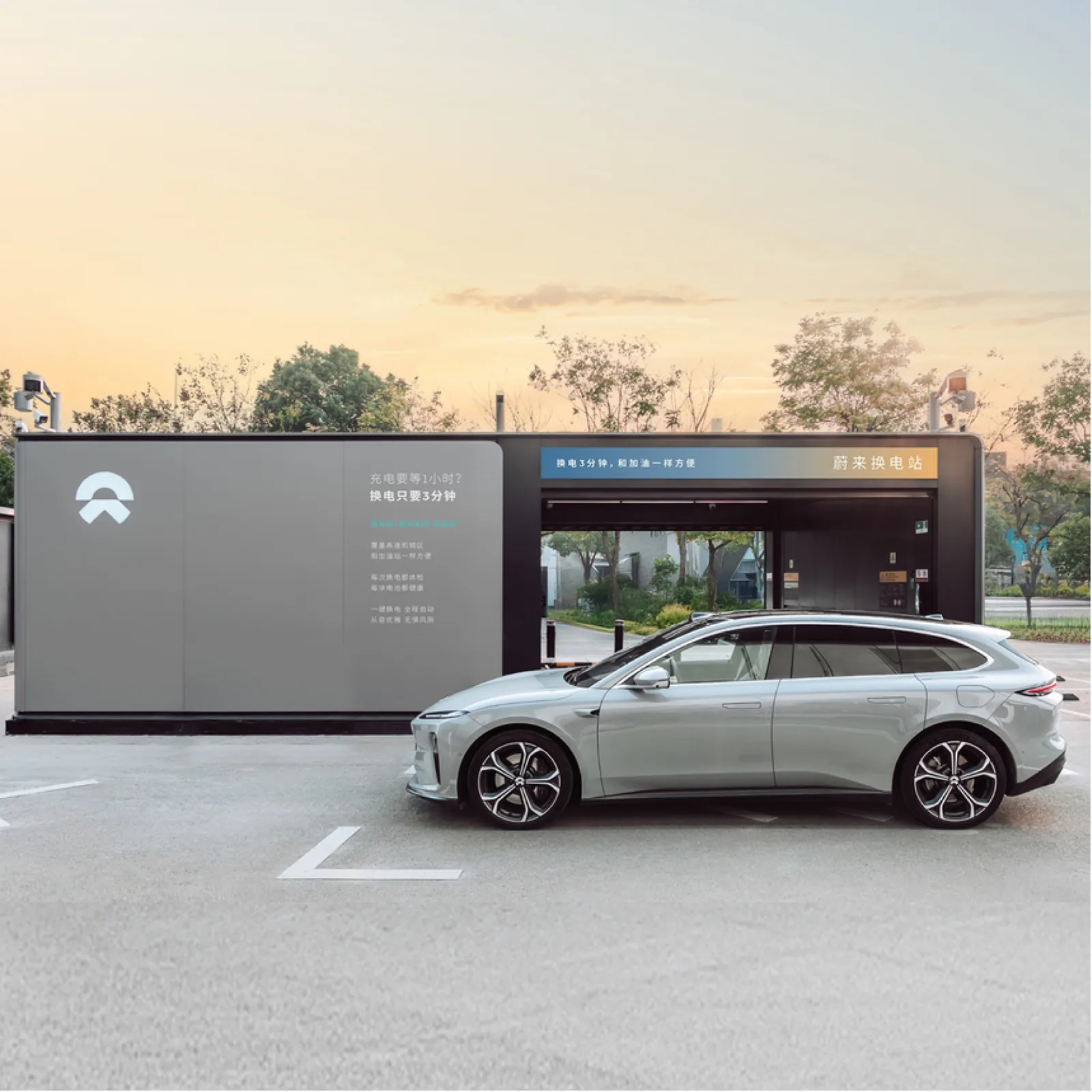
On September 23, NIO began operating the world's first zero-carbon off-grid solar-storage battery swap station at Xingxingxia in Xinjiang's Gobi Desert. The station runs entirely on solar power, using LONGi equipment to autonomously manage energy without grid connection. It validates NIO's off-grid model for remote areas and precedes the September 26 opening of its 3,605-km Silk Road swap route with 33 stations.
 Illustration
Editorial responsibility
- No named human review is recorded for this page.
- Reports are grouped by semantic similarity and deterministic rules. Language models may assist titles, summaries, translation and cross-source analysis; the page reads the event directly, while its address stays stable when the title changes.
- Summary covers the current reports
Cross-source coverage
Common ground
- Both sides agree the Xingxingxia station proves a technology stack for off-grid solar-powered battery swapping exists.
- Both acknowledge the station has strategic signaling value for China's Belt and Road ambitions.
- Both agree thermal management of batteries in extreme heat is a real challenge that needs solving.
- Both recognize the station is not a mass-market business model today.
Points of contention
- Eastern Agent sees the station as a scalable foundation for future infrastructure, while Neutral Agent views it as a costly demo that doesn't prove economic viability.
- Eastern Agent argues infrastructure creates demand, but Neutral Agent says the upfront capital needed is too high for a single company like NIO to build a network.
- Eastern Agent believes the station can be adapted for the Global South, while Neutral Agent says the $4 million cost and proprietary tech make it unsuitable for poor regions.
- Neutral Agent insists the station is a PR win, not a proof of scalability, while Eastern Agent calls it a strategic inflection point.
Blind spots
- Neither side fully addresses how battery degradation in 50°C heat over multiple years will affect long-term costs and reliability.
- Both overlook the lack of concrete data on actual vehicle traffic and swap demand along the Silk Road corridor.
- The debate ignores the role of government subsidies or policy support that could change the economics of off-grid stations.
WorldAttention’s read
The Xingxingxia station is a real engineering achievement that shows off-grid solar swapping can work in harsh environments, and it sends a strong signal about China's ambitions to lead in future mobility infrastructure. However, it remains a costly proof-of-concept, not a proven business model. The big questions—whether NIO can afford to build enough stations to matter, whether batteries will hold up in extreme heat, and whether this tech can ever be cheap enough for the Global South—are still unanswered. For now, it's a strategic demonstration, not a revolution.
Reporting timeline
NIO Opens World's First Zero-Carbon Off-Grid Solar Swap Station in Xinjiang
On September 23, NIO announced the official operation of the world's first zero-carbon off-grid solar-plus-storage battery swap station in Xingxingxia, Xinjiang. Located in the harsh Gobi desert with extreme temperatures and weak grid coverage, the station operates entirely on solar photovoltaic power, using LONGi mobile energy units and H2D storage systems to autonomously manage energy supply without external grid connection. The system automatically switches between three modes: direct solar supply with surplus storage during the day, battery discharge at night, and emergency mode for prolonged cloudy periods. This deployment validates NIO's off-grid swap model for remote areas. The station also paves the way for the full opening of NIO's 3,605-km Silk Road battery swap route on September 26, which will feature 33 swap stations and enable continuous battery swapping from any national station to all provincial-level regions in mainland China. As of September 23, 2026, NIO has deployed 9,410 charging and swapping facilities nationwide, including 4,109 swap stations and 5,301 charging stations, leading the industry. The company has also established 1,060 highway swap stations covering 9 vertical and 11 horizontal expressway corridors, connecting over 550 cities. NIO plans to complete 100 scenic charging routes by 2026.
Read sourceNIO Opens First Zero-Carbon Off-Grid Solar Storage Swap Station in Gobi Desert
NIO's first zero-carbon off-grid solar storage battery swap station, located at the Xingxingxia service area on the G30 Lianhuo Expressway in Xinjiang, began operations on September 23. The station is the first entry point into Xinjiang on the expressway and represents a key expansion of NIO's swap network into remote, grid-weak areas. It uses a complete off-grid solar storage solution with photovoltaic panels as the sole energy source, creating a zero-carbon loop of generation, storage, and consumption. The system, utilizing LONGi BLOCK mobile energy units and LONGi H2D storage, automatically switches between three modes: daytime solar direct supply with surplus storage, nighttime battery discharge, and an emergency mode for consecutive overcast days, requiring no manual operation. NIO co-founder and president Qin Lihong stated that this is the first real-world validation of NIO's off-grid swap scenario, providing replicable experience for further expansion into remote areas. As of September 23, NIO has deployed 9,410 charging and swapping stations nationwide, including 4,109 swap stations and 5,301 charging stations, with 1,060 highway swap stations covering 9 vertical and 11 horizontal expressway routes.
Read sourceNIO's first zero-carbon off-grid solar-storage battery swap station begins operation in Xinjiang
On September 23, NIO's first zero-carbon off-grid battery swap station began operation at Xingxing Gorge on the G30 Lianyungang-Khorgas Expressway in Xinjiang, marking the company's first entry into the remote, weak-grid region. The station uses a complete off-grid solar-storage solution from LONGi, with photovoltaic panels as the sole energy source, creating a closed-loop 'generation-storage-consumption' zero-carbon system. It can automatically switch between three operating modes based on sunlight conditions. NIO co-founder and president Qin Lihong stated that this deployment validates the off-grid swap station concept for the first time, solving the challenge of expanding the swap network into areas with weak grid infrastructure. He noted that the extreme environment deployment tested system reliability and provides replicable experience for further expansion. As of September 23, NIO has built 9,410 charging and swapping stations nationwide, including 4,109 swap stations and 5,301 charging stations, ranking first in the industry.
Read sourceShow 2 older updatesHide older updates
World's First Zero-Carbon Off-Grid Solar-Storage Swap Station Launched; NIO Silk Road Route to Open Sept 26
On September 23, the world's first zero-carbon off-grid solar-storage battery swap station, located at the Xingxingxia service area in the Gobi desert of eastern Xinjiang, was officially put into operation. The station, built by NIO, uses photovoltaic power as its sole energy source, creating a closed-loop 'generation-storage-consumption' system that operates 24/7 without relying on the external power grid. The area has weak grid coverage, with over 100 days of gale-force winds annually, summer surface temperatures above 70°C, and winter lows of -30°C. Traditional grid expansion would require costly long-distance power lines. The station uses LONGi BLOCK mobile energy units and H2D storage systems, automatically switching between daytime charging, nighttime discharging, and emergency backup modes without manual operation. NIO co-founder and president Qin Lihong stated at the launch that this marks the first validation of NIO's off-grid swap station scenario. The NIO Silk Road battery swap route, spanning 3,605 km with 33 swap stations, will be fully completed on September 26, enabling users to travel via battery swaps to all provincial-level regions in mainland China. As of September 23, NIO's network includes 4,109 swap stations and 5,301 charging stations.
Read sourceWorld's First Zero-Carbon Off-Grid Solar-Storage Battery Swap Station Opens in China
On September 23, the world's first zero-carbon off-grid solar-storage battery swap station was officially put into operation at the Xingxingxia service area along the Silk Road in China. The station, operated by NIO, is designed to operate independently of the power grid, using solar panels and energy storage to provide battery swapping services for electric vehicles. The project is part of broader efforts to promote clean energy and sustainable transportation infrastructure along the historic Silk Road route. The announcement was made via People's Financial News on the same day.
Read source