Netanyahu reportedly ignored UAE warning of Hamas attack to preserve Saudi normalization talks
Israeli Prime Minister Benjamin Netanyahu received a warning from UAE President Mohamed bin Zayed in late September 2023 that Hamas might launch a major attack, but did not order strikes or inform security chiefs, fearing military action would derail normalization talks with Saudi Arabia. Netanyahu has denied the warning. The New York Times and Haaretz reported the claim, citing multiple sources. The Oct. 7 Hamas attack killed about 1,200 Israelis and took 250 hostages.
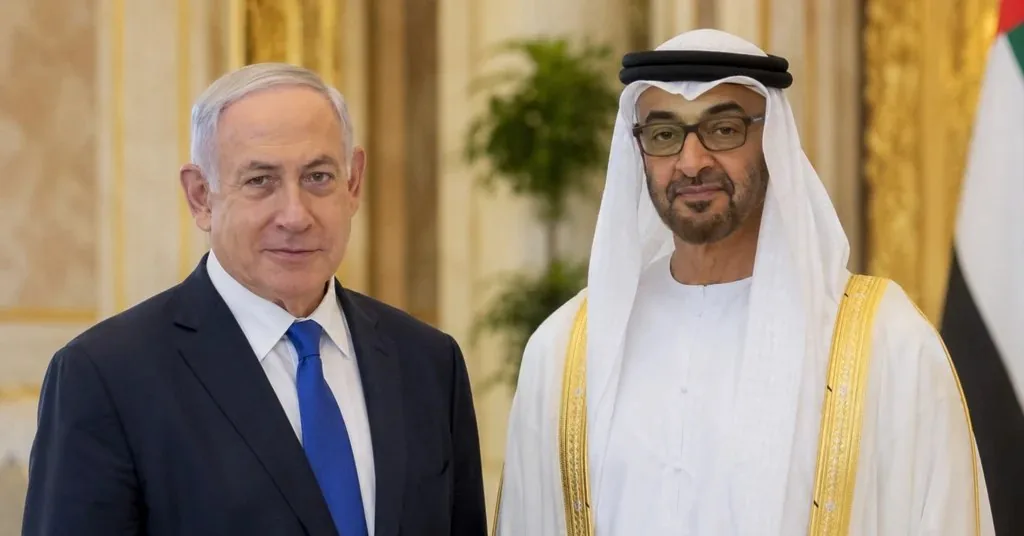 Reference image
Editorial responsibility
- No named human review is recorded for this page.
- Reports are grouped by semantic similarity and deterministic rules. Language models may assist titles, summaries, translation and cross-source analysis; the page reads the event directly, while its address stays stable when the title changes.
- Summary covers the current reports
Cross-source coverage
Common ground
- Benjamin Netanyahu's decision to ignore a direct warning from the UAE president about an impending Hamas attack was a serious failure of leadership that demands accountability.
- The Israeli security establishment, including military intelligence, suffered from a broader culture of arrogance and complacency, dismissing clear warning signs like Hamas's 2022 battle plan.
- The occupation of Gaza and the denial of Palestinian rights created a volatile situation that made some kind of conflict likely, even if the specific October 7 attack wasn't inevitable.
- An independent, transparent inquiry is needed to investigate the full chain of failures, not just Netanyahu's actions.
Points of contention
- Whether Netanyahu's personal negligence is the primary scandal or just a symptom of a larger systemic and moral failure involving the entire international community.
- Whether the UAE warning was a specific, actionable alert about an imminent attack or a general warning about an unsustainable situation.
- Whether focusing on the occupation as the root cause lets Netanyahu off the hook for his specific, documented decision to suppress the warning.
- Whether the Western media's focus on this leak is a genuine accountability effort or a distraction from the ongoing war in Gaza and the broader structural violence.
Blind spots
- The debate largely ignored the role of Hamas's own agency and responsibility in planning and executing the October 7 attack.
- There was little discussion of what a 'proper' response to the UAE warning would have looked like, given the constraints of the occupation and existing security doctrine.
- The perspectives of ordinary Israelis and Palestinians—beyond their leaders and systems—were not represented in the discussion.
WorldAttention’s read
The roundtable revealed a deep divide between those who see the October 7 attack as primarily a failure of one leader's judgment and those who view it as the inevitable result of a system built on occupation and normalization. While everyone agrees Netanyahu's handling of the UAE warning was a serious lapse, the disagreement centers on whether that lapse is the main story or just a symptom of a much larger moral and political failure. The strongest consensus is that a full, independent inquiry is needed—not just into Netanyahu's actions, but into the entire security establishment's culture of arrogance and the international community's complicity in ignoring the Palestinian question. However, the debate also exposed a blind spot: by focusing on blame and systems, the panel largely avoided discussing what concrete steps could prevent such a catastrophe in the future, or how to address the ongoing humanitarian crisis in Gaza that all sides acknowledged but failed to center.
Reporting timeline
US Media: Netanyahu Received Hamas Attack Warning but Avoided Strikes for Saudi Deal
According to a New York Times report cited by Chinese state media Xinhua, Israeli Prime Minister Benjamin Netanyahu received a warning from the United Arab Emirates in late September 2023 that Hamas might launch a major attack. However, Netanyahu did not inform Israeli security chiefs or order strikes on Hamas senior members, fearing such military action would derail ongoing normalization talks with Saudi Arabia. The warning, conveyed by UAE President Mohamed bin Zayed in a phone call, was not specific about the method of attack. Netanyahu has publicly denied receiving any such warning, but multiple sources confirmed it to the Times. The report also notes that at a security meeting on October 1, 2023, Netanyahu argued for maintaining calm in Gaza and opposed targeting Hamas leaders, believing a Saudi-Israel deal was imminent. As Israel's parliamentary election approaches on October 27, the intelligence failure has become a key campaign issue, with Netanyahu blaming security officials and critics holding him responsible.
Read sourceNetanyahu Received UAE Warning of Hamas Attack Before Oct. 7, Reports Say
According to reports from US and Israeli media, Israeli Prime Minister Benjamin Netanyahu received a warning from the United Arab Emirates in late September 2023, days before the Hamas attack on October 7, that Hamas might launch a major assault. The warning was conveyed in a phone call from UAE President Mohamed bin Zayed Al Nahyan. However, Netanyahu did not order military action against Hamas leaders, reportedly fearing it would disrupt normalization talks with Saudi Arabia. Netanyahu has denied receiving such a warning. The New York Times reported on November 25, citing multiple知情人士 (informed sources), that Netanyahu did receive the warning, though it was not specific about the method of attack. The information was first disclosed by Israel's Haaretz newspaper and later confirmed by US media.
Read sourceReport: Netanyahu Ignored Warnings from UAE and Egypt Before Hamas Attack
A report citing the New York Times and Haaretz reveals that Israeli Prime Minister Benjamin Netanyahu allegedly ignored multiple warnings from foreign leaders before the October 7, 2023 Hamas attack. According to the reports, UAE President Mohamed bin Zayed secretly called Netanyahu in late September 2023 to warn that Hamas was planning a major attack. Egyptian intelligence chief Abbas Kamel flew to Israel on September 26 to deliver a similar warning and suggested economic concessions to avert conflict. Netanyahu reportedly did not share these warnings with security officials and instead emphasized maintaining calm in Gaza to preserve normalization prospects with Saudi Arabia. The attack killed about 1,200 Israelis and took 250 hostages. Netanyahu has blamed security officials, while critics accuse him of responsibility. Israeli opposition leaders and election candidates have called for a national investigation and criticized Netanyahu's handling of the warnings. Netanyahu has denied the reports and threatened to sue Haaretz.
Read sourceShow 2 older updatesHide older updates
Report: Netanyahu feared Gaza strikes before Oct. 7 would harm Saudi normalization talks
A collection of reports from The Times of Israel, The New York Times, The Jerusalem Post, RAND, and Haaretz indicates that Israeli Prime Minister Benjamin Netanyahu was reportedly warned about a potential Hamas attack before October 7, 2023. According to the reports, Netanyahu allegedly feared that launching preemptive strikes in Gaza would undermine ongoing normalization talks with Saudi Arabia. The warnings reportedly came from various sources, including the President of the United Arab Emirates, but may not have reached Israeli security leaders. The reports suggest that Netanyahu may have ignored a dire warning, and that Israel is ignoring the deeper threat. The RAND article provides analysis on the broader implications of this alleged decision.
Read sourceNetanyahu reportedly warned by UAE president about Hamas attack before Oct. 7
Multiple news outlets, including The New York Times, Haaretz, and The Seattle Times, report that Israeli Prime Minister Benjamin Netanyahu was warned by the United Arab Emirates' President about a potential Hamas attack before the October 7 assault. The reports, citing sources, indicate that the warning was conveyed but that Netanyahu may have ignored it, fearing that strikes on Gaza would undermine ongoing normalization talks with Saudi Arabia. The Times of Israel adds that the prime minister reportedly feared that military action would derail the diplomatic process. A RAND analysis suggests Israel ignored a deeper threat. The Haaretz report confirms the NYT story, citing sources that corroborate the earlier Haaretz report of the UAE president's warning. The warnings and subsequent inaction are now under scrutiny as part of the broader intelligence and policy failures surrounding the October 7 attack.