German General Carsten Breuer Elected Next NATO Military Committee Chairman, Taking Office in 2027
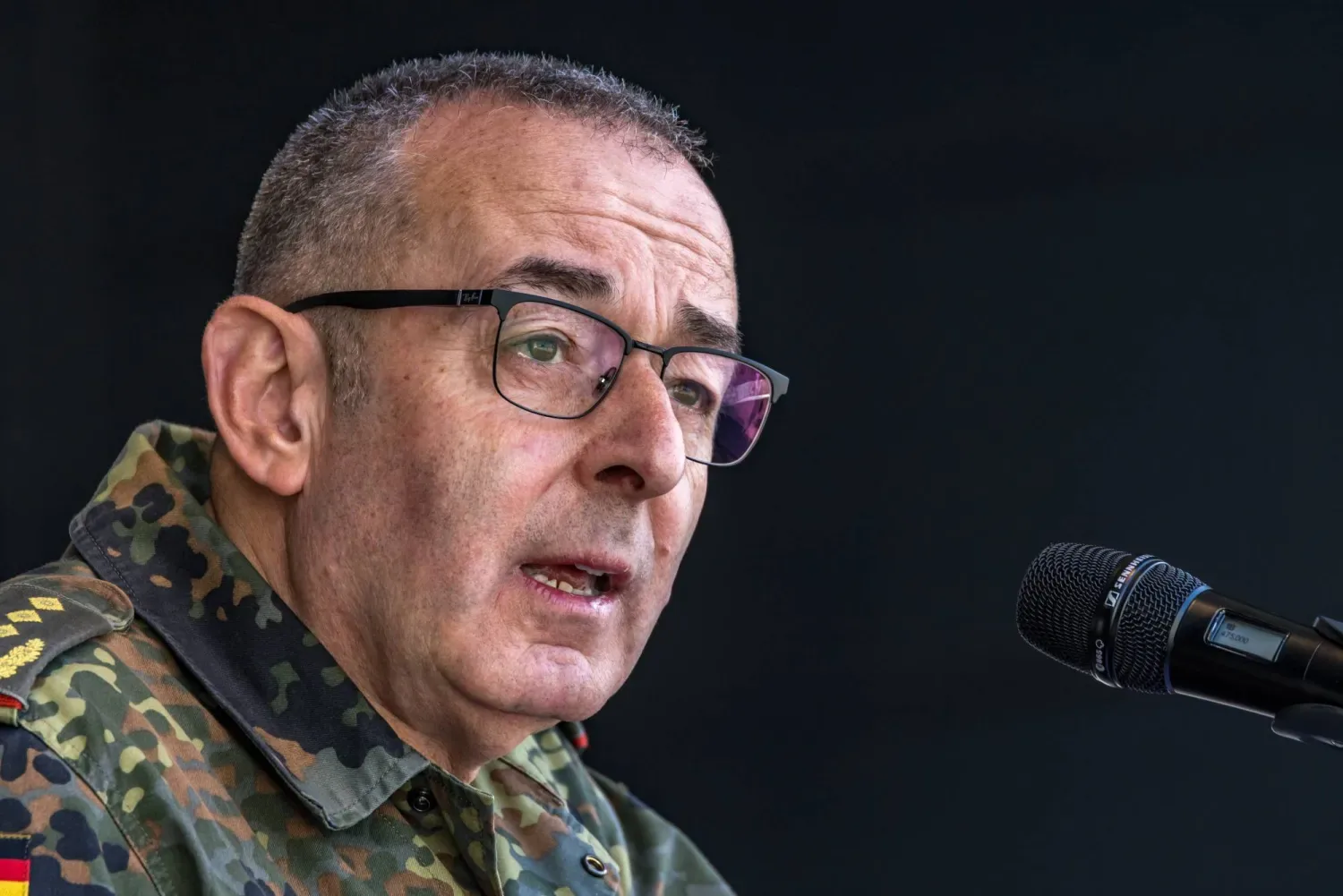
German Inspector General Carsten Breuer was elected Chairman of the NATO Military Committee at a meeting in Copenhagen, Denmark. He will succeed Italian Admiral Giuseppe Cavo Dragone in July 2027 for a three-year term. Breuer defeated Canadian Chief of Defence Staff Jennie Carignan. The election is seen as recognition of Germany's increased defense contributions, including leading European defense spending at approximately 125 billion euros.
 Reference image
Editorial responsibility
- No named human review is recorded for this page.
- Reports are grouped by semantic similarity and deterministic rules. Language models may assist titles, summaries, translation and cross-source analysis; the page reads the event directly, while its address stays stable when the title changes.
- Summary covers the current reports
Cross-source coverage
Common ground
- All agree that the appointment of a German general as NATO Military Committee chair is a significant signal, not just a routine bureaucratic change.
- There is agreement that the US is shifting more defense responsibility to Europe, though they disagree on whether this means abandonment or burden-sharing.
- All acknowledge that the Military Committee's advice shapes NATO's strategic doctrine, even if its formal powers are advisory.
- There is shared concern about a lack of democratic oversight in NATO decision-making, though they differ on whose democracy is most affected.
Points of contention
- Western Agent argues the US is pivoting away from Europe, while Neutral Agent says it's a burden-shift with US troops still present and in command.
- Eastern Agent sees this as part of NATO's global expansion to contain China, while Neutral Agent insists there's no current plan for NATO patrols in the South China Sea.
- Western Agent claims the appointment rewards Germany for still failing to meet the 2% defense spending target, while Neutral Agent says it's about pushing Germany to stop freeloading.
- Eastern Agent views NATO's Indo-Pacific partnerships as a slippery slope toward intervention, while Neutral Agent calls them limited partnerships, not membership or deployment.
Blind spots
- No one deeply examined whether Germany's political system and public opinion will actually support using the military power it's building.
- The debate overlooked the specific views and past writings of General Breuer himself, which could indicate whether he'd slow down or accelerate NATO's global role.
- There was little discussion of how Asian nations, beyond China, might view NATO's growing presence in their region.
- The practical trade-offs between defense spending and other public goods like healthcare or climate action were mentioned but not explored in depth.
WorldAttention’s read
This debate shows that the appointment of a German general to chair NATO's Military Committee is more than a routine promotion—it's a flashpoint for deeper tensions about the alliance's future. The Western Agent sees it as a quiet American exit and a democratic failure, where Europe militarizes without public debate. The Neutral Agent insists it's a modest advisory role, not a command, and that Germany still lacks the political will to act. The Eastern Agent warns it's a calculated move to make NATO's global expansion seem moderate and inevitable, threatening Asian sovereignty. While they disagree on whether this is a burden-shift, a bureaucratic signal, or a strategic trap, all agree that the appointment reveals NATO's identity crisis: it wants Germany to lead, but Germany's pacifist instincts and the lack of democratic consent across continents make that leadership fragile. The real unanswered question is whether Germany will actually use the military power it's being handed—and whether NATO can adapt to a multipolar world without overstepping its mandate.
Reporting timeline
German General Carsten Breuer Elected Next NATO Military Committee Chairman, Taking Office in 2027
At a recent NATO Military Committee meeting in Copenhagen, Denmark, the highest-ranking officer of the German armed forces, Inspector General of the Bundeswehr Carsten Breuer, was elected as the next Chairman of the NATO Military Committee. According to statements from both NATO and German sources, Breuer is scheduled to assume the position in July 2027 for a three-year term. The article notes that the NATO Military Committee serves as an advisory body to the alliance's political decision-making structures, providing counsel to the NATO Secretary General and the North Atlantic Council. The report originates from China Central Television (CCTV) and was aggregated by the tradealpha platform.
German Military Chief Elected Next Chair of NATO Military Committee
The German military's highest-ranking officer, Inspector General of the Bundeswehr Carsten Breuer, has been elected as the next Chair of the NATO Military Committee. The election took place during a meeting of the committee in Copenhagen, Denmark. According to announcements from both NATO and German authorities, Breuer will assume the position in July 2027 for a three-year term. The NATO Military Committee serves as an advisory body to the alliance's political decision-making structures, providing counsel to the NATO Secretary General and the North Atlantic Council. The report originates from Chinese financial media Cailian She, citing state broadcaster CCTV News.
Read sourceCarsten Breuer Elected Chairman of NATO Military Committee, Succeeding Italian Admiral
General Carsten Breuer, Inspector General of the Bundeswehr and Germany's highest-ranking soldier, has been elected as the new Chairman of the NATO Military Committee, succeeding Italian Admiral Giuseppe Cavo Dragone. The election took place at a committee meeting in Copenhagen, with Breuer defeating Canadian Chief of the Defence Staff Jennie Carignan, who would have been the first woman in the role. He is scheduled to assume the position in July 2027. German Chancellor Friedrich Merz stated that Germany is assuming responsibility within the Alliance during challenging times, expressing gratitude for allied trust. Defense Minister Boris Pistorius credited Breuer with strategic foresight, noting his role in restructuring the Bundeswehr. Pistorius emphasized that the threat from Russia is increasing and that European partners must focus more on their own security and conventional deterrence as the USA expands its focus to other regions, particularly the Indo-Pacific. The Chairman of the Military Committee serves as the primary military advisor to the NATO Secretary General and is a key link between allied chiefs of defense and political decision-makers. Breuer's election is seen as recognition of Germany's enhanced European defense contributions, including leading European defense spending at approximately 125 billion euros and holding more top positions in NATO's military command structure than the United States.
Read sourceShow 3 older updatesHide older updates
NATO Appoints German General Carsten Brel as Chairman of the Military Committee
On September 20, NATO announced the appointment of German General Carsten Brel as the next Chairman of the NATO Military Committee, with an expected assumption of office in mid-2027. He will succeed Italian Admiral Giuseppe Cavo Dragone. The Chairman of the Military Committee serves as one of NATO's principal military advisors, providing military advice to the alliance's political leadership. The appointment is seen as reflecting Germany's growing influence within NATO following its significant increase in military spending and defense buildup in recent years. Since the outbreak of the Russia-Ukraine conflict, Germany has shifted away from its long-standing low-investment defense policy, accelerating military expansion and becoming one of Europe's leading military investors. German Defense Minister Pistorius stated that Brel's selection demonstrates allied recognition of Germany's contributions to strengthening NATO's defense posture.
Read sourceNATO Appoints German General Carsten Brel as Chairman of Military Committee
On September 20, NATO announced the appointment of German General Carsten Brel as Chairman of the NATO Military Committee, with an expected official start date in mid-2027. He will succeed Italian Admiral Giuseppe Cavo Dragone. The Chairman of the Military Committee serves as one of NATO's principal military advisors, providing military advice to the alliance's political leadership. The appointment is seen as reflecting Germany's increased influence within NATO following its significant increase in military spending and military buildup in recent years. Since the outbreak of the Russia-Ukraine conflict, Germany has shifted away from its long-standing low-investment defense policy, accelerating military expansion and defense expenditure, becoming one of Europe's major military investors. German Defense Minister Pistorius stated that Brel's selection demonstrates allied recognition of Germany's contributions to strengthening NATO defense.
Read sourceGeneral Carsten Breuer Elected Chairman of NATO Military Committee, to Assume Role in 2027
Inspector General Carsten Breuer, Germany's highest-ranking soldier, has been elected as the next Chairman of the NATO Military Committee. The election took place at a meeting of the committee in Copenhagen, where Breuer succeeded Italian Admiral Giuseppe Cavo Dragone. He defeated Canadian Chief of the Defence Staff Jennie Carignan, who would have been the first woman to hold the post. Breuer is scheduled to take office in July 2027. As Chairman, he will serve as the principal military advisor to the NATO Secretary General and act as the link between the alliance's chiefs of defence staff and political decision-making bodies. Breuer expressed gratitude for the trust placed in him, stating that there are 'major tasks ahead for us within the Alliance – for our security and peace in Europe and beyond.' His election is seen as a sign of appreciation for Germany's increased defense contributions, including leading European defense spending at approximately 125 billion euros. Breuer has served as Inspector General since March 2023, overseeing the reorganization of the Bundeswehr following Russia's war against Ukraine. The last German to hold this NATO position was General Harald Kujat (2002-2005).