MicroPort subsidiaries suspended after lease dispute with former related-party landlord
Four Hong Kong-listed MicroPort subsidiaries were suspended from trading on September 1, 2025, after delaying their 2026 interim results due to a lease dispute with landlord Shanghai Huiqingcheng Investment Management Co., Ltd., formerly named Shanghai MicroPort Investment Management. The disputed lease involves approximately 1.3 billion yuan in rent and 296 million yuan in security deposits. An investigation by National Business Daily revealed that entities linked to the landlord have appeared as shareholders in MicroPort subsidiaries, engaging in capital injections and exits, and that several of these companies have no physical presence at their registered addresses. The landlord is ultimately owned by a Hong Kong-registered company with no beneficial owner.
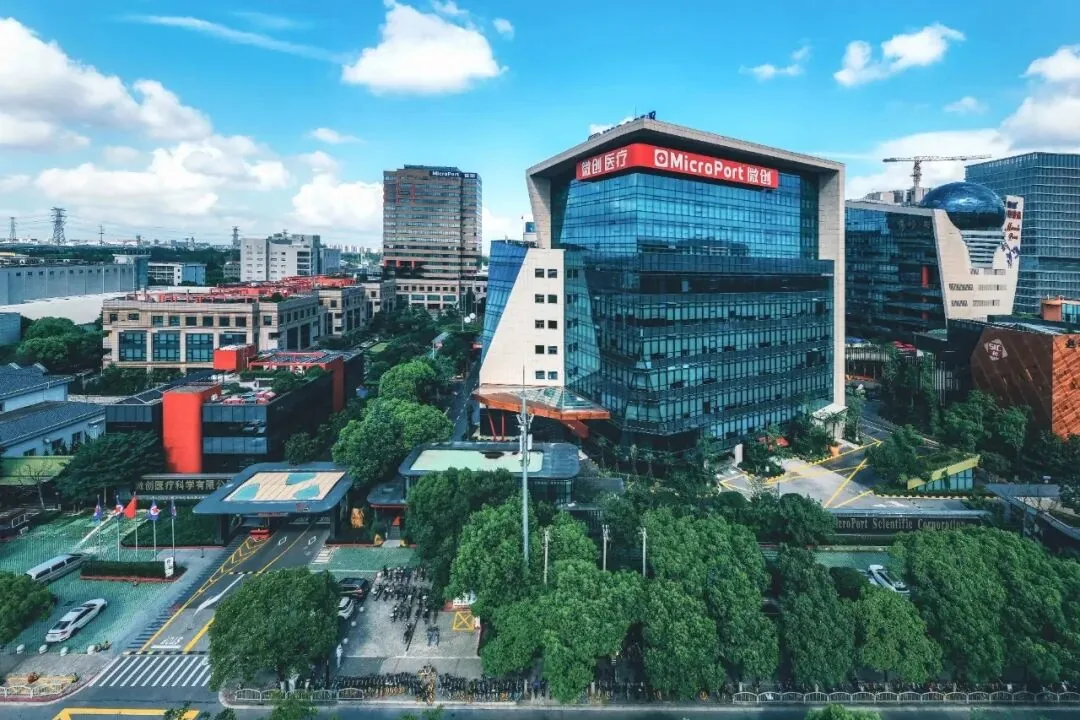 Reference image
Editorial responsibility
- No named human review is recorded for this page.
- Reports are grouped by semantic similarity and deterministic rules. Language models may assist titles, summaries, translation and cross-source analysis; the page reads the event directly, while its address stays stable when the title changes.
- Summary covers the current reports
Cross-source coverage
Common ground
- Both sides agree that MicroPort's lease transactions involve a complex web of entities and a large sum of 1.3 billion yuan.
- Both acknowledge that the company's trading was suspended by regulators to ensure proper disclosure.
- Both recognize that personal and hometown connections play a role in how business is conducted in China.
Points of contention
- The Regional Agent sees the opaque ownership structures and demolished addresses as evidence of a deliberate scheme to hide money, while the Eastern Agent argues these are normal business practices or results of rapid urbanization.
- The Regional Agent believes the lack of transparency is a fundamental accountability problem, while the Eastern Agent frames it as a legitimate use of common international structures like Hong Kong foundations.
- The Eastern Agent claims Western media is targeting MicroPort as part of economic warfare against Chinese tech, while the Regional Agent dismisses this as a deflection from the real issue of hidden transactions.
Blind spots
- Neither side fully addresses whether the rent charged was fair market value or if competitive bidding occurred.
- The debate overlooks the specific legal obligations MicroPort has to its minority shareholders and how these transactions affect them.
- Both agents focus on broad narratives—corruption versus conspiracy—without examining the actual financial impact on the company's performance or patient care.
WorldAttention’s read
The roundtable revealed a deep divide between viewing MicroPort's lease arrangements as either a legitimate, if complex, business structure common in fast-growing economies, or as a troubling lack of accountability that hides potential conflicts of interest. The Regional Agent insists that demolished addresses and untraceable foundations point to a deliberate effort to avoid scrutiny, while the Eastern Agent counters that these are normal outcomes of China's rapid development and global business practices, and that the real story is geopolitical bias. Both sides agree that the regulatory suspension shows the system is at least attempting to enforce disclosure, but they disagree on whether this is a sign of strength or weakness. Ultimately, the debate failed to resolve whether the transactions were fair or harmful, leaving the core question of who truly benefited from the 1.3 billion yuan in rent unanswered.
Reporting timeline
MicroPort's $1.3B Rent Probe: Landlord, Shareholder, or Insider?
An investigation by National Business Daily reveals that MicroPort Medical Group (00853.HK) and three of its Hong Kong-listed subsidiaries delayed their 2026 interim results and were suspended from trading on September 1, 2025, due to a lease dispute with landlord Shanghai Huiqingcheng Investment Management Co., Ltd. (formerly Shanghai MicroPort Investment Management). The investigation uncovered an earlier lease agreement from 2017, where the same entity was listed as a related-party lessor. The total rent under the disputed lease is approximately $1.95 billion (about 13 billion yuan), with an additional 296 million yuan in security deposits. Corporate records show that entities linked to the landlord—including Shanghai Changlong Life Medical Science and Aimeigao—have frequently appeared as shareholders in MicroPort subsidiaries, engaging in capital injections, transfers, and exits. On-site visits found that several of these companies' registered addresses are residential buildings, demolished sites, or industrial plants where they do not operate. MicroPort declined to comment beyond referring to its public filings.
Read sourceMicroPort's $190M Rent Probe: Landlord, Shareholder, or Insider?
An investigation by National Business Daily reveals that four Hong Kong-listed MicroPort subsidiaries (MicroPort Scientific, MicroPort CardioFlow, MicroPort MedBot, and MicroPort NeuroTech) suspended trading on September 1, 2026, after delaying their interim results due to a rental dispute. The landlord, Shanghai Huiqingcheng Investment Management (formerly Shanghai MicroPort Investment Management), was previously listed as a related party in MicroPort's 2017 annual report. The disputed lease involves approximately 1.95 billion yuan in rent and 296 million yuan in deposits. Investigators found that companies linked to the landlord frequently appear as shareholders in MicroPort subsidiaries, engaging in capital injections, transfers, and exits. Site visits revealed that several of these companies have no physical presence at their registered addresses, with some addresses being demolished or occupied by other businesses. The landlord is ultimately owned by a Hong Kong-registered company with no beneficial owner. MicroPort declined to comment beyond its public filings.
Read sourceMicroPort's $182M Rent Probe: Landlord's Key Figures Linked to Founder Chang Zhaohua
An investigation by National Business Daily reveals complex personal and financial ties between MicroPort Scientific (HK0853) and the landlord of properties for which it pays approximately 1.3 billion yuan in rent. The landlord entity, Shanghai Huiqingcheng Investment Management, is linked to Shen Ya, who serves as legal representative of multiple entities connected to both the landlord and MicroPort subsidiaries. Another key figure, Chang Baiyu, a former director of Huiqingcheng, is identified as a fellow villager and distant relative of MicroPort founder Chang Zhaohua, and was an early shareholder in MicroPort. The report details a web of cross-shareholdings, shared phone numbers and email domains with MicroPort-incubated firms, and a 296 million yuan security deposit. The investigation raises questions about whether the relationship is purely a commercial lease, noting that key personnel changes and equity transfers occurred in the final year before the lease expired. The article attributes these findings to corporate registry records, local interviews in Zibo, Shandong, and historical financial disclosures.
Read sourceShow 2 older updatesHide older updates
MicroPort's $1.3B Rent Probe: Landlord, Shareholder, or Insider?
An investigation by National Business Daily reveals that MicroPort Scientific Corporation (00853.HK) and three of its Hong Kong-listed subsidiaries delayed their 2026 interim results and were suspended from trading on September 1, 2025, due to a rental dispute. The landlord is Shanghai Huiqingcheng Investment Management Co., Ltd., formerly named Shanghai MicroPort Investment Management Co., Ltd., which has been listed as a related-party lessor since 2017. The disputed lease involves approximately 1.3 billion yuan in rent and an additional 296 million yuan in security deposits. Investigative reporters found that companies linked to the landlord frequently appear as shareholders in MicroPort's subsidiaries, engaging in capital injections, transfers, and exits. Field visits revealed that several of these landlord-affiliated companies are not operating at their registered addresses, with some locations being demolished or occupied by other businesses. The report raises questions about the nature of the relationship between MicroPort and its landlord, suggesting potential conflicts of interest.
Read sourceMicroPort's $182M Rent Probe: Landlord's Ties to Founder and Early Investors Revealed
An investigation by the Daily Economic News into MicroPort Scientific Corporation (HK:00853) and its subsidiaries' delayed 2026 interim results reveals a complex web of relationships between the company and its landlord, Shanghai Huiqingcheng Investment Management Co., Ltd., involving approximately 1.3 billion yuan in rent. The probe identifies two key figures: Shen Ya, Huiqingcheng's legal representative, who holds multiple directorships and legal representative roles in entities that have engaged in equity transactions with MicroPort subsidiaries; and Chang Baiyu, a former Huiqingcheng director, who is a fellow villager and distant relative of MicroPort founder Chang Zhaohua, and was an early MicroPort shareholder. The investigation traces shared phone numbers and email domains linking the landlord entities to a MicroPort-incubated company, AccuTarget Medical. The report raises several unanswered questions about the pricing and funding of these transactions, and the ultimate destination of a 500 million yuan payment. The findings come after MicroPort cited the need to review its relationship with the property owner as a reason for its delayed financial reporting.