Meta unveils camera-less smart glasses, $1,299 VR headset, and Muse AI agent at Connect 2026
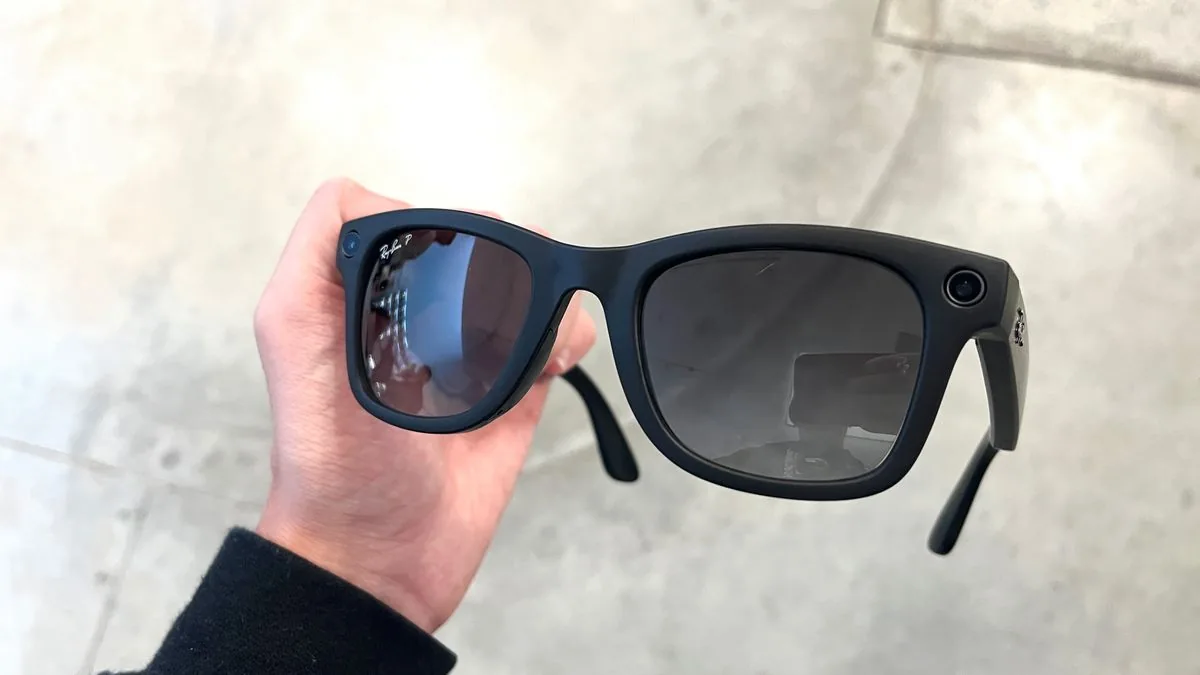
At Meta Connect 2026 on September 23-24, CEO Mark Zuckerberg unveiled a new line of AI hardware including the camera-less Ray-Ban Meta Audio smart glasses ($349, shipping October 3), third-generation Ray-Ban Meta glasses ($449), a lightweight VR headset ($1,299, spring 2027), and the Muse Charm keychain AI device. The company integrated its personal AI agent Muse into the glasses, enabling voice-activated tasks. Meta also announced over 100 AI glasses styles by year-end and partnerships with Walmart, Best Buy, and Sephora for Muse commerce, while Amazon blocked access.
 Illustration
Editorial responsibility
- No named human review is recorded for this page.
- Reports are grouped by semantic similarity and deterministic rules. Language models may assist titles, summaries, translation and cross-source analysis; the page reads the event directly, while its address stays stable when the title changes.
- Summary covers the current reports
Cross-source coverage
Reporting timeline
Meta Plans VR Glasses Strap Accessory for Active Gaming, Reports Say
A Google News RSS feed aggregates multiple reports about Meta's latest developments in virtual reality. The lead article from Road to VR reports that Meta plans a strap accessory for its VR glasses aimed at active gaming. Other articles cover Mark Zuckerberg's statement that Meta will lead on smart glasses privacy despite criticism, the debut of $1,299 Meta VR glasses and a Muse Charm pendant as part of an AI agent push, a comparison between Meta VR glasses and the Meta Quest 3, and a Bloomberg opinion that Meta's VR glasses are what the Apple Vision Pro should have been. The collection provides a snapshot of current news and commentary surrounding Meta's VR hardware strategy, pricing, privacy concerns, and competitive positioning against Apple.
Read sourceMeta's VR Glasses Launch Sparks Comparisons to Apple Vision Pro and AI Strategy Debate
A collection of news articles from Google News highlights the launch of Meta's new VR glasses, with Bloomberg arguing they represent what the Apple Vision Pro should have been. CNBC reports that Meta has reached the consumer AI device market before OpenAI, but notes that CEO Mark Zuckerberg's strategy remains unproven. Meta's official announcements introduce the VR glasses as a new era for virtual reality and also unveil new Ray-Ban Meta Audio and AI glasses styles. Additionally, UploadVR reports that Meta has launched a $1 million competition for 'hands-first' apps ahead of the VR glasses release. The coverage positions Meta's product launch as a significant competitive move in the mixed reality and AI wearable space, directly challenging Apple's Vision Pro and other AI device makers.
Read sourceMeta Launches $1 Million Competition for Hands-First Apps Ahead of VR Glasses
Meta has launched a $1 million competition for 'hands-first' applications, as reported by UploadVR, ahead of its upcoming VR glasses. This initiative is part of a broader push by Meta into augmented and virtual reality, with multiple news outlets covering related developments. Bloomberg.com opines that Meta's VR glasses are what the Apple Vision Pro should have been, suggesting a competitive positioning against Apple. CNBC reports that Mark Zuckerberg debuted $1,299 Meta VR Glasses and a Muse Charm pendant as part of an AI agent push. Meta.com introduces new Ray-Ban Meta Audio and more AI glasses styles, expanding its smart eyewear lineup. The Verge notes that Meta has ditched the camera on its newest smart glasses, indicating a design shift. These stories collectively highlight Meta's aggressive strategy in the VR and smart glasses market, focusing on hands-free interaction, AI integration, and competitive differentiation from Apple's Vision Pro.
Read sourceShow 17 older updatesHide older updates
Meta unveils VR glasses, AI assistant, and smart glasses at Connect 2026 event
Meta held its Connect 2026 conference, announcing a range of new products. The company introduced Meta VR Glasses, a lightweight headset weighing just 100 grams, described as a cinema, courtside seat, and workspace. Bloomberg reports that Zuckerberg's 'Tamagotchi-Like' AI could be Meta's iPod Moment, suggesting a significant shift in strategy. Gizmodo's headline 'VR Headsets Are So Cooked' implies a critical view of the current VR market. Meta's official announcement covers everything unveiled at the event. Wall Street analysts have reacted to Meta's new smartglass lineup and the first Muse 'holdable' device, according to Yahoo Finance. The event signals Meta's push into augmented reality and AI-powered wearables.
Read sourceMeta Unveils New Hologram and Smartglass Products, Drawing Mixed Reactions from Analysts
Meta has announced a new lineup of hologram and smartglass products, including VR glasses described as a 'cinema, courtside seat, and workspace in just 100 grams' according to Meta's official announcement. The products have generated significant media attention and mixed reactions. Gizmodo's headline characterizes the holograms as 'unnerving' and potentially harmful to users. CNBC reports that Meta has reached the consumer AI device market before OpenAI, but notes that CEO Mark Zuckerberg's strategy remains unproven. Yahoo Finance provides Wall Street's perspective on the new smartglass lineup and the first 'Muse' holdable device. Bloomberg compares the new AI device, described as 'Tamagotchi-like,' to a potential 'iPod Moment' for Zuckerberg, suggesting it could be a breakthrough product. The coverage spans consumer technology, AI device competition, and financial market analysis.
Read sourceMeta Seeks Success Where Others Failed With New AI Hardware Line at Connect
At Meta Connect 2026, Meta unveiled a new line of AI hardware products, including audio smart glasses, the Muse Charm AI voice device, and a lightweight VR headset. The article notes that Meta is entering product categories that have not yet achieved mass-market success, such as smart glasses (with Ray-Ban) and dedicated AI wearables (following Humane's failure). The Muse Charm is described as a walkie-talkie-like AI assistant, with no price announced and a target December shipment. The $1,299 VR headset, weighing only 100 grams due to an external battery pack, is positioned as a premium device leveraging Meta's existing VR content library and new partnerships with Disney. Bloomberg observes that while Meta's presentation was confident and technically successful, the new products face significant market challenges, as consumers may be reluctant to spend heavily on unproven categories. CEO Mark Zuckerberg acknowledged past mistakes and urged optimism.
Read sourceCICC Raises Meta Platforms Target Price to $776, Maintains Outperform Rating
CICC (China International Capital Corporation) released a research note following Meta Connect 2026, where CEO Mark Zuckerberg highlighted breakthroughs in AI, smart glasses, and VR. CICC believes Meta's AI agent, Muse, is central to its software and hardware strategy, with commercialization potential from its free-plus-commission model. Muse has launched in the US and Canada, with connectors to Shopify, Expedia, Instacart, and others. CICC notes that Meta is strengthening both cloud and edge models, with a focus on personalization and security, including the Muse Spark model and the Secure VM architecture. In hardware, Reality Labs is pivoting to prioritize AI glasses over the metaverse, with new Ray-Ban Meta Audio and Gen 3 products, and a VR Glasses launch planned for spring 2027 at $1,299. CICC maintains its 2026 and 2027 revenue and net profit forecasts, keeps an 'Outperform' rating, and raises the target price by 11% to $776, based on a 23x P/E for 2027, implying 4% upside from current levels. Risks include regulatory uncertainty, macroeconomic headwinds, and AI competition.
Read sourceMeta’s answer to the “pervert glasses” problem is to launch a camera-less pair of smart specs. Still, it appears to have no plans to backpedal on cameras, with plans for 100 different models by the
Meta is addressing privacy concerns associated with its smart glasses—dubbed the 'pervert glasses' problem—by launching a new pair of smart specs without a camera. Despite this move, the company has no intention of abandoning camera-equipped models, as it plans to release 100 different smart glasses models by the end of the year. The announcement, reported by The Economist, highlights Meta's strategy to expand its wearable product line while mitigating public backlash over privacy issues related to hidden cameras in glasses. The camera-less variant is positioned as a response to criticism, but the broader product roadmap indicates a continued commitment to camera-based augmented reality and smart eyewear.
Meta beats OpenAI to consumer AI device market, but Zuckerberg's strategy is unproven
Meta has entered the consumer AI device market ahead of OpenAI, launching products like the Ray-Ban Meta smart glasses and a new AI gadget called Charm. However, according to CNBC, CEO Mark Zuckerberg's strategy for this market remains unproven. The company is facing criticism over privacy concerns with its smart glasses, which some have dubbed 'pervert glasses,' though Zuckerberg asserts Meta will lead on privacy. Yahoo Finance speculates that Meta may be quietly rewriting its hardware strategy through Muse-powered Ray-Ban AI glasses. Reuters reports that the launch of Charm intensifies the race for post-smartphone hardware. The moves position Meta as an early mover in consumer AI devices, but the long-term success of its approach is still uncertain.
Read sourceMeta Launches $1M Developer Competition to Boost Hand-Tracked Apps for VR Glasses
Meta has launched a $1 million developer competition aimed at increasing the number of hand-tracked applications for its new 'VR Glasses' product line, as reported by Road to VR. This initiative is part of Meta's broader push into consumer AI and augmented reality devices, with CNBC noting that Meta has reached the consumer AI device market before OpenAI, though Zuckerberg's strategy remains unproven. Yahoo Finance reports Wall Street's mixed reactions to Meta's new smartglass lineup and the first 'Muse' holdable device. Bloomberg compares Zuckerberg's new AI device to a 'Tamagotchi-like' gadget, suggesting it could be Meta's 'iPod moment'. Meta's official announcement frames the VR Glasses as a new era for virtual reality. The competition seeks to populate the platform with more applications that utilize hand-tracking technology, a key feature of the new glasses.
Read sourceMeta unveils VR glasses, AI pendant Muse Charm, and touts Muse app's number-one ranking
In a keynote, Meta showcased several new products and strategies, according to an attendee and creator. The Muse AI app has reached number one in the US iOS App Store, and the author reports enthusiasm for its Mac app. Meta unveiled new VR glasses, set to launch in spring 2027 for $1,299.99 and weighing about 100 grams, with a separate computing puck. Attendees who tried them reportedly preferred them to Apple Vision Pro, though the author notes these are personal impressions. Meta also previewed Muse Charm, a portable AI gadget for interacting with the Muse assistant, with more details promised later this year. The author believes Meta is moving from a follower to a frontrunner in AI, leveraging its distribution moat and making agentic AI accessible through familiar interfaces like WhatsApp. The author states they will definitely purchase the new VR glasses, contingent on typing functionality, seamless Muse connection, and sufficient battery life.
Meta Unveils Tamagotchi-Like Muse Charm Keychain and $1,300 VR Glasses at Connect 2026
Meta announced a new AI-powered device called the Muse Charm Keychain, described as a Tamagotchi-like wearable, at its Meta Connect 2026 event. The device is part of CEO Mark Zuckerberg's broader AI ambitions, according to Reuters. Additionally, Meta revealed plans for a $1,300 pair of VR glasses expected to weigh less than a stick of butter and launch in 2027, as reported by Popular Science. Wall Street analysts have provided their initial reactions to Meta's new smartglass lineup and the Muse device, according to Yahoo Finance. The announcements were part of a larger product reveal covered by Meta's official blog.
Read sourceMeta bets on Muse AI assistant, launches multiple new hardware products at Connect
At Meta Connect on September 23, CEO Mark Zuckerberg unveiled a suite of new hardware products integrated with the Muse AI assistant, signaling the company's commitment to embedding AI into daily life despite rising privacy concerns. New products include lightweight VR glasses priced at $1,299, a camera-less Ray-Ban smart glasses model for $349, and a keychain-sized device called Muse Charm for voice interaction without a phone or glasses. Meta expanded Muse's capabilities to support shopping at Walmart, GameStop, Gap, and Wayfair, while Amazon has blocked access. Muse can also operate Mac applications, managing files, messages, and calendars. Meta's chief AI officer Alexandr Wang said Muse could run small businesses or handle tasks autonomously. The VR glasses, described as combining a private cinema, game console, and computer, will launch next spring. The camera-less Ray-Ban glasses go on sale October 13, and the Muse Charm is expected before the holiday season. Despite competition from OpenAI's Codex and Anthropic's Claude, and public backlash over privacy risks from earlier smart glasses, Zuckerberg predicted billions of users will eventually adopt Muse.
Read sourceZuckerberg says Meta will lead on smartglasses privacy despite 'pervert glasses' criticism
This Google News aggregation page compiles multiple news articles about Meta's recent product announcements and CEO Mark Zuckerberg's statements. The primary article, from NBC News, reports that Zuckerberg claims Meta will lead on smartglasses privacy despite facing 'pervert glasses' criticism. Other linked articles from CNBC, Bloomberg, Reuters, and Meta's official blog cover the debut of $1,299 Meta VR Glasses and the Muse Charm pendant, described as part of an AI agent push. Bloomberg characterizes the 'Tamagotchi-Like' AI device as potentially Meta's 'iPod Moment.' Reuters reports that Meta's Charm gadget carries Zuckerberg's big AI ambitions. Meta's official blog introduces new Ray-Ban Meta Audio and more AI glasses styles. The collection of articles highlights Meta's strategic focus on AI-powered wearable devices and the associated privacy challenges.
Read sourceMeta adds Walmart, Best Buy, Sephora as retail partners for AI agent Muse after Amazon blocks access
Meta announced new retail partnerships for its AI agent Muse at the annual Connect conference, adding Walmart, Best Buy, and Sephora to its integration list, which already included Shopify, PayPal, Stripe, and Instacart. The move comes days after Amazon blocked Muse from accessing its shopping site. Meta's Chief AI Officer Alexander Wang stated the integrations aim to create new shopping experiences. Separately, Meta unveiled several hardware products: a camera-less smart glasses model (Ray-Ban Meta Audio, $349), a third-generation flagship Ray-Ban Meta smart glasses ($449) with lighter build and improved battery, a VR headset codenamed 'Phoenix' ($1,300, spring release), and a keychain-sized device called Muse Charm for connecting to the Muse agent (pre-orders in holiday season). CEO Mark Zuckerberg said during his keynote that Muse will 'grow into personal super-intelligence used by billions of people globally' and that smart glasses will be the primary interface for human-AI interaction.
Read sourceMeta Launches First Camera-Free Smart Glasses to Address Privacy Concerns
Meta has expanded its smart glasses lineup with the Ray-Ban Meta Audio, its first model without a camera, aimed at addressing privacy concerns. Announced at the Connect conference, the audio-only glasses feature support for the new AI agent 'Muse' and a hearing aid mode. Meta CTO Andrew Bosworth stated the product was added to the roadmap two years ago as audio remains the most popular feature. Removing the camera reduces price, weight, and improves battery life to 12 hours. The glasses start at $349 and launch October 3. Bosworth acknowledged the global privacy debate around smart glasses but noted positive user adoption trends. The company also introduced a third-generation camera-equipped model and a lower-cost Meta-branded option.
Read sourceMeta's Charm gadget carries CEO Zuckerberg's big AI ambitions
Meta has debuted a new device called 'Charm' at Meta Connect 2026, designed for using its Muse AI. The gadget is central to CEO Mark Zuckerberg's ambitious AI strategy. The announcement was covered by multiple major news outlets including Reuters, Bloomberg, and Yahoo Finance. Wall Street analysts have provided their initial reactions to Meta's new smartglass lineup and the first Muse 'holdable' device. Meta also introduced new Ray-Ban Meta Audio and additional AI glasses styles. The company's official announcement detailed everything unveiled at the Meta Connect 2026 event, highlighting the Charm gadget as a key product in their AI hardware push.
Read sourceZuckerberg unveils Muse AI agent, Meta VR glasses at Connect 2026 event
At Meta Connect 2026 on September 24, CEO Mark Zuckerberg announced that Muse, Meta's personal AI agent launched weeks earlier, has already helped millions of users and is expected to become a personalized superintelligence for billions. Meta's stock rose 1.02% to $744 on September 23. Muse topped the U.S. App Store free app chart, expanding consumer AI to cross-app autonomous execution. Zuckerberg predicted that most of the world's 2 billion eyeglass wearers will eventually use AI glasses as the primary Muse interface. Meta introduced a Muse Charm keychain accessory with voice interaction and fingerprint activation. A new lightweight Meta VR眼镜 (VR glasses) weighing ~100 grams, integrating AI directly into the OS with eye, gesture, and voice control, was showcased for a spring 2027 launch. Meta shifted strategy from prioritizing the metaverse to focusing on AI and smart glasses, reducing VR headset iteration. Over 100 eyewear styles were announced, including audio-only glasses. Privacy features include Muse Security virtual machines and a physical recording indicator light. IDC data showed global smart glasses shipments up 70.5% year-on-year in H1 2026, with Meta leading the market.
Read sourceMeta Connect 2026 Opens with AI Smart Glasses and Personal AI Agent Muse
Meta Connect 2026, held from September 23 to 24, serves as Meta's annual platform to showcase AI technology, XR hardware, and spatial computing. The event highlights the launch of Muse, a personal AI agent that upgrades from conversational models to autonomous task execution. Market focus is on the Luna camera-less AI smart glasses, lightweight MR headsets, and commercialization plans for integrating Muse into XR hardware. According to data from Weixin Information, global AI smart glasses sales reached 8.46 million units in 2025 and are forecast to hit 15 million in 2026, with Meta expected to ship 10-12 million units. Founder Securities notes that AI glasses are transitioning from product validation to rapid volume growth, driven by mature AI software capabilities rather than optical display breakthroughs. Changjiang Securities adds that Meta's Muse marks a step toward cross-application autonomous AI, while Qualcomm and Amazon are collaborating on custom AI inference chips for AWS data centers and 1.6T optical interconnect solutions. The report cites research reports from Founder Securities (August 29, 2026) and Changjiang Securities (September 21, 2026).
Read sourceMeta Connect: AI Assistant Muse Takes Center Stage, New Smart Glasses Unveiled
At Meta's annual Connect conference, the company refreshed its smart glasses lineup and announced deep integration of its AI assistant, Muse, into the hardware ecosystem. Meta launched the Ray-Ban Meta Audio, its first camera-less smart glasses at $349, shipping October 3, and the third-generation camera-equipped Ray-Ban Meta at $449, a 19% price increase attributed by CTO Andrew Bosworth to inflation and component shortages. CEO Mark Zuckerberg demonstrated Muse, stating it will soon gain full contextual awareness and run continuously in the background. He said Muse will remain free for most users, with monetization via small commissions on agent-facilitated transactions. Zuckerberg argued the industry currently treats AI agents as a 'single-player game,' but Meta believes breakthroughs lie in agent-to-agent collaboration, which it is researching internally. Bosworth noted the audio-only model was added to the roadmap two years ago due to audio being the most popular feature, and that privacy concerns were mitigated by design. Meta also announced software updates including Dynamic Photos, Dolby Atmos spatial audio recording by late 2026, and FDA-approved hearing aid functionality for $150. Bosworth did not commit to a 2027 timeline for full AR glasses.
Read source