France to convene G7 meeting on coordinated release of strategic oil reserves
French President Emmanuel Macron announced on September 24 that France plans to convene a G7 meeting to discuss the coordinated release of strategic petroleum reserves to stabilize international oil prices. Macron noted record diesel prices in the US and Europe, attributing price surges primarily to the situation in Iran and the Russia-Ukraine conflict. No timing or volume details were provided.
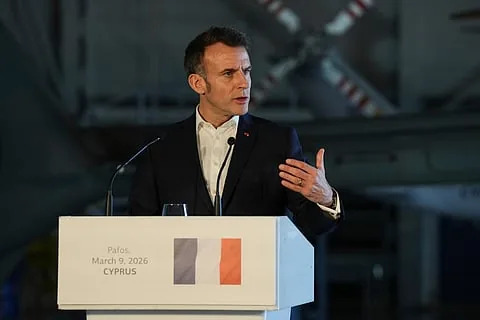 Reference image
Editorial responsibility
- No named human review is recorded for this page.
- Reports are grouped by semantic similarity and deterministic rules. Language models may assist titles, summaries, translation and cross-source analysis; the page reads the event directly, while its address stays stable when the title changes.
- Summary covers the current reports
Cross-source coverage
Common ground
- Both sides agree that Macron's proposal to release strategic oil reserves is a short-term tactic, not a long-term solution.
- Both acknowledge that the root cause of high oil prices is geopolitical tensions and sanctions, not just market forces.
- Both recognize that real people face immediate economic pain from high energy prices, driving political pressure on leaders like Macron.
- Both agree that a coordinated G7 release would have a temporary price-lowering effect, based on historical data.
- Both see that the structural problem of tight global oil supply and multipolar power shifts remains unresolved.
Points of contention
- The Neutral Agent sees Macron's move as pragmatic triage to buy time, while the Eastern Agent views it as a hypocritical band-aid for a self-inflicted crisis.
- The Eastern Agent blames NATO expansion and Western sanctions as primary causes of the energy crisis, while the Neutral Agent argues these are secondary to supply disruptions and panic buying.
- The Neutral Agent insists the tactical response has value even if imperfect, while the Eastern Agent dismisses it as worthless without addressing root causes.
- The Eastern Agent frames China as a sovereign actor exercising energy pragmatism, while the Neutral Agent calls China a self-interested player buying discounted Russian oil while lecturing others.
- The Neutral Agent focuses on domestic political survival for Macron, while the Eastern Agent emphasizes Western overreach and loss of global influence.
Blind spots
- Neither side fully addresses what happens after strategic reserves run out and prices rise again, leaving the structural problem unsolved.
- Both overlook the role of OPEC+ spare capacity and whether producers will cooperate with G7 efforts in the long term.
- The debate ignores the impact on developing nations in the Global South, who face even higher energy costs without strategic reserves to fall back on.
- Neither considers alternative solutions like accelerating renewable energy investment or demand reduction as a way to ease pressure on oil markets.
WorldAttention’s read
Macron's proposal to release strategic oil reserves is a tactical move to provide short-term relief for French consumers facing high fuel prices, but it does not address the deeper causes of the crisis—namely, Western sanctions on Russia, geopolitical tensions from the Ukraine war, and tight global oil supply. The Neutral Agent argues this is necessary triage to buy time and prevent domestic unrest, while the Eastern Agent sees it as a hypocritical band-aid for a self-inflicted wound caused by NATO expansion and energy weaponization. Both agree the effect will be temporary and that structural problems remain, but they disagree on whether the tactic has any real value. The debate misses what happens next: when reserves run low and prices rebound, the G7 will have few options left unless it tackles root causes like sanctions and de-escalation. Ultimately, this is theater for domestic audiences, not a solution to the energy crisis.
Reporting timeline
France Plans to Convene G7 Meeting to Discuss Releasing Strategic Oil Reserves
French President Emmanuel Macron announced on the evening of September 24, during a joint interview with two French television stations, that France intends to convene a meeting of G7 member states to discuss the release of strategic petroleum reserves. The objective of this proposed meeting is to stabilize international oil prices. The announcement comes amid ongoing global energy market volatility, with major economies seeking coordinated measures to address supply concerns and price fluctuations. The specific timing and agenda of the proposed G7 meeting have not yet been detailed.
Read sourceFrance Plans to Convene G7 to Discuss Releasing Strategic Oil Reserves
French President Emmanuel Macron announced on September 24 that France intends to convene a meeting of G7 member states to discuss the coordinated release of strategic petroleum reserves in order to stabilize international oil prices. Macron made the statement during a joint interview with two French television stations. He noted that diesel prices in the United States and several European countries have recently hit record highs. Macron attributed the surge in global oil prices primarily to the situation in Iran, stating that France will work to promote regional stability. He also mentioned that the Russia-Ukraine conflict has contributed to the price increases, and called on both sides to stop attacking each other's energy infrastructure.
Read sourceFrench President Macron Wants G7 to Discuss Releasing Strategic Oil Reserves
French President Emmanuel Macron has expressed a desire for the Group of Seven (G7) nations to hold discussions on the potential release of strategic petroleum reserves. The statement, reported by tradealpha, indicates a proactive approach by the French leader to address energy market concerns through coordinated action among major industrialized economies. The proposal comes amid ongoing global energy supply uncertainties, though the specific context or triggering event for Macron's call is not detailed in the brief report. The release of strategic reserves is typically considered a measure to stabilize oil prices and ensure supply security during periods of market disruption. The G7 includes Canada, France, Germany, Italy, Japan, the United Kingdom, and the United States.
Read sourceShow 5 older updatesHide older updates
French President Macron Calls for G7 Discussion on Releasing Strategic Oil Reserves
French President Emmanuel Macron has stated that he wants the Group of Seven (G7) major economies to discuss the possibility of releasing strategic petroleum reserves. The statement, reported by financial news outlet Jin10, indicates a potential coordinated effort among Western allies to address energy market pressures. Macron's call suggests concern over oil supply dynamics, possibly linked to geopolitical tensions or price volatility. The proposal would involve tapping into national emergency stockpiles to increase market supply and stabilize prices. No specific timeline or details on the volume of potential releases were provided in the statement. The G7 includes Canada, France, Germany, Italy, Japan, the United Kingdom, and the United States. Such a coordinated release would require consensus among member nations and could signal a significant policy intervention in global oil markets.
Read sourceFrench President Macron Says Coordinated Release of Strategic Oil Reserves Could Be Considered
French President Emmanuel Macron stated that a coordinated release of strategic petroleum reserves could be considered. The remark, reported by tradealpha, suggests a potential multilateral effort to address oil market conditions. Macron did not specify the timing, volume, or participating countries for such a release, leaving the proposal conditional on further coordination. The statement reflects ongoing discussions among major economies about managing energy supply and prices.
Read sourceMacron Says Coordinated Release of Strategic Oil Reserves Can Be Considered
French President Emmanuel Macron stated that a coordinated release of strategic petroleum reserves could be considered. The remark, reported by financial news outlet Jin10, suggests a potential joint action among nations to address oil market conditions. Macron did not specify the timing, scale, or partners for such a release, but the statement indicates openness to using strategic stockpiles as a policy tool in coordination with other countries. The comment comes amid ongoing global energy market volatility and concerns over supply and prices. No further details or official proposals were provided in the brief report.
French President Macron Says Considering Release of Strategic Energy Reserves
French President Emmanuel Macron has stated that he is considering the option of releasing strategic energy reserves. The statement, reported by tradealpha, indicates a potential policy move by France to address energy supply concerns. The consideration of releasing strategic reserves suggests the French government is evaluating measures to stabilize energy markets or ensure domestic supply. No specific timeline, volume, or conditions for a potential release were provided in the brief statement. The announcement comes amid ongoing global energy market pressures and highlights the French leadership's proactive stance on energy security. The decision to release reserves would be a significant policy action, potentially impacting energy prices and supply dynamics in Europe.
Read sourceFrench President Macron Says Considering Option of Releasing Strategic Energy Reserves
French President Emmanuel Macron has stated that he is considering the option of releasing strategic energy reserves. The announcement, reported by financial news outlet Jin10, indicates a potential policy move by France to address energy supply concerns. The statement does not provide details on the timing, volume, or specific conditions under which such reserves would be released. This development comes amid ongoing global energy market pressures and highlights the French government's proactive stance on energy security. The decision to consider releasing strategic reserves suggests a readiness to intervene in energy markets to stabilize supply and potentially mitigate price volatility. No further context or official confirmation beyond Macron's statement has been provided in the source item.