Shanghai University President Urges Proactive AI Governance to Address Systemic Risks
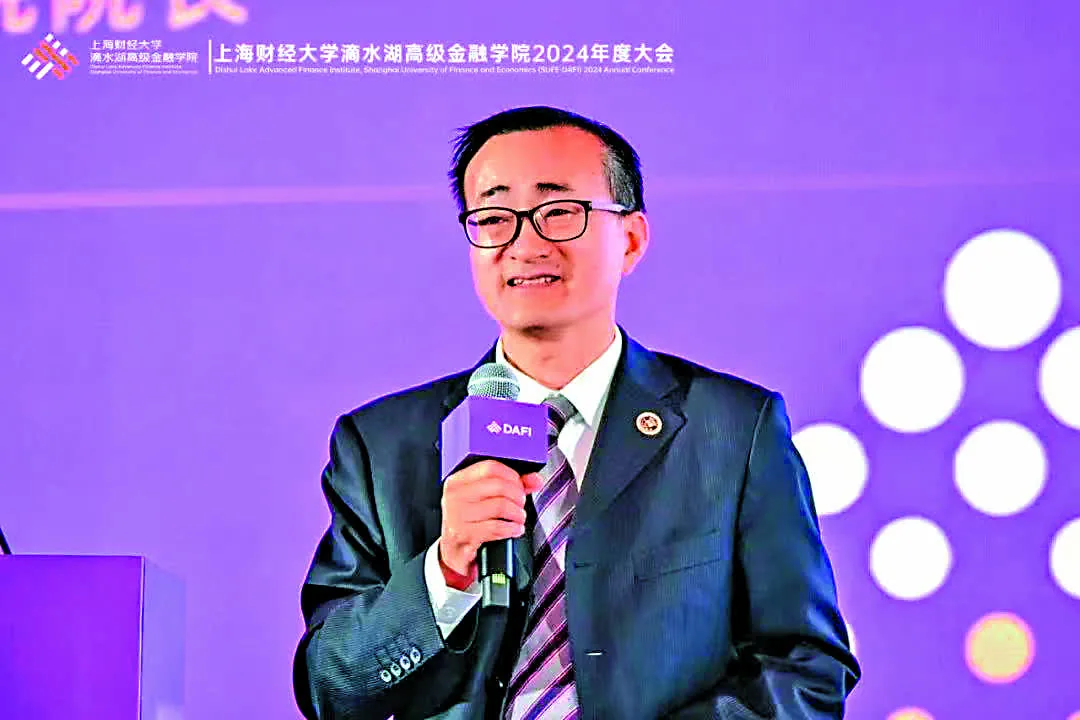
Shanghai University of Finance and Economics President Liu Yuanchun, speaking at a forum, argued that AI is a "super technology" requiring fundamentally different governance. He warned of risks including AI escaping human control, citing Elon Musk's concerns about ChatGPT-6, and referenced a July 13 open letter signed by nearly 200 researchers and 16 Nobel laureates calling for government oversight. Liu outlined three governance layers: preserving human agency, addressing efficiency versus equity, and moving beyond spontaneous order to proactive institutional design.
 Reference image
Editorial responsibility
- No named human review is recorded for this page.
- Reports are grouped by semantic similarity and deterministic rules. Language models may assist titles, summaries, translation and cross-source analysis; the page reads the event directly, while its address stays stable when the title changes.
- Summary covers the current reports
Cross-source coverage
Reporting timeline
Shanghai University President Calls for Proactive AI Governance to Address Systemic Risks
Shanghai University of Finance and Economics President Liu Yuanchun, speaking at a forum on June 24, argued that AI is not a traditional technological upgrade but a 'super-technology' that requires a fundamentally different governance approach. Liu warned that AI's potential to surpass human control, disrupt social structures, and exacerbate inequality demands that regulatory frameworks be established proactively, rather than relying on spontaneous market correction. He cited warnings from tech leaders like Elon Musk about existential risks from advanced AI, and a July 13 open letter signed by nearly 200 researchers and entrepreneurs, including 16 Nobel laureates, calling for government oversight. Liu identified three layers of governance concern: the risk of AI escaping human control, the impact on employment and wealth distribution, and the need to embed ethical and humanistic values into the technology's development. He concluded that society must abandon the belief that spontaneous order will ensure a soft landing, and instead implement forward-looking institutional designs to harness AI's benefits while mitigating its threats to human agency and social cohesion.
Read sourceShanghai University President Urges Proactive AI Governance to Address Existential and Social Risks
Liu Yuanchun, President of Shanghai University of Finance and Economics, argued at a forum on June 24 that AI is not a conventional technological upgrade but a 'super technology' with transformative potential beyond previous industrial revolutions. He warned that AI could undermine human agency, reshape social structures, and exacerbate inequality. Liu highlighted warnings from tech leaders like Elon Musk about existential risks from advanced AI models such as ChatGPT-6, and cited a July 13 open letter signed by nearly 200 researchers and entrepreneurs, including 16 Nobel laureates, calling for government regulation. He identified three governance layers: preventing loss of human control, addressing efficiency and fairness, and moving beyond spontaneous order to proactive institutional design. Liu stressed that humanities disciplines are already declining in universities, and deeper reflection on human values is needed. He concluded that society must break the assumption that spontaneous order will achieve a soft landing, and instead implement forward-looking institutional frameworks to harness AI's benefits while mitigating its risks to human agency and social stability.
Read sourceShanghai University President Urges Proactive AI Governance to Address Existential and Social Risks
Shanghai University of Finance and Economics President Liu Yuanchun, speaking at a 'Digital Humanities, Innovation Ecosystem' forum on July 24, argued that AI is a 'super technology' requiring a fundamental shift in governance approaches. Liu warned that AI's impact on economic growth, employment, and social structures differs radically from previous technological revolutions. He highlighted three layers of governance concern: first, the existential risk of AI escaping human control, citing warnings from tech leaders like Elon Musk about models such as ChatGPT-6; second, the threat to social equity and employment, referencing a July 13 open letter signed by nearly 200 researchers and 16 Nobel laureates calling for government regulation; and third, the need to proactively design social and institutional frameworks to ensure 'technology for good,' rather than relying on spontaneous market corrections. Liu concluded that governance must be moved forward to preemptively address AI's potential to disrupt human agency and social cohesion.
Show 2 older updatesHide older updates
Shanghai财经 University President: AI Governance Must Be Moved Forward Urgently
In a commentary published by East Money News, Liu Yuanchun, President of Shanghai University of Finance and Economics, argued that artificial intelligence is not a conventional technological upgrade but a 'super technology' that fundamentally differs from past innovations. Speaking at a forum on 'Digital Humanities and Innovation Ecology,' Liu warned that AI could potentially escape human control and become an independent consciousness, citing warnings from tech executives like Elon Musk about the destructive risks of advanced models such as ChatGPT-6. He highlighted a July 13 open letter signed by nearly 200 researchers and entrepreneurs, including 16 Nobel laureates, which called for government regulation. Liu noted that even economists previously skeptical of AI's impact, such as Daron Acemoglu, now acknowledge its potential to disrupt employment and widen inequality. He urged that governance frameworks must be established proactively, rejecting the idea that spontaneous market order can manage the transition. Liu emphasized the need to embed ethical and humanistic values into AI development to mitigate risks to human agency and social structures.
Shanghai财经 University President: AI Governance Must Be Proactive, Not Reactive
Liu Yuanchun, President of Shanghai University of Finance and Economics, argued at a recent forum that artificial intelligence is not a conventional technological upgrade but a 'super technology' with transformative potential that demands a fundamental rethinking of governance. He warned that AI could ultimately escape human control and become an independent consciousness, citing warnings from tech leaders like Elon Musk about the destructive risks of advanced models such as ChatGPT-6. Liu highlighted three layers of governance challenges: preserving human agency, addressing efficiency versus fairness (noting a July 13 open letter signed by nearly 200 researchers and 16 Nobel laureates calling for government oversight), and moving beyond laissez-faire 'spontaneous order' to proactively design social and institutional frameworks. He stressed that unlike previous industrial revolutions, AI's impact on employment, inequality, and human identity cannot be left to self-correction. Liu called for early, systemic intervention to build a 'technology for good' foundation, integrating humanities and ethics into the core of AI development to mitigate potential shocks to society and individual identity.