Judge denies Lindsay Clancy’s acquittal bid; defense now questions evidence in children’s murders
A judge denied Lindsay Clancy’s motion to be found not guilty of murdering her three children, weeks after her trial ended in a mistrial. Clancy’s defense now argues there is no evidence she committed the killings, stating she had no memory of the incident. The district attorney is seeking to limit public statements as a retrial remains undecided. A hearing is set for early November to discuss a possible retrial date.
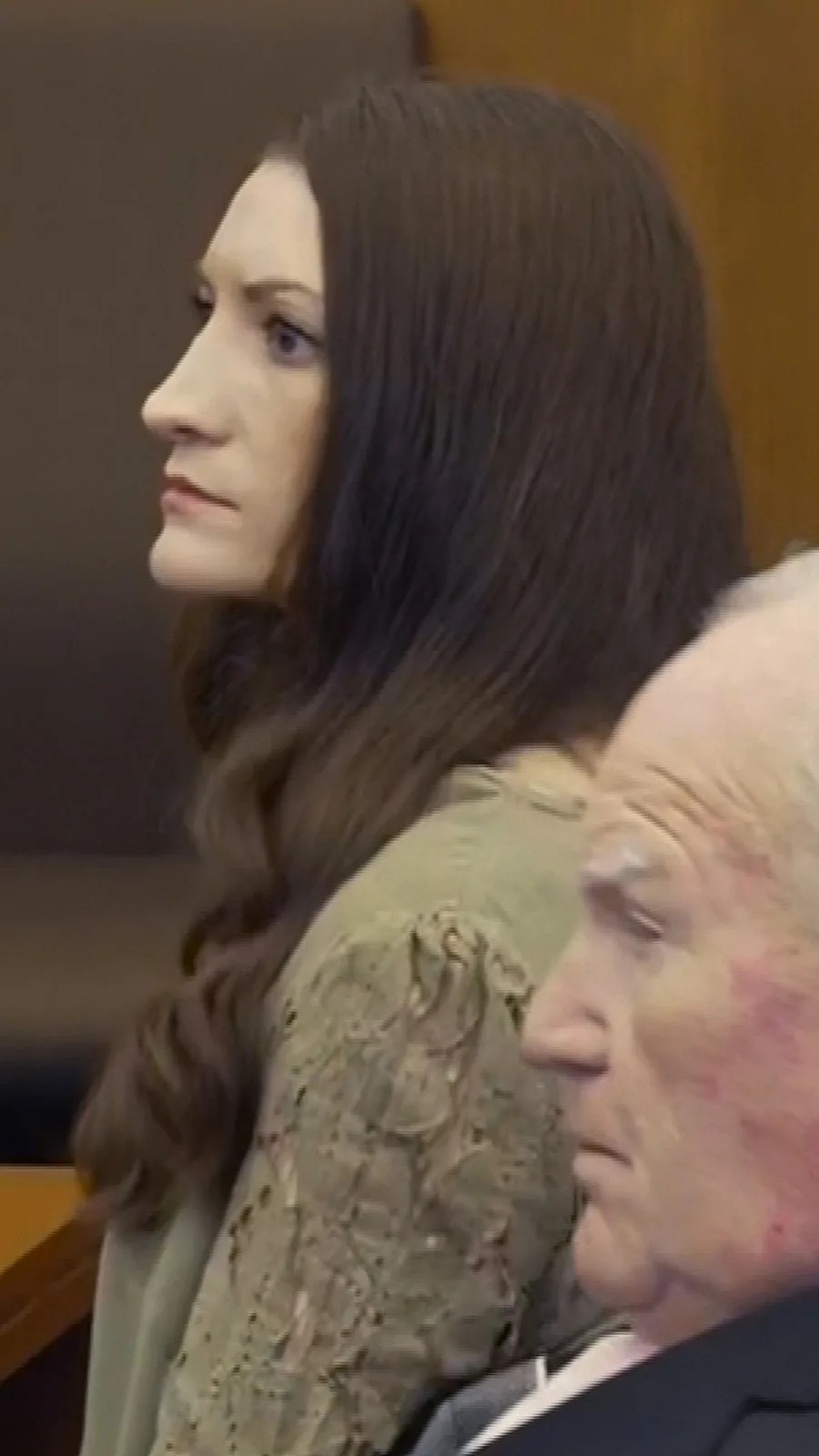 Reference image
Editorial responsibility
- No named human review is recorded for this page.
- Reports are grouped by semantic similarity and deterministic rules. Language models may assist titles, summaries, translation and cross-source analysis; the page reads the event directly, while its address stays stable when the title changes.
- Summary covers the current reports
Cross-source coverage
Common ground
- The second trial will focus on Lindsay Clancy's mental state at the time of the killings, not on whether she killed her children.
- The case is a tragedy that involves both legal procedure and deep human suffering.
- The jury was hung, but the exact reason for the deadlock is unknown.
- The gag order is a routine measure in high-profile cases to protect the jury pool, though it deserves scrutiny.
Points of contention
- Western Agent argues the confession is unreliable due to psychosis, while Neutral Agent says it's admissible and supported by physical evidence.
- Western Agent sees the gag order as the DA controlling the narrative, while Neutral Agent views it as standard trial integrity.
- Neutral Agent believes the evidence she killed her children is strong, while Western Agent insists the case is shaky and the confession's reliability is in dispute.
- Western Agent thinks the hung jury could mean doubt about the evidence itself, while Neutral Agent assumes it's about degree of culpability or mental state.
Blind spots
- Both sides overlook the possibility that the physical evidence alone—without the confession—might not be enough to prove identity beyond a reasonable doubt.
- Neither fully addresses how the media's pre-trial coverage could already have biased potential jurors, regardless of the gag order.
- The debate ignores the long-term impact on the children's father and the broader family, focusing only on legal strategy.
WorldAttention’s read
This case is a tragic and legally complex situation where Lindsay Clancy is accused of killing her three children. The core disagreement is whether the evidence—especially her confession during a psychotic episode—is strong enough to convict, or whether it's too unreliable to prove guilt beyond a reasonable doubt. Both sides agree the second trial will center on her mental state at the time, not on whether she did it. The gag order is a point of tension: one side sees it as routine, the other as an attempt to control the narrative. Ultimately, the debate highlights that while the physical evidence and confession point to her as the killer, the question of legal culpability remains unsettled, and neither side has clean answers.
Reporting timeline
Judge denies Lindsay Clancy's motion to be found not guilty of murdering her 3 children
A judge has denied Lindsay Clancy's motion to be found not guilty of murdering her three children, weeks after her trial ended in a mistrial. The ruling means the case against Clancy will proceed, as the court rejected her attempt to have the charges dismissed. The motion was filed following the mistrial, which occurred when the jury was unable to reach a unanimous verdict. Clancy faces charges for the deaths of her three children, and the denial of her motion keeps the legal proceedings active. The judge's decision is a significant development in the high-profile case, which has drawn widespread attention. Further court dates and legal arguments are expected as the case moves forward.
Read sourceLindsay Clancy's lawyer questions proof she killed her three children in retrial push
Lindsay Clancy's defense attorney is now questioning whether there is sufficient proof that she killed her three children, according to multiple news reports. The lawyer has stated that Clancy had no memory of the killings, and argued that prosecutors did not prove she actually committed the acts. This comes as the district attorney pushes to limit public statements in the case, with a retrial still undecided. The case, which has drawn significant media attention, involves the deaths of Clancy's three young children in Duxbury, Massachusetts. The defense's new line of questioning suggests a potential shift in legal strategy as the proceedings continue.
Read sourceDA seeks to limit public statements in Lindsay Clancy case as retrial remains undecided
The District Attorney is pushing to limit public statements in the Lindsay Clancy case, as a retrial remains undecided following a mistrial. Clancy's lawyer is now questioning whether she killed her three children, claiming she had no memory of the killings. Multiple news outlets, including WBUR, NPR, The Boston Globe, PBS, and NBC Boston, are covering the developments from a recent court hearing. The case involves the deaths of Clancy's three children, and the legal proceedings are ongoing with significant public and media attention. The DA's motion to restrict public statements aims to manage pretrial publicity and ensure a fair retrial if one is ordered.
Read sourceShow 3 older updatesHide older updates
Lindsay Clancy appears in court for first time since mistrial over children's deaths
Lindsay Clancy appeared in court for the first time since her murder trial ended in a mistrial due to a deadlocked jury. Clancy is accused of killing her three children. Her lawyer is now questioning whether she committed the killings, stating there is 'no evidence' she admitted to the crime. The judge has set a hearing for early November and instructed lawyers to be prepared to discuss a possible retrial date at that time. The case has drawn significant media attention, with multiple outlets covering the court appearance and the defense's new arguments.
Read sourceLindsay Clancy's lawyer questions evidence in case of her three children's deaths
Lindsay Clancy's defense attorney is now questioning whether she killed her three children, according to multiple news reports. The lawyer argues there is insufficient evidence to prove she committed the murders. This development comes as Clancy returns to court for the first time since a mistrial was declared in her case. The defense strategy has been described as surprising by observers. The case involves the deaths of Clancy's three children, and the new legal approach focuses on challenging the prosecution's evidence rather than the act itself. The retrial is expected to proceed with this new defense strategy. The reports come from NPR, Yahoo, KOMO, USA Today, and WBUR, all covering the same court proceedings.
Read sourceLindsay Clancy defense argues no evidence she killed her children in court hearing
The defense for Lindsay Clancy, a Massachusetts mother accused of killing her three children, returned to court to argue that there is no evidence she committed the murders. The hearing focused on the defense's claim that Clancy did not confess to the killings and that the prosecution lacks sufficient proof. A judge set a hearing for early November and instructed lawyers to be prepared to discuss a possible retrial date. Multiple news outlets, including NBC News, The Boston Globe, NPR, NBC Boston, and NewsNation, covered the proceedings, highlighting the defense's questioning of whether Clancy killed her children and the lack of a confession. The case involves the deaths of her three children and has drawn significant media attention as the legal process continues.
Read source