Li Bei: China property opportunity upgraded to once-in-20-years; AI capex may peak mid-2025
Banxia Investment founder Li Bei told Tencent Finance that China's real estate sector opportunity has been upgraded from "once in a decade" to "once in 20 years" due to a new completed-home sales policy, which she says will drive 95-98% of developers out of the market. She separately warned that quarterly growth in AI capital expenditure may peak around mid-2025, with a second wave of stock declines expected when spending falls and profits drop.
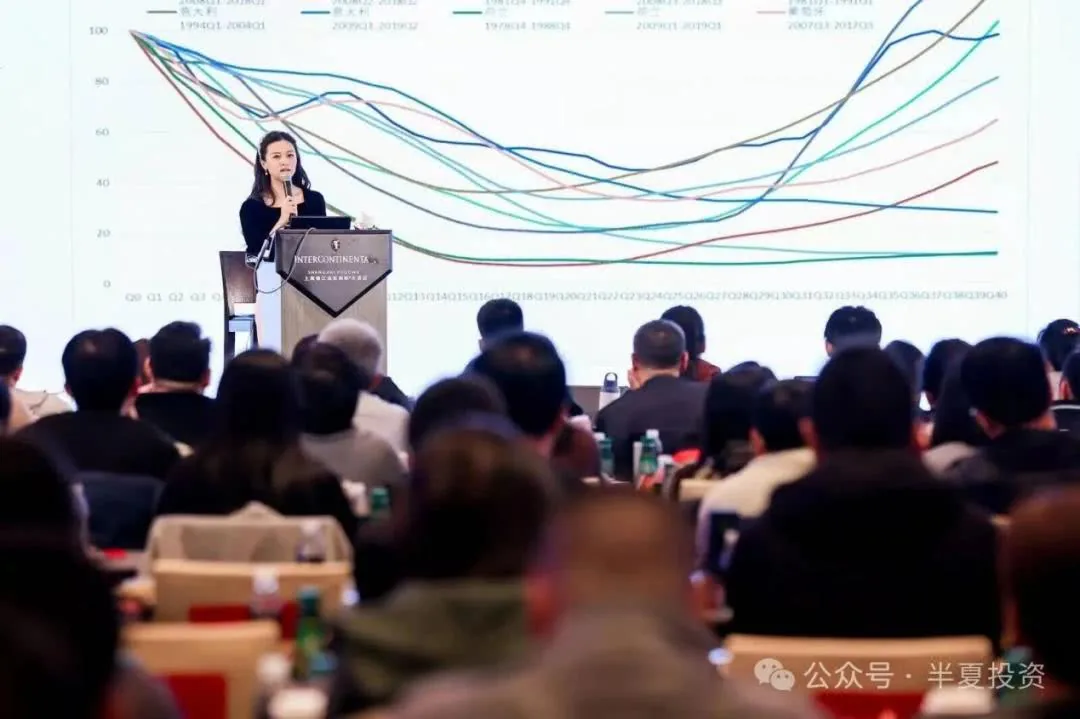 Reference image
Editorial responsibility
- No named human review is recorded for this page.
- Reports are grouped by semantic similarity and deterministic rules. Language models may assist titles, summaries, translation and cross-source analysis; the page reads the event directly, while its address stays stable when the title changes.
- Summary covers the current reports
Cross-source coverage
Reporting timeline
Li Bei: AI capex may peak mid-2025; China property opportunity upgraded to once in 20 years
In an interview with Tencent Finance, Li Bei, founder of半夏投资 (Banxia Investment), argued that China's property sector opportunity has been upgraded from a 'once in a decade' to a 'once in 20 years' event, despite short-term negative impacts from the new home sales policy. She believes the policy will lead to more thorough industry consolidation, with 95-98% of developers exiting, leaving fewer than 10 national players. Li Bei calculates that for top developers, net profit margins could rise 20-30% due to higher prices and lower land costs, offsetting longer capital turnover. Separately, she warned of an AI bubble, predicting that quarterly growth in AI capital expenditure may peak around mid-2025, followed by a second wave of stock declines when profits fall. She sees Chinese consumer stocks as 'extremely undervalued' and expects them to become a 'desert oasis' for global assets once the AI hype fades and US interest rates decline.
Read sourceLi Bei: China Real Estate Opportunity Upgraded to Once-in-20-Years, Warns of AI Bubble Risk
In an interview with Tencent Finance, Li Bei, founder of半夏投资 (Banxia Investment), stated that the opportunity in China's real estate sector has been upgraded from a once-in-a-decade to a once-in-20-years event. She argued that while new real estate policies caused short-term negative impacts on property stock prices, the overall opportunity level has increased, potentially extending the duration and height of the subsequent bull market in real estate stocks. Li Bei predicted that over the next 1-2 years, the industry will undergo more thorough consolidation, with more companies exiting. In the long term, higher entry barriers will widen gaps between firms, benefiting a few top developers with both product and financing advantages, whose stock prices could rise 5-10 times in the coming years. Separately, she warned of risks in the AI sector, forecasting that while overseas AI capital expenditure is still growing, the quarter-on-quarter growth rate may peak by mid-2025. She noted that cloud providers' investment increases were based on assumptions of high linear revenue growth from AI models, but model companies' revenue growth has slowed significantly. The recent adjustment in AI-related stocks reflects valuation contraction rather than immediate earnings downgrades, and a 'second wave' of decline may occur when capital expenditure truly peaks and profits fall.
Read sourceLi Bei: Real estate opportunity upgraded to once in 20 years as AI boom fades
In an interview with Tencent Finance, Li Bei, founder of Banxia Investment, argues that China's real estate sector now presents a 'once-in-20-years' opportunity, upgraded from her previous 'once-in-10-years' assessment. She believes the new policy requiring sales of completed homes (现房销售) will lead to a more thorough industry shakeout, with up to 98% of developers exiting. Surviving top firms with strong product and financing capabilities could see stock prices rise 5-10 times over several years. Li Bei calculates that the policy may increase project capital turnover by only 20-30% while boosting net profit margins by 20-30% due to higher prices and lower land costs. Separately, she warns of an AI bubble, predicting that quarterly growth in AI capital expenditure may peak by mid-2025, followed by a second wave of stock declines when spending actually falls. She expects that as the AI boom recedes and the US economy slows, Chinese consumer and real estate stocks will become 'desert oases' for global assets, with many consumer stocks at historically low valuations offering attractive dividend yields.
Read sourceShow 2 older updatesHide older updates
Li Bei Raises AI Bubble Risk Again, Upgrades China Property Opportunity to Once in 20 Years
In an interview with Tencent Finance, Li Bei, founder of半夏投资 (Banxia Investment), argues that China's real estate sector now presents a 'once-in-20-years' opportunity, upgraded from her previous 'once-in-10-years' assessment. She contends that the new policy requiring sales of completed homes (现房销售) will lead to more thorough industry consolidation, with 95% to 98% of developers exiting the market. Li predicts that surviving top developers with strong product and financing capabilities could see stock price gains of 5 to 10 times over several years, as they benefit from higher prices, lower land costs, and improved net profit margins. Separately, she warns of an AI bubble, forecasting that quarterly growth in AI capital expenditure may peak by mid-2025, followed by a second wave of stock declines when spending actually falls and profits drop. She expects that as the AI hype fades and the US economy slows, Chinese consumer and property stocks—currently at historically low valuations—could become a 'desert oasis' for global assets, with many consumer stocks offering attractive dividend yields and potential for a major rally.
Read sourceLi Bei: Real Estate Opportunity Upgraded to Once-in-20-Years; AI Bubble Risk Persists
In an interview with Tencent Finance, Li Bei, founder of半夏投资 (Banxia Investment), provided a detailed analysis of China's real estate sector and global AI risks. She argued that the new policy promoting presale of completed homes (现房销售) will lead to a more thorough industry shakeout, with up to 98% of developers exiting. This, she claims, upgrades the real estate opportunity from 'once in a decade' to 'once in 20 years,' benefiting a handful of top state-owned developers with strong financing and product capabilities. She forecasts that some of these firms' stock prices could rise 5-10 times over several years. Conversely, Li Bei warned that AI capital expenditure growth is likely to peak in mid-2025, as model revenue growth has already slowed significantly. She described the recent AI stock correction as a valuation adjustment, predicting a 'second wave' of declines when capital spending actually peaks and profits fall. She concluded that as the AI 'fever' subsides and the US economy slows, Chinese consumer and real estate stocks, currently at historically low valuations, could become a 'desert oasis' for global capital.