Lenovo unveils Hybrid Token Factory to slash AI token costs from 10 yuan to 1 yuan
Lenovo China's Strategic Technology Director Huang Shan introduced the Hybrid Token Factory, an integrated system combining cloud, computing, storage, and networking to standardize AI production and reduce token costs from ten yuan to one yuan. Huang argued enterprises' main anxiety is cost calculation, not AI technology itself. The solution targets small and medium enterprises and traditional industries, aligning with China's national AI+ and East-West Computing strategies. Lenovo's consulting team has implemented full-stack AI planning in over a dozen Chinese cities.
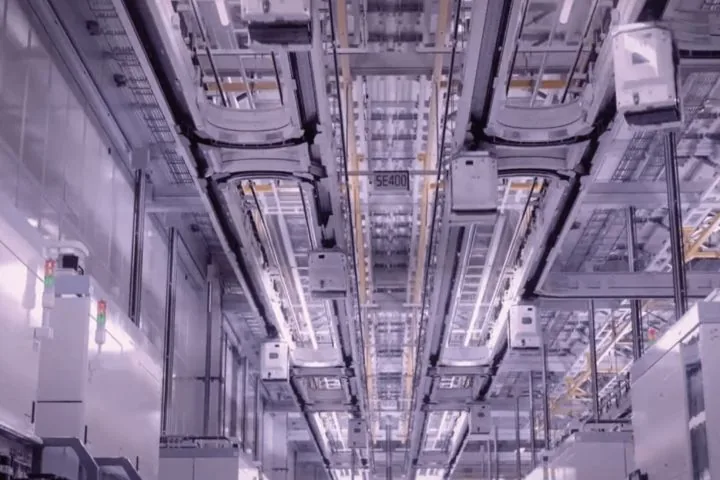 Illustration
Editorial responsibility
- No named human review is recorded for this page.
- Reports are grouped by semantic similarity and deterministic rules. Language models may assist titles, summaries, translation and cross-source analysis; the page reads the event directly, while its address stays stable when the title changes.
- Summary covers the current reports
Cross-source coverage
Reporting timeline
Lenovo's Hybrid Token Factory Aims to Cut AI Token Costs for Enterprise Adoption
This article reports on Lenovo's strategy to reduce the cost of AI token generation and consumption, as articulated by Huang Shan, Strategic Technology Director of Lenovo China's Infrastructure Business Group. Huang argues that enterprises' primary anxiety is not AI technology itself but the inability to calculate and control token costs, especially as agent usage drives token consumption to potentially 1 billion tokens per employee per day. Lenovo's proposed solution is a 'Hybrid Token Factory,' an integrated system combining xCloud smart cloud, intelligent computing centers, heterogeneous computing solutions, servers, storage, and data networking to standardize and bill AI compute like a utility. Huang breaks down token costs into a 'nine-layer tower' of optimization, including compute libraries, communication libraries, memory semantics, inference frameworks, hardware system efficiency (30-40% variation between model-chip combinations), operational layers like model gateway routing and FinOps, and infrastructure choices like liquid cooling. He claims costs can be reduced from ten yuan to one yuan per token. The article also discusses the future impact of 'super nodes' for public inference services, which Huang predicts will see year-over-year doubling growth as inference scenarios adopt them, and the potential for specialized inference chips (TPU, NPU, LPU) in autonomous driving and scientific research. Lenovo's consulting team has implemented full-stack planning in over a dozen Chinese cities, tailoring AI infrastructure to local industries.
Read sourceLenovo's Hybrid Token Factory Aims to Cut AI Costs and Make Compute Accessible
This article reports on Lenovo's strategy to reduce the cost of AI token generation through its 'Hybrid Token Factory' solution, as explained by Lenovo China Infrastructure Business Group Strategic Technology Director Huang Shan. Huang argues that enterprises' primary anxiety is not AI technology itself but the inability to clearly account for token costs, which are exploding due to the 2025 agent boom. He introduces a 'nine-layer' cost structure where compute optimization accounts for one-third to one-half of costs, with potential to reduce token cost from ten yuan to one yuan. The Hybrid Token Factory integrates xCloud, smart computing centers, and Wanquan heterogeneous computing to standardize AI production. Huang forecasts that 'super nodes' will become the new form of public inference services, with explosive growth over the next three years, and notes that inference-specific chips (TPU, NPU, LPU) are a key trend. The article positions Lenovo as a system integrator enabling AI affordability for small and medium enterprises and traditional industries, aligned with China's 'AI+' and 'East Data West Computing' national strategies.
Lenovo executive: Token factories make AI compute as cheap and accessible as water and electricity
In an interview with Huanqiu.com, Huang Shan, Strategic Technology Director of Lenovo's China Infrastructure Business Group, argued that enterprises' real anxiety about AI is not the technology itself but the inability to calculate costs clearly. He introduced Lenovo's hybrid Token factory solution, which integrates cloud platforms, intelligent computing centers, and heterogeneous computing to standardize AI production and make compute power 'as easy to use as water and electricity.' Huang broke down Token cost optimization into a 'nine-layer pagoda,' including seven layers of compute optimization, hardware system efficiency, operations, and infrastructure, claiming costs can drop from 10 yuan to 1 yuan per Token. He predicted that supernodes will become the new form of public inference services, with explosive year-over-year growth starting in 2025, and noted that inference-specific chips like TPU, NPU, and LPU are worth watching. Lenovo's consulting team has implemented full-stack AI planning in over a dozen Chinese cities, tailoring solutions to local industries. Huang emphasized that systematic planning and industry know-how are essential, as AI is not suitable for all scenarios.
Read sourceShow 2 older updatesHide older updates
Lenovo Director Says Token Cost Must Be Cut to Enable AI Adoption Across Industries
In an interview with DoNews, Lenovo China Infrastructure Business Group Strategic Technology Director Huang Shan outlined the company's strategy to reduce token costs and make AI accessible to enterprises. He argued that businesses are not anxious about AI technology itself but about the inability to calculate costs clearly. Huang introduced Lenovo's 'Hybrid Token Factory' solution, which integrates cloud, computing, storage, and networking to standardize AI production. He broke down token cost optimization into a 'nine-layer tower' covering computing, hardware, operations, and infrastructure, claiming costs can be reduced from ten yuan to one yuan per token. Huang noted that chip-model adaptation is a system engineering challenge, with efficiency varying by 30-40% across different combinations. He predicted that 'super nodes' will become the new form of public inference services, with explosive growth expected as inference scenarios adopt them. Huang also highlighted that Lenovo's consulting team has implemented AI plans in over a dozen cities based on local industries. The article frames Lenovo's role as a system integrator enabling the national 'AI+' and 'East-West Computing' strategies.
Lenovo pushes AI accessibility from planning to industry deployment with Token factory concept
Lenovo China's infrastructure strategy director, Huang Shan, argues that enterprises' real anxiety about AI is not the technology itself but the inability to account for Token costs. He introduces the 'Token factory' as a standardized, scalable system for producing intelligence, integrating cloud, computing, storage, and networking. Huang breaks down Token costs into a 'nine-layer tower' of optimization, claiming costs can be reduced from ten yuan to one yuan per Token through efficiency gains in computing, hardware, and operations. He predicts that 'supernodes' will become the new form of public inference services, with annual doubling growth after 2025, driven by scaling laws. Lenovo's consulting team has implemented full-stack AI planning in over a dozen Chinese cities. The article frames Lenovo's role as a system integrator enabling AI affordability under China's 'AI+' and 'East Data West Computing' national strategies.
Read source