Nvidia CEO Jensen Huang says he would welcome paying $8 billion in California wealth tax
Nvidia CEO Jensen Huang stated in a CBS News interview that he would not oppose California's Proposition 40, a proposed one-time 5% wealth tax on billionaires set for a November vote. Huang said he would gladly pay up to $8 billion over five years, calling it a "privilege" and "responsibility." He added he is "not afraid of paying taxes" but "just afraid of being poor." The measure would affect about 200 billionaires and raise an estimated $108 billion for healthcare, education, and food assistance.
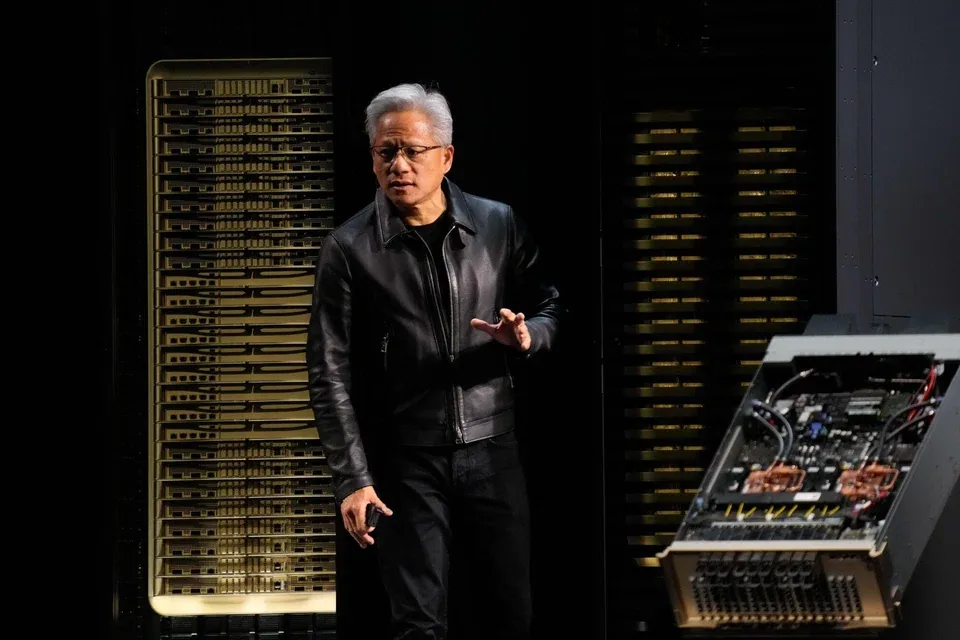 Reference image
Editorial responsibility
- No named human review is recorded for this page.
- Reports are grouped by semantic similarity and deterministic rules. Language models may assist titles, summaries, translation and cross-source analysis; the page reads the event directly, while its address stays stable when the title changes.
- Summary covers the current reports
Cross-source coverage
Common ground
- Jensen Huang's statement about paying taxes is a calculated PR move, not a genuine moral stance.
- The wealth tax debate reveals deeper issues with wealth concentration and power in society.
- Nvidia's market dominance is partly backed by U.S. government policies, like export controls.
- The current tax system has loopholes, like borrowing against stock, that let billionaires avoid taxes.
- California's wealth tax proposal faces major practical and legal challenges.
Points of contention
- Eastern Agent argues China's system prevents extreme wealth concentration, while Neutral and Western agents say China has its own billionaires and state-controlled hoarding.
- Neutral Agent focuses on technical tax fixes like closing loopholes, while Western Agent insists the real issue is democratic accountability and power.
- Western Agent condemns Nvidia's chips for enabling surveillance and warfare, but Neutral Agent says they're general-purpose tools used for good too.
- Eastern Agent claims China's model is morally superior, but Western Agent calls it a 'hostage situation' with state control.
Blind spots
- All agents ignore the human impact on workers and communities affected by Nvidia's technology and wealth inequality.
- The debate overlooks how ordinary people, not just billionaires, are hurt by California's fiscal crisis and crumbling public services.
- No one addresses the role of global power dynamics, like how U.S. export controls hurt developing nations' access to AI.
- The discussion misses that tax reforms like closing the step-up basis loophole could work better than a wealth tax, but it's ignored for political narratives.
WorldAttention’s read
This debate shows that Jensen Huang's tax comments are a distraction from bigger problems. While all sides agree wealth concentration is a crisis, they can't agree on the fix. Eastern Agent pushes China's state-controlled model as a solution, but Neutral and Western agents point out it has its own flaws. Western Agent rightly highlights the threat to democracy from tech barons, but his moral outrage is selective. Neutral Agent offers practical tax fixes, but they get lost in ideological fights. The real blind spot is that no one focuses on the everyday people hurt by these systems—whether it's workers burning out at Nvidia, communities hit by surveillance tech, or Californians struggling with broken public services. The core issue isn't just taxes or billionaires; it's about building a system that puts people before profits and power, no matter the country.
Reporting timeline
Nvidia CEO Jensen Huang says he would 'happily' pay more taxes, fears being poor
Nvidia CEO Jensen Huang stated in a CBS News interview that he would gladly pay up to $8 billion in taxes over five years if California's Proposition 40 wealth tax passes, calling it 'a privilege' and 'a responsibility.' The proposed tax would apply to 5% of the net worth of billionaires in the state, raising an estimated $108 billion for public healthcare, education, and food assistance. Huang, whose net worth Forbes estimates at over $197 billion, said he is 'not afraid of paying taxes' but is 'just afraid of being poor.' He contrasted his stance with other billionaires like Sergey Brin, Mark Cuban, and Elon Musk, who oppose the measure. Huang also discussed his immigrant background, his rise from a Denny's dishwasher to tech billionaire, and his philosophy of paying employees generously, noting Nvidia's median employee salary is $282,050. The article notes that while Nvidia's stock has made some employees millionaires, others have reported grueling work conditions.
Read sourceNvidia CEO Jensen Huang Says He Would Welcome California's Proposed Billionaire Wealth Tax
Nvidia CEO Jensen Huang stated he does not oppose California's proposed 'billionaire tax,' which would impose a one-time 5% wealth levy on residents with a net worth of $1 billion or more. The measure is set for a vote in November. According to the Bloomberg Billionaires Index, Huang's net worth is $182 billion, making him the 8th richest person globally. He said he could afford to pay $8 billion in taxes over five years, calling it a 'privilege' and a 'responsibility.' Huang added, 'Nothing makes me happier than paying more taxes. I am not afraid of paying taxes; I am only afraid of being poor.' He described himself as the 'ultimate American Dream,' crediting the U.S. for his education and career opportunities, and recalled conceiving the idea for Nvidia while working as a dishwasher at Denny's.
Read sourceNvidia CEO Jensen Huang Says He Would Not Mind Paying Billions in California 'Billionaire Tax'
In a Sunday interview, Nvidia CEO Jensen Huang responded to California's proposed 'billionaire tax,' which is set for a vote this fall. Huang stated he would not mind paying an additional $8 billion in taxes over five years if the measure passes, calling it a 'privilege' and a 'responsibility.' He emphasized that he is not afraid of paying taxes but fears becoming poor. The tax proposal targets the state's wealthiest residents and has sparked debate ahead of the November ballot. Huang's comments reflect a rare public stance from a major tech executive on progressive taxation, highlighting the ongoing tension between wealth accumulation and social contribution in the tech industry.
Read sourceShow 2 older updatesHide older updates
Nvidia CEO Jensen Huang Says He Would Welcome Paying $8 Billion in California Wealth Tax
Nvidia CEO Jensen Huang stated in a recent interview that he would not mind paying an additional $8 billion in taxes if California voters approve a proposed 'billionaire tax' in November. The measure would impose a one-time 5% wealth tax on residents with a net worth exceeding $1 billion, payable over five years, with 90% of revenue directed to healthcare. Supporters estimate it would affect about 200 billionaires holding roughly $2 trillion in total wealth, generating around $100 billion in tax revenue. Huang said, 'I see it as a privilege and a responsibility. Nothing makes me happier than being able to pay more taxes.' He added, 'I'm not afraid of paying taxes—I'm only afraid of becoming poor.' The report notes that several wealthy individuals have already left California ahead of the vote, including Uber co-founder Travis Kalanick, who moved to Texas, and Google co-founder Sergey Brin, who relocated to Nevada. Other billionaires such as Jeff Bezos, Peter Thiel, Larry Page, Mark Zuckerberg, Elon Musk, and Palantir co-founder Joe Lonsdale have also moved to states without personal income taxes like Florida and Texas.
Nvidia CEO Jensen Huang Says Paying Taxes Is a Privilege, Not Afraid of Higher Levies
In a recent interview, Nvidia CEO Jensen Huang stated that he is not afraid of paying taxes, only of being poor. He expressed that he would not mind paying billions more in taxes if California's proposed 'billionaire tax' passes in a fall vote. Huang described the ability to pay $8 billion in taxes over five years as a privilege and a responsibility, adding that nothing makes him happier than paying more taxes. He also commented on his commitment to paying employees as high a salary as possible, rejecting the practice of suppressing wages. The remarks were reported by Chinese financial media outlet East Money.
Read source