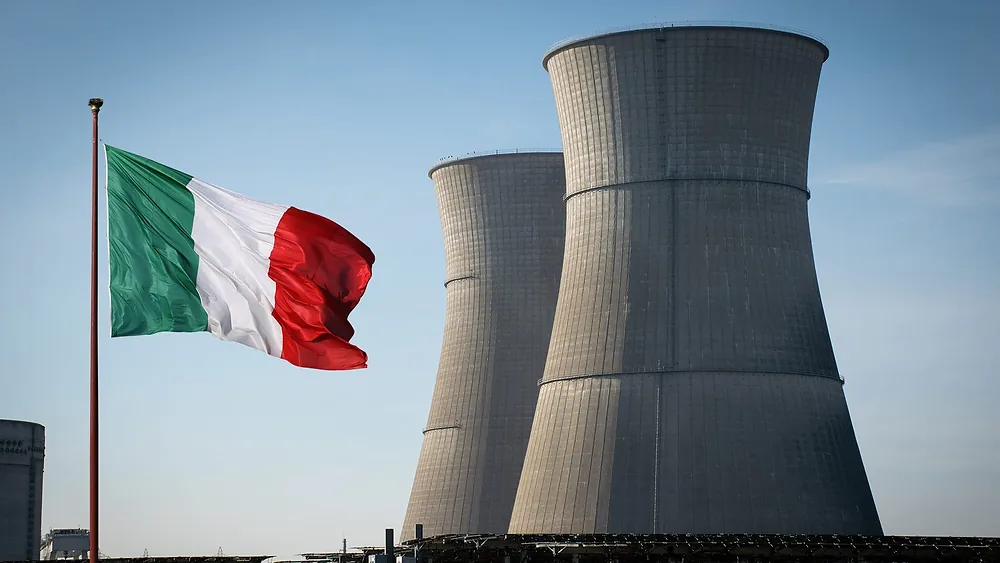
Italian Senate passes bill authorizing nuclear power revival nearly 40 years after ban
The Italian Senate passed a "sustainable nuclear energy" authorization bill on September 23, with 81 votes in favor, 51 against, and 7 abstentions, following approval by the Chamber of Deputies in June. The bill establishes a legal framework for nuclear energy development, including regulations for new reactor construction, decommissioning, and waste management. The government plans to deploy small modular reactors (SMRs) to reduce carbon emissions and energy imports, with Minister Gilberto Pichetto Fratin stating nuclear generation could begin by 2033-2034. The law requires implementing decrees within 12 months.
 Illustration
Editorial responsibility
- No named human review is recorded for this page.
- Reports are grouped by semantic similarity and deterministic rules. Language models may assist titles, summaries, translation and cross-source analysis; the page reads the event directly, while its address stays stable when the title changes.
- Summary covers the current reports
Cross-source coverage
Reporting timeline
Italian Senate Approves Nuclear Power Revival Bill Nearly 40 Years After Referendum Ban
The Italian Senate passed a 'sustainable nuclear energy' authorization bill on Wednesday with 81 votes in favor, 51 against, and 7 abstentions, following approval by the Chamber of Deputies in June. The legislation paves the way for Italy to restart nuclear power generation nearly 40 years after a 1987 referendum, prompted by the Chernobyl disaster, led to the closure of its four reactors. Prime Minister Giorgia Meloni's right-wing government plans to deploy advanced small modular reactors (SMRs) to reduce carbon emissions, enhance energy security, and lower dependence on imported energy, which has made Italy one of Europe's largest nuclear power importers. Energy Minister Gilberto Pichetto Fratin called the vote a historic step toward a secure and competitive energy mix. However, anti-nuclear activists question the safety and timeline of new reactors, while analysts cite high costs—estimating 3-6 billion euros for a 300 MW SMR, excluding infrastructure—and note that no commercially proven SMR projects exist in Europe. A June Demopolis poll showed 51% public support for nuclear revival, though most oppose local construction. The government estimates nuclear could meet 11-22% of energy demand by 2050, saving 17 billion euros in decarbonization costs. The law requires implementing decrees within 12 months covering licensing, safety, waste management, and siting criteria. Center-left opposition parties, including the Five Star Movement, urged prioritizing previously developed or degraded land for any new reactors.
Read sourceItalian Senate Approves Nuclear Power Revival Plan Nearly 40 Years After Referendum
On Wednesday, the Italian Senate passed a 'sustainable nuclear energy' authorization bill with 81 votes in favor, 51 against, and 7 abstentions, following approval by the Chamber of Deputies in June. The bill paves the way for Italy to restart its nuclear power program, nearly 40 years after a 1987 referendum led to the shutdown of its four reactors following the Chernobyl disaster. Prime Minister Giorgia Meloni's right-wing government argues that rising electricity demand, climate goals, and energy security concerns highlighted by the Russia-Ukraine conflict necessitate nuclear power. The government plans to deploy advanced small modular reactors (SMRs) to help decarbonize industry and reduce reliance on energy imports. Energy Minister Gilberto Pichetto Fratin called the vote a historic step toward a secure and competitive Italy. However, anti-nuclear activists cite safety risks and long construction timelines, while analysts question the economic viability of SMRs, noting high costs and a lack of commercially proven projects in Europe. A June 2024 poll showed 51% public support for nuclear, but most oppose local construction. The government estimates nuclear could meet 11% of energy demand by 2050, saving €17 billion in decarbonization costs. The law requires implementing decrees within 12 months covering licensing, safety, waste management, and site selection.
Read sourceItalian Senate passes nuclear authorization bill, paving way for nuclear power restart
On September 23, the Italian Senate passed a 'sustainable nuclear energy' authorization bill, which had already been approved by the Chamber of Deputies in June. The bill authorizes the government to establish a comprehensive legal framework for nuclear energy, including a national sustainable nuclear development plan, regulations for building and operating new nuclear facilities, decommissioning existing plants, and managing radioactive waste and spent fuel. The Italian government stated that developing next-generation nuclear technology aims to diversify the energy mix, reduce dependence on fossil fuels, and enhance energy security. Environment and Energy Security Minister Gilberto Pichetto Fratin said that under current plans, Italy could begin nuclear power generation as early as 2033-2034. Italy was an early adopter of nuclear power in Europe but abandoned it after a 1987 referendum following the Chernobyl disaster. A 2011 referendum after Fukushima again blocked restart attempts. Recent energy security and emissions concerns have revived government interest in new nuclear technology.
Read sourceShow 2 older updatesHide older updates
Italian Senate passes bill authorizing sustainable nuclear energy development framework
On September 23, the Italian Senate passed a 'sustainable nuclear energy' authorization bill, which had already been approved by the Chamber of Deputies in June. The bill authorizes the Italian government to establish a comprehensive legal framework for nuclear energy, including a national sustainable nuclear energy development plan, regulations for the construction and operation of new nuclear facilities, decommissioning of existing plants, and management of radioactive waste and spent fuel. It also mandates improvements in approval, safety oversight, and environmental protection systems. The Italian government stated that developing next-generation nuclear technology aims to diversify the energy mix, reduce dependence on fossil fuels, and enhance energy security. Environment and Energy Security Minister Gilberto Pichetto Fratin said that under current plans, Italy could begin nuclear power generation as early as 2033-2034.
Italian Parliament Passes Nuclear Energy Authorization Bill, Paving Way for Restart of Nuclear Power
On September 23, the Italian Senate passed a 'sustainable nuclear energy' authorization bill, which had already been approved by the Chamber of Deputies in June. The bill authorizes the government to establish a comprehensive legal framework for nuclear energy, including a national sustainable nuclear development plan, regulations for new nuclear facility construction and operation, decommissioning of existing plants, and management of radioactive waste and spent fuel. The Italian government stated that developing next-generation nuclear technology aims to diversify energy sources, reduce dependence on fossil fuels, and enhance energy security. Environment and Energy Security Minister Gilberto Pichetto Fratin indicated that under current plans, Italy could begin nuclear power generation as early as 2033-2034. Italy was an early nuclear power adopter in Europe but halted its program after a 1987 referendum following the Chernobyl disaster. Attempts to restart nuclear power were rejected in a 2011 referendum after the Fukushima accident. Renewed interest in nuclear energy has emerged recently due to energy security and emissions reduction concerns.
Read source