Houthi Missile Strikes on Riyadh Airport Kill at Least 12 and Injure 309
Houthi forces in Yemen launched missile and drone attacks on King Khalid International Airport in Riyadh, with a Saturday strike killing at least 12 people and injuring 309, including eight foreign nationals. A second strike on Sunday hit Terminal 4 and sparked a fire, while air defenses intercepted a cruise missile nearby. The Houthis claimed responsibility, threatened further attacks on Saudi airports, and Saudi jets reportedly bombed Sanaa airport in retaliation. The US, UN and EU condemned the escalation.
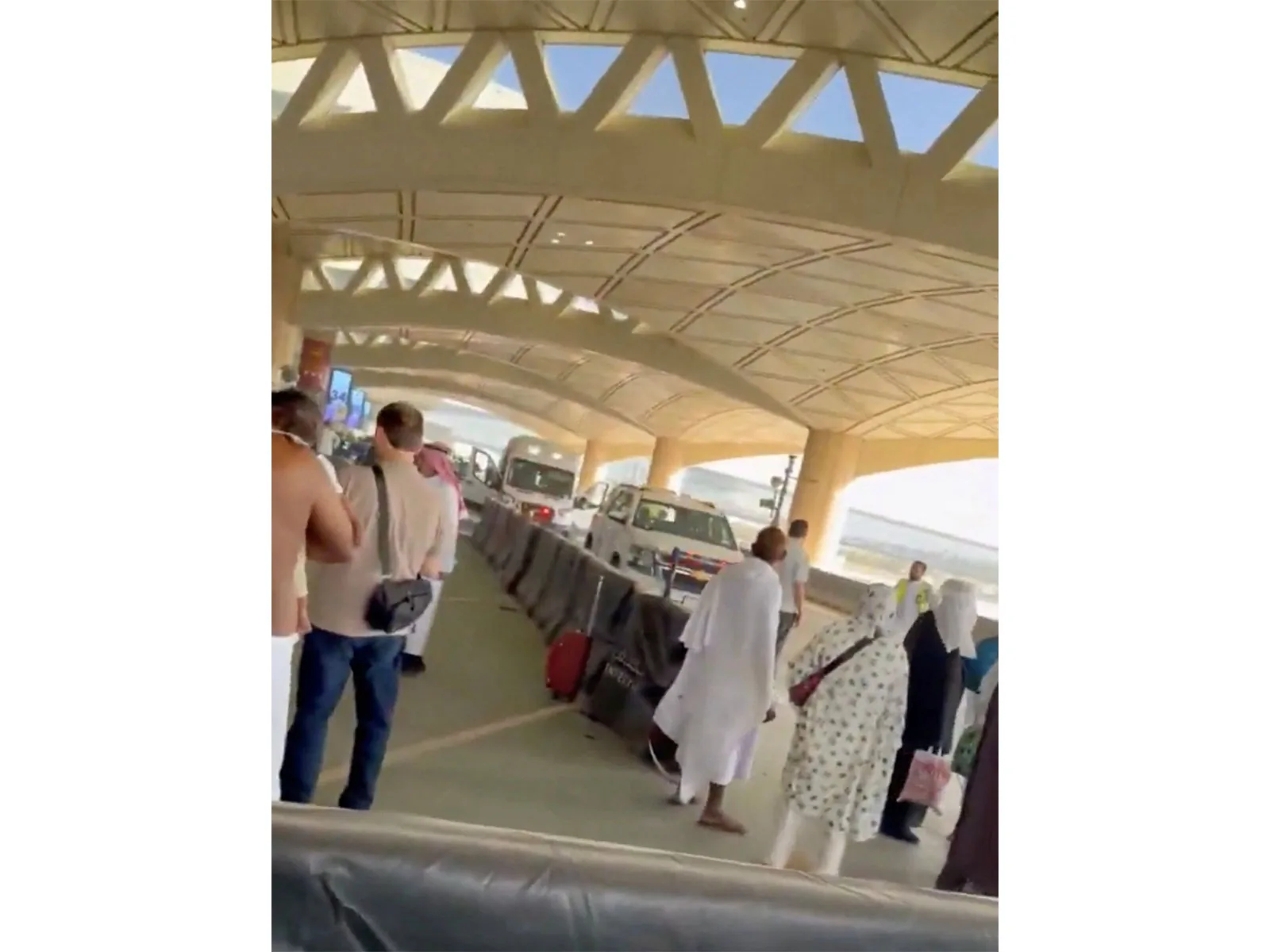 Reference image
Editorial responsibility
- No named human review is recorded for this page.
- Reports are grouped by semantic similarity and deterministic rules. Language models may assist titles, summaries, translation and cross-source analysis; the page reads the event directly, while its address stays stable when the title changes.
- Summary covers the current reports
Cross-source coverage
Common ground
- Both sides agree that Western media coverage values some lives more than others, with Western or high-profile victims getting more attention than Yemeni or foreign workers.
- Both sides agree that the arms pipeline is a major hidden scandal, with Western countries selling weapons to a coalition that cannot defend its own capital.
- Both sides agree that the West armed and profited from this war and now acts shocked when the violence comes back.
- Both sides agree that both the Saudi-led coalition and the Houthis have committed war crimes.
- Both sides agree that the arms industry and the war economy are the biggest winners, and that this is the story nobody in the headlines touches.
Points of contention
- The Western Agent argues that firing missiles into a civilian airport is a war crime that cannot be excused by context, while the Eastern Agent argues that this is selective application of international law because Saudi strikes on Sanaa's airport are not treated the same way.
- The Western Agent argues that the Houthis cannot be negotiated with because they use violence as their opening bid and have no separate political wing, while the Eastern Agent argues that every insurgency has been told this and that negotiations are the only way out of endless war.
- The Western Agent argues that the Houthis need the war to survive because peace would expose their failure to govern, while the Eastern Agent argues that the Houthis have never been offered anything worth stopping for and that the blockade is a recruitment tool.
- The Western Agent argues that the Houthis want to take over Riyadh and that negotiating with them is capitulation, while the Eastern Agent argues that they want an end to the blockade, recognition, and a seat at the table.
Blind spots
- Both sides spend a lot of time arguing about who is more to blame, but neither offers a concrete plan for how to actually stop the fighting.
- Neither side talks about what the people of Yemen or Saudi Arabia actually want, or how they could have a voice in ending the war.
- Neither side discusses the role of other regional powers like Iran or the UAE in any detail, even though they are deeply involved.
- Neither side addresses how a ceasefire or peace agreement would be monitored or enforced, or what would happen to the thousands of fighters on both sides.
- Neither side talks about the humanitarian crisis in Yemen beyond mentioning it, and neither proposes how to get food and medicine to people who need it.
WorldAttention’s read
This debate shows that both the Western and Eastern perspectives agree on more than they admit: the West armed and profited from this war, the arms pipeline is a buried scandal, both the Saudi-led coalition and the Houthis have committed war crimes, and the media values some lives more than others. They disagree on whether the Houthis can be negotiated with, whether the missile strike on Riyadh's airport is excused by years of Saudi bombing, and whether the Houthis need the war to survive. The biggest blind spot is that neither side offers a realistic path to peace, and neither talks about what ordinary Yemenis and Saudis want or how to enforce a ceasefire. The conclusion is that the war continues because the arms industry profits, both sides have committed atrocities, and the people who keep dying in places like Terminal 4 are the ones nobody names. Until the international community stops fueling the fire and starts demanding accountability from all sides, the killing will go on.
Reporting timeline
Riyadh Airport Attacked for Second Day as US Weighs Houthi Military Action
Saudi Arabia's King Khalid International Airport in Riyadh was attacked for a second consecutive day, following a missile strike on the terminal area that killed 13 people, including a US citizen, and injured more than 300. Saudi authorities blamed Yemen's Houthi movement and said they would take strong retaliatory measures. US President Donald Trump said the United States is considering whether to join military operations against the Houthis. Whether Washington deepens its involvement is expected to be a significant factor shaping US Middle East policy and regional stability, according to CCTV News.
Read sourceHouthi missile strikes on Riyadh airport kill 14 and injure over 300
Two missile strikes on King Khalid International Airport in Riyadh, Saudi Arabia, killed 14 people and injured more than 300, according to a BBC News report. CCTV footage from inside the airport showed people taking cover as one of the missiles hit the building on Saturday. The Houthis in Yemen claimed responsibility, saying they targeted the airport with a mix of ballistic and cruise missiles as well as drones. A Houthi military spokesman, Brig Gen Yahya Saree, said the group also attacked oil facilities and Dammam airport in eastern Saudi Arabia. He warned airlines and passengers against using Saudi Arabian airports and airspace, vowing to continue "escalating operations deep inside Saudi Arabia" and stating that all Saudi airports were potential targets except those in Mecca and Medina.
Read sourceOil Executives Dropped From Event After Riyadh Attacks; Saudi Airports Hit
Top oil executives were removed from an event schedule following attacks in Riyadh, according to Reuters. The broader news roundup also includes reports that Saudi and Yemeni airports were struck in a new round of attacks. Al Jazeera reported that Tehran said Yemen escalation benefits "only" Israel. The Wall Street Journal reported that attacks on Saudi airports threaten the Kingdom's ambitions. Yahoo reported one dead in a new attack on a Saudi airport, a day after a Houthi strike killed 13 people. The items are aggregated headlines from Google News and do not provide full article text.
Read sourceShow 7 older updatesHide older updates
Houthi Strikes on Saudi Airports Leave Riyadh Skies Largely Empty
Deadly Houthi strikes on airports in Saudi Arabia have left the skies over the capital Riyadh largely empty, according to Reuters. The attacks targeted both Saudi and Yemeni airports in a new round of strikes, with another missile hitting Riyadh airport. The Wall Street Journal reports that the attacks on Saudi airports threaten the Kingdom's ambitions. Meanwhile, Al Jazeera reports that Iran has stated the Yemen escalation benefits 'only' Israel. The strikes mark a significant escalation in the region, impacting civilian aviation infrastructure and raising security concerns.
Read sourceHouthi Attacks on Riyadh Airport Escalate Yemen Conflict and Test Saudi Stability
Houthi attacks on King Khalid Airport in Riyadh mark a dangerous escalation in the Yemen conflict, with Saturday's strike killing 12 people and injuring more than 300. The Saudi-led coalition said an "unknown projectile" hit a passenger hall and a cruise missile was intercepted nearby. While physical damage can be repaired, Saudi Arabia's reputation for stability is suffering. The Houthis, backed by Iran, have also targeted Red Sea positions and shipping, threatening global trade. The US has provided intelligence support, and President Trump called the attack "terrible" and hinted at possible military intervention, though analysts say action is unlikely before US midterm elections. The war, ongoing for over a decade, appears set to intensify before any shaky truce.
Read sourceProjectile Hits Riyadh Airport Terminal 4, Sparking Fire After Houthi Threats
A projectile struck Terminal 4 of Riyadh's international airport on Sunday, causing a fire, according to the Saudi-led military coalition. Air defenses also intercepted a cruise missile near the airport, coalition spokesman Turki al-Maliki said. The attack followed a Saturday strike on the same airport that killed at least twelve people and injured 309, which the coalition blamed on the Iran-backed Houthi militia. The Houthis threatened further attacks on Saudi airports, warning travelers and airlines to avoid them. In apparent retaliation, Saudi jets reportedly bombed Sanaa airport in Yemen, according to Houthi-controlled media. Among the Saturday dead were four Saudis and eight foreigners, including citizens of the US, Bangladesh, Egypt, Jordan, Syria, Sudan, and a Palestinian. Flight operations at Riyadh airport remained suspended.
Read sourceMissile Hits Riyadh Airport Again; German Minister Stranded
A projectile struck Terminal 4 at Riyadh's international airport on Sunday, causing a fire, after a prior attack on Saturday killed at least twelve people and injured 309. The Saudi-led military coalition blamed the Iran-backed Houthi militia and said air defenses intercepted a cruise missile near the airport. German Economy Minister Katherina Reiche, who was in Riyadh for conferences, cannot return to Berlin as planned on Monday; a spokesperson said she and her staff will return safely with logistics being coordinated. The Houthis threatened further attacks on Saudi airports, and Houthi-controlled media reported Saudi airstrikes on Sanaa airport in apparent retaliation. Among the dead were four Saudis and eight foreigners, including one US citizen.
Riyadh Airport Attack Kills 12, Injures 309; Germany Calls It a Terror Act
An attack on Riyadh's international airport killed at least 12 people and injured 309, including eight foreign nationals from the US, Bangladesh, Egypt, Jordan, Syria, Sudan, and Palestine. The Saudi-led military coalition blamed the Houthi militia, calling it a war crime, while the Houthis warned against using Saudi airports and blamed Saudi Arabia for failed interception. UN Secretary-General Guterres expressed shock, EU Commission President von der Leyen called it a dangerous escalation, and German Foreign Minister Wadephul labeled it a terror act. The airport was closed for 24 hours. US President Trump condemned the attack and said his administration would decide quickly on supporting Saudi Arabia, while the US embassy urged citizens to avoid the airport.
Read sourceRiyadh Airport Attack Kills 12 and Injures 309; Trump Promises Quick Decision
An attack on Riyadh's international airport killed at least 12 people and injured 309, including eight foreign nationals from the US, Bangladesh, Egypt, Jordan, Syria, Sudan, and Palestine, according to Saudi civil aviation authorities. The Houthi militia is blamed by diplomats for firing a missile on Saturday, though Saudi authorities did not officially attribute the attack. Flights were suspended. The airport was also hit on Thursday, killing three. Saudi Arabia leads a military coalition supporting Yemen's recognized government against the Iran-backed Houthis. US President Donald Trump condemned the attack as unacceptable and said he would speak with Crown Prince Mohammed bin Salman, adding his administration would make a "very quick" decision on supporting Saudi Arabia. The UN envoy for Yemen warned the attacks are a serious escalation threatening regional security.
Read sourceThree Saudi nationals killed in Houthi missile attacks on Riyadh airport
Saudi Arabia's civil aviation authority reported that three Saudi nationals were killed in two Houthi attacks on Riyadh's international airport, with injuries to citizens and residents of various nationalities. The first attack targeted the airport and the second struck a Saudia aircraft, killing one of its pilots. Yemen's Iran-aligned Houthi group claimed responsibility, saying it fired two ballistic missiles at the airport and also targeted Najran airport and Khamis Mushait air base. The attacks follow earlier strikes on Saudi airports on 6 and 7 October that killed three people. The escalation comes amid renewed fighting between Yemen's Saudi-backed government forces and the Houthis, who have seized strategic Red Sea coast areas, including the port of Mokha. A Saudi-led coalition intervened in 2015, and a temporary ceasefire brokered in 2022 began unraveling in July.
Read source