Hong Kong HIBOR Rates Surge Across All Tenors, One-Month Rate Hits Two-Month High
Hong Kong dollar interbank offered rates (HIBOR) rose across all tenors on September 24 and 25, with the one-month rate climbing for three consecutive days to 2.99048%, its highest in over two months. The three-month HIBOR reached its highest since November 2023, signaling tightening liquidity in Hong Kong's banking system.
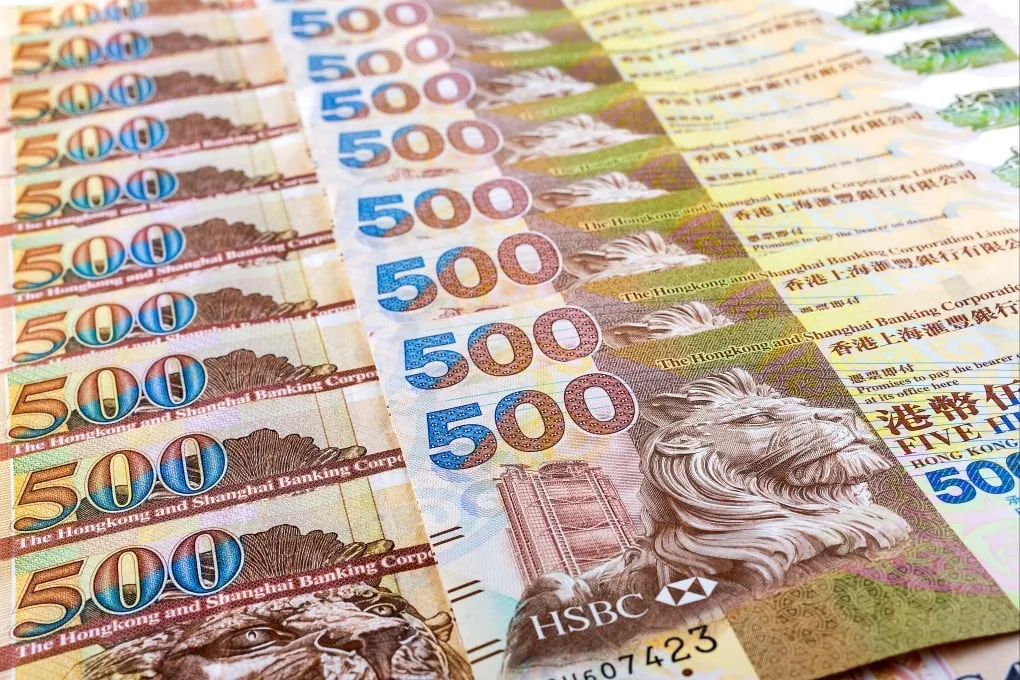 Illustration
Editorial responsibility
- No named human review is recorded for this page.
- Reports are grouped by semantic similarity and deterministic rules. Language models may assist titles, summaries, translation and cross-source analysis; the page reads the event directly, while its address stays stable when the title changes.
- Summary covers the current reports
Cross-source coverage
Common ground
- Both sides agree that the one-month Hibor at 2.99% is not a crisis in itself, but the speed of the rise deserves attention.
- Both acknowledge that the IPO settlement and corporate tax payments are real factors contributing to the Hibor spike.
- Both agree that the data over the next two weeks will determine whether the rise is temporary or a sign of deeper stress.
Points of contention
- The Neutral Agent sees the 70-basis-point one-week spike as a sign of a funding squeeze or liquidity stress, while the Eastern Agent calls it a normal, temporary adjustment.
- The Neutral Agent argues the aggregate balance drop from HKD 450 billion to HKD 120 billion shows a thinning buffer, but the Eastern Agent says it's a deliberate, orderly normalization.
- The Eastern Agent believes PBOC-HKMA coordination and state-owned banks provide a structural safety net, while the Neutral Agent says political will can't override balance sheet math.
Blind spots
- Neither side fully explores the impact of a potential margin call or hidden funding gap that the rapid spike might reveal.
- Both overlook how a prolonged Hibor rise above 3.5% could affect small businesses and non-bank lenders, not just mortgage holders.
- The debate doesn't address the role of global investor sentiment or geopolitical risks in driving capital flows out of Hong Kong.
WorldAttention’s read
This debate boils down to a clash between short-term signals and long-term structure. The Neutral Agent warns that the speed of the Hibor spike—especially the 70-basis-point one-week jump—points to a liquidity squeeze that could signal deeper trouble if it persists. The Eastern Agent counters that this is a temporary blip caused by a perfect storm of IPO settlements, tax payments, and Fed tightening, all absorbed by a resilient system backed by China's financial support. Both agree the next two weeks are key: if the one-month rate drops below 2.8% by mid-October, the Eastern Agent's view wins; if it stays above 2.8%, the Neutral Agent's alarm was justified. The real blind spot is that neither side fully accounts for hidden risks like a potential margin call or the impact on smaller financial players, and the debate sidesteps how global politics might accelerate capital outflows. Ultimately, the system is not in crisis, but the velocity of change is a warning that shouldn't be ignored.
Reporting timeline
Hong Kong Dollar 1-Month HIBOR Rises to Highest Level Since January
According to a report from Cailianshe on September 25, the Hong Kong dollar one-month Hong Kong Interbank Offered Rate (HIBOR) has risen to its highest level since January. This indicates tightening liquidity conditions in Hong Kong's banking system, as the benchmark short-term lending rate between banks climbs. The increase in HIBOR could have implications for borrowing costs in the Hong Kong dollar market, affecting loans, mortgages, and other financial instruments tied to the rate. The report does not provide specific reasons for the rise or further context on market conditions.
Read sourceHong Kong Dollar Interbank Rates Rise Across the Board; One-Month Hibor Hits Two-Month High
On September 25, Hong Kong dollar interbank offered rates (Hibor) rose across all tenors, according to data reported by Zhitong Finance. The one-month Hibor, closely tied to mortgage rates, increased by 3.357 basis points to 2.99048%, marking its third consecutive daily rise and a new two-month high. The three-month Hibor, a key indicator of bank funding costs, rose 2.910 basis points to 3.23339%. Overnight Hibor edged up 1.119 basis points to 2.72786%. One-week Hibor climbed 7.726 basis points to 3.20071%, and two-week Hibor gained 6.553 basis points to 3.07839%. Two-month Hibor increased 4.971 basis points to 3.12060%. On the longer end, six-month Hibor rose 1.423 basis points to 3.51423%, while the one-year Hibor added 3.625 basis points to 3.97988%. The report notes that Hibor has been rising for two consecutive days, with the one-month rate rising for three straight days to reach its highest level in over two months.
Read sourceHong Kong Dollar Hibor Rates Rise Across the Board; One-Month Rate Hits 2.99%, a Two-Month High
On September 25, Hong Kong dollar interbank offered rates (Hibor) rose across all tenors, according to Zhitong Finance. The one-month Hibor, closely tied to mortgage rates, increased by 3.357 basis points to 2.99048%, marking its third consecutive daily rise and a new two-month high. The three-month Hibor, a key gauge of bank funding costs, rose 2.910 basis points to 3.23339%. Overnight Hibor edged up 1.119 basis points to 2.72786%. One-week Hibor surged 7.726 basis points to 3.20071%, while two-week Hibor gained 6.553 basis points to 3.07839%. Two-month Hibor climbed 4.971 basis points to 3.12060%. On the longer end, six-month Hibor increased 1.423 basis points to 3.51423%, and the one-year Hibor rose 3.625 basis points to 3.97988%. The report notes that Hibor rates have been rising for two consecutive days, with the one-month rate climbing for three straight sessions.
Read sourceShow 2 older updatesHide older updates
Hong Kong 3-Month HIBOR Rises to Highest Level Since November 2023
According to a report from Cailianshe on September 24, the Hong Kong dollar 3-month interbank offered rate (HIBOR) has risen to its highest level since November 2023. This increase in the short-term lending rate between banks in Hong Kong reflects tightening liquidity conditions in the city's financial system. The 3-month HIBOR is a key benchmark for Hong Kong dollar loans and is closely watched by market participants as an indicator of funding costs and monetary conditions. The rise to an 11-month high suggests that banks are facing higher costs for short-term funding, which could potentially impact lending rates for businesses and consumers in Hong Kong. The move comes amid broader global monetary policy adjustments and regional financial market dynamics.
Read sourceHong Kong Hibor Rates Rise Across All Tenors; One-Month Rate Hits 2.96%, a Two-Month High
On September 24, Hong Kong dollar interbank offered rates (Hibor) rose across all tenors, according to Zhitongcaijing. The one-month Hibor, closely linked to mortgage rates, increased by 7.120 basis points to 2.95691%, reaching a more than two-month high. The three-month Hibor, reflecting bank funding costs, rose 8.863 basis points to 3.20429%. Overnight Hibor surged 37.334 basis points to 2.71667%. One-week Hibor jumped 70.315 basis points to 3.12345%, while two-week Hibor gained 19.691 basis points to 3.01286%. Two-month Hibor edged up 2.869 basis points to 3.07089%. Among longer tenors, six-month Hibor rose 2.274 basis points to 3.50000%, and the one-year Hibor increased 3.530 basis points to 3.94363%. The broad-based increase signals tightening liquidity in Hong Kong's banking system.
Read source