HKMA to issue AI governance guidelines for banks, stresses human oversight
Hong Kong Monetary Authority Deputy Chief Executive Arthur Yuen announced at the Hong Kong Banker Summit that the HKMA will issue practical application guidelines for banks on AI governance. Yuen emphasized that while AI can execute decisions, human oversight remains crucial, with humans ultimately bearing responsibility. He also addressed tokenization, cybersecurity risks from faster cyberattacks, and noted that the HKMA's generative AI sandbox tested over 40 use cases, half of which have been productized.
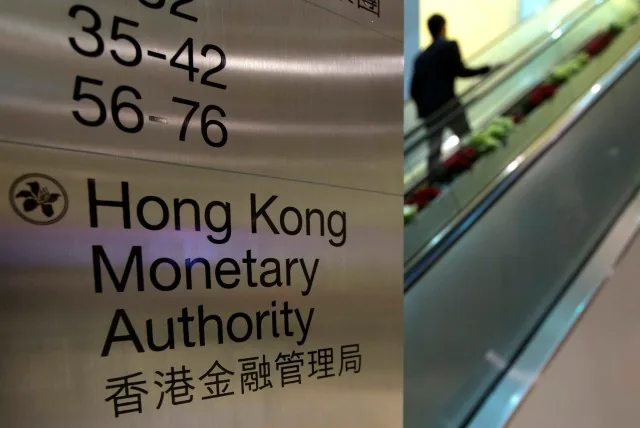 Reference image
Editorial responsibility
- No named human review is recorded for this page.
- Reports are grouped by semantic similarity and deterministic rules. Language models may assist titles, summaries, translation and cross-source analysis; the page reads the event directly, while its address stays stable when the title changes.
- Summary covers the current reports
Cross-source coverage
Common ground
- Both agree that Hong Kong's AI governance model has real institutional mechanisms like the Privacy Commissioner and judicial review under the Basic Law.
- Both acknowledge that legal frameworks on paper don't always translate into justice for ordinary people, like garment workers or taxi drivers.
- Both recognize that the Western financial system has caused significant harm, including the 2008 crisis and exploitation of the Global South.
- Both agree that Hong Kong's approach is better than the systems in London, New York, or Gulf monarchies in terms of accountability.
Points of contention
- Eastern Agent sees the sandbox's 20 rejected use cases as proof of regulator accountability, while Regional Agent views it as a controlled rollout without public input.
- Eastern Agent argues that Hong Kong's legal recourse mechanisms are effective in practice, while Regional Agent insists they are often inaccessible to ordinary people due to bureaucracy and costs.
- Eastern Agent frames the debate as East versus West, focusing on breaking Western monopoly, while Regional Agent argues that local power structures in Hong Kong also need scrutiny.
- Regional Agent demands proof of overturned AI credit denials for ordinary people, while Eastern Agent says no system allows individual challenges to every AI decision.
Blind spots
- Neither side fully addresses how trade secrets or proprietary algorithms might block ordinary people from challenging AI decisions in practice.
- Both overlook the potential for AI systems to disproportionately harm marginalized groups within Hong Kong, like migrant workers or low-income residents.
- The debate ignores the role of international standards or third-party audits that could bridge the gap between legal frameworks and real-world justice.
WorldAttention’s read
After five rounds of debate, both agents agree that Hong Kong's AI governance model has stronger institutional safeguards than Western or Gulf systems, but they clash on whether those safeguards actually protect ordinary people. Eastern Agent argues that the sandbox, Privacy Commissioner, and Basic Law create real accountability, while Regional Agent insists that legal rights on paper don't help a taxi driver or garment worker challenge an AI credit denial in practice. The key blind spots are how trade secrets block transparency, how marginalized groups may be left out, and whether independent audits could improve fairness. Ultimately, Hong Kong's model is a step forward in a multipolar world, but it still needs to ensure that power is shared with the people it affects, not just shifted from one elite to another.
Reporting timeline
Hong Kong Monetary Authority to Issue AI Governance Guidance for Banks, Deputy Chief Says
Hong Kong Monetary Authority (HKMA) Deputy Chief Executive Arthur Yuen stated at the Hong Kong Bankers Summit that the authority will release practical application guidelines to help banks translate data excellence principles into concrete actions regarding artificial intelligence. Yuen noted that AI is no longer merely an assistant but can execute decisions and actions, raising concerns about how banks can effectively govern AI, enhance technical resilience, ensure system evolution alongside increasing complexity, build trustworthy tokenization frameworks, and guarantee data quality. He emphasized that despite AI's capabilities, human oversight remains crucial, with humans ultimately making decisions and bearing responsibility. Regarding tokenization, Yuen highlighted opportunities for programmable value transfer but stressed that trust cannot be sacrificed, requiring all blockchain transactions to be accurate and authorized. He also stated that frontier AI models have not fundamentally changed cyber risk management, though standards must adapt to faster and larger-scale attacks. The HKMA launched a generative AI sandbox years ago, testing over 40 use cases, half of which have been productized.
Read sourceHong Kong Monetary Authority to Issue AI Governance Guidance for Banks, Deputy Chief Says
Hong Kong Monetary Authority (HKMA) Deputy Chief Executive Arthur Yuen, speaking at the Hong Kong Banker Summit, announced that the HKMA will publish practical application guidelines to help banks translate data excellence principles into concrete actions. Yuen emphasized that while AI can provide decision-making options and execute some processes, human oversight remains essential, with humans ultimately responsible for decisions and accountability. He noted that tokenization creates opportunities for programmable value transfer and changes how financial services are delivered, but warned that trust cannot be sacrificed, requiring all blockchain transactions to be accurate and authorized. Yuen stated that frontier AI models have not fundamentally changed the landscape of cyber risk management, though standards must be adjusted to address faster and larger-scale cyberattacks. He urged banks to strengthen cybersecurity controls and assess third-party service providers' risk management measures. Yuen also mentioned that the HKMA launched a generative AI sandbox several years ago, testing over 40 use cases, half of which have been productized.
Read sourceHKMA Deputy Chief Warns on AI Governance, Plans to Issue Practical Guidelines for Banks
In a speech at the Hong Kong Banker Summit, Hong Kong Monetary Authority (HKMA) Deputy Chief Executive Arthur Yuen addressed the evolving role of artificial intelligence in banking, stating that AI is now capable of not only assisting but also executing decisions and actions. He expressed concern over how banks can effectively govern AI, enhance technical resilience, and ensure the banking system evolves with increasing complexity. Yuen emphasized that while AI can provide decision-making solutions and automate processes, human oversight remains crucial, with humans ultimately responsible for decisions. He also discussed tokenization, noting it creates opportunities for programmable value transfer but must not compromise trust; all blockchain transactions must be accurate and authorized. Yuen stated that frontier AI models have not fundamentally changed cyber risk management, but standards must be adjusted for faster and larger-scale cyberattacks. He revealed that HKMA will issue practical application guidelines to help banks translate data excellence principles into concrete actions. Additionally, HKMA's generative AI sandbox, launched years ago, has tested over 40 use cases, half of which have been productized.
Show 2 older updatesHide older updates
Hong Kong Monetary Authority to Issue AI Governance Guidelines for Banks, Official Says
Hong Kong Monetary Authority (HKMA) Deputy Chief Executive Arthur Yuen stated at the Hong Kong Banker Summit that the authority is focused on how banks can effectively govern artificial intelligence (AI), enhance technical resilience, and ensure the banking system evolves with increasingly complex environments. Yuen noted that AI is no longer just an assistant in decision-making and actions but can execute tasks. He emphasized that not every application scenario needs automation or autonomy, and human oversight remains crucial, with humans ultimately making decisions and bearing responsibility. The HKMA will release practical application guidelines to help banks translate data excellence principles into concrete actions. Regarding tokenization, Yuen highlighted opportunities for banks but stressed that trust cannot be sacrificed, and all blockchain transactions must be accurate and authorized. He also stated that frontier AI models have not fundamentally changed cyber risk management, but standards must be adjusted to address faster and larger-scale cyberattacks. The HKMA previously launched a generative AI sandbox, testing over 40 use cases, half of which have been productized.
Read sourceHong Kong Monetary Authority to Issue AI Governance Guidelines for Banks, Official Says
Hong Kong Monetary Authority (HKMA) Deputy Chief Executive Arthur Yuen stated at the Hong Kong Banker Summit that AI is no longer just an assistant in decision-making and actions but can execute tasks. He expressed concern about how banks can effectively govern AI, enhance technical resilience to keep pace with an increasingly complex environment, build a trustworthy tokenization framework, and ensure data quality. Yuen announced that HKMA will release practical application guidelines to help banks translate data excellence principles into concrete actions. He emphasized that while AI can provide decision-making solutions and execute some processes, not every application scenario needs automation or autonomy, and human oversight remains crucial, with humans ultimately making decisions and bearing responsibility. Regarding tokenization, Yuen noted it creates opportunities for banks by making value transfer programmable, but stressed that trust cannot be sacrificed, and all blockchain transactions must be authentic, accurate, and authorized. He also stated that frontier AI models have not fundamentally changed cyber risk management, but standards need adjustment to address faster and larger-scale cyberattacks. HKMA has been guiding the industry on these risks and expects banks to strengthen cybersecurity controls and assess third-party service risks. HKMA's generative AI sandbox launched years ago has tested over 40 use cases, half of which have been productized.