HHS Diverts $12 Million from Minority Health Office for Kennedy Security Costs
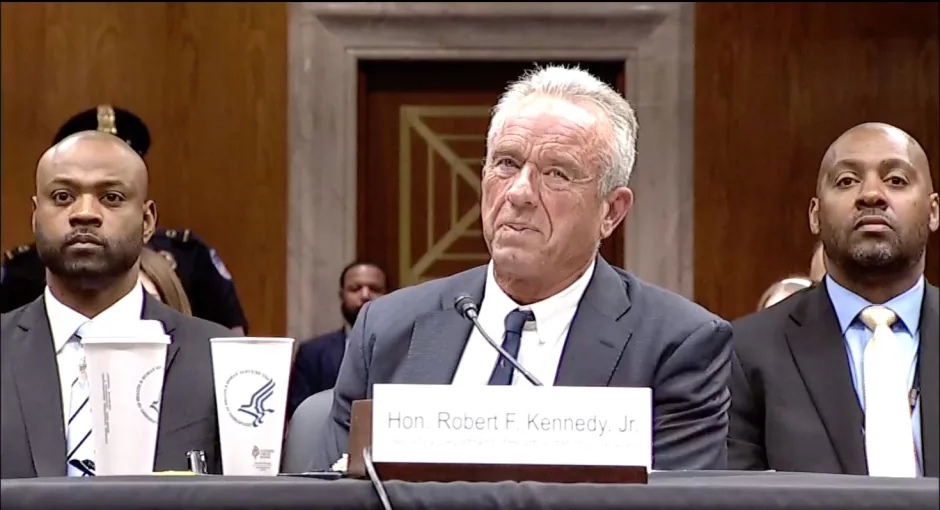
The U.S. Department of Health and Human Services redirected approximately $12 million from the Office of Minority Health to cover rising security costs for Secretary Robert F. Kennedy Jr., according to a Wall Street Journal report. HHS informed Congress earlier this year of the transfer. Kennedy's security expenses rose from $10 million in fiscal year 2025 to $17 million in fiscal year 2026. HHS spokeswoman Emily Hilliard said the cuts reflect departmental priorities, not the secretary's security needs, citing threats and extensive travel.
 Illustration
Editorial responsibility
- No named human review is recorded for this page.
- Reports are grouped by semantic similarity and deterministic rules. Language models may assist titles, summaries, translation and cross-source analysis; the page reads the event directly, while its address stays stable when the title changes.
- Summary covers the current reports
Cross-source coverage
Common ground
- The $12 million cut to the Office of Minority Health is a disproportionate and harmful hit to a program that serves vulnerable communities.
- The $5 million surplus beyond the $7 million security shortfall suggests either sloppy budgeting or deliberate overreach, not pure necessity.
- Congress underfunding the Marshals Service and minority health programs is a long-standing bipartisan failure that creates these ugly trade-offs.
- The administration had other options within a $1.7 trillion budget but chose the path of least political resistance, targeting a politically weak program.
Points of contention
- Neutral Agent argues the transfer is largely a bureaucratic artifact driven by legal requirements and congressional dysfunction, while Western Agent insists it's a deliberate moral choice to prioritize the Secretary's security over minority health.
- Western Agent sees the 70% security increase as a luxury upgrade, while Neutral Agent views it as a necessary response to a genuine threat assessment given RFK Jr.'s family history.
- Neutral Agent shifts blame to Congress for underfunding security, while Western Agent holds the administration accountable for choosing which account to raid.
Blind spots
- Both sides overlook that the Office of Minority Health's discretionary funding structure makes it an easy target—Congress could give it mandatory status to prevent future raids.
- The debate doesn't fully explore whether the threat assessment justifying the 70% security increase is accurate or inflated.
- Neither side examines the possibility that the extra $5 million cut could be a routine budgeting error rather than a deliberate attack.
WorldAttention’s read
This debate boils down to a clash between structural inevitability and moral choice. The $12 million cut from minority health to fund RFK Jr.'s security detail is a bad outcome for vulnerable communities, and the extra $5 million beyond the $7 million shortfall is indefensible. While Congress's chronic underfunding of both the Marshals Service and minority health programs sets the stage, the administration made a specific, avoidable decision to raid a politically weak account. The people who signed the transfer order had other options—consulting contracts, travel budgets, or other discretionary funds—but chose the path of least resistance. This isn't just a bureaucratic artifact; it's a hierarchy of values made clear. The real fix requires Congress to properly fund security and protect minority health programs with mandatory funding, but that doesn't excuse the administration's choice to prioritize one man's comfort zone over a Black mother in Mississippi.
Reporting timeline
RFK Jr. Diverted $12 Million from Minority Health Office for Personal Security
Health and Human Services Secretary Robert F. Kennedy Jr. redirected $12 million from the Office of Minority Health, originally created by President Ronald Reagan to address higher Black infant mortality rates, to fund his personal security detail, according to a Wall Street Journal report. HHS informed Congress earlier this year that the funds would cover Kennedy's security costs, which rose from $10 million in 2025 to $17 million in 2026. In response, HHS spokeswoman Emily Hilliard stated that the cuts reflect departmental priorities and programmatic assessments, not the secretary's security needs, adding that Kennedy faces a significantly different security environment than previous HHS secretaries due to threats, extensive travel, and nationwide duties. Kennedy initially requested protection from the U.S. Marshals Service rather than the Office of the Inspector General, and stopped speaking at outdoor events after a man rushed at him last year.
RFK Jr. Diverted $12 Million from Minority Health Office for Personal Security
Health and Human Services Secretary Robert F. Kennedy Jr. redirected $12 million from the Office of Minority Health, originally created by President Ronald Reagan to address higher Black infant mortality rates, to fund his personal security detail, according to a Wall Street Journal report. HHS informed Congress earlier this year that the funds would cover Kennedy's security costs, which rose from $10 million in 2025 to $17 million in 2026. In response, HHS spokeswoman Emily Hilliard stated that the cuts 'reflect HHS priorities and programmatic assessments—not the Secretary’s security needs,' adding that Kennedy faces a unique security environment due to threats and extensive travel. Kennedy had requested protection from the U.S. Marshals Service instead of the Office of the Inspector General, and stopped speaking at outdoor events after a man rushed at him last year.
Read sourceRFK Jr. Diverted $12 Million from Minority Health Office for Personal Security
Health and Human Services Secretary Robert F. Kennedy Jr. redirected $12 million from the Office of Minority Health, a program created by President Ronald Reagan to address higher Black infant mortality rates, to fund his personal security detail, according to a Wall Street Journal report. HHS informed Congress earlier this year that the funds would cover Kennedy's security costs, which rose from $10 million in 2025 to $17 million in 2026. In response, HHS spokeswoman Emily Hilliard stated that the cuts 'reflect HHS priorities and programmatic assessments—not the Secretary’s security needs,' but added that Kennedy faces a 'security environment that differs significantly from that of previous HHS secretaries' due to threats, extensive travel, and the need for protection. Kennedy initially requested protection from the U.S. Marshals Service rather than the Office of the Inspector General, and stopped speaking at outdoor events after a man rushed at him last year.
Show 2 older updatesHide older updates
HHS Moves $12 Million from Minority Health Office to Cover Kennedy Security Costs
The Department of Health and Human Services (HHS) informed congressional appropriators earlier this year that it was reallocating approximately $12 million from the Office of Minority Health to help cover the rising costs of security for Health Secretary Robert F. Kennedy Jr. The funding transfer, reported by the Wall Street Journal, highlights the ballooning security expenses associated with the high-profile cabinet member. The move redirects resources from a program focused on minority health initiatives to address the security needs of the Secretary, a development that may raise questions among lawmakers about budget priorities within the department.
HHS Diverts $12 Million from Minority Health Office for Secretary Kennedy's Security
According to sources and a document reviewed by media, the U.S. Department of Health and Human Services (HHS) informed Congress earlier this year of plans to reallocate approximately $12 million from its Office of Minority Health to cover rising security costs for Secretary Robert F. Kennedy Jr. Multiple sources note that Kennedy, a prominent figure in the Trump administration whose father and uncle were assassinated in the 1960s, has seen his security expenses increase from about $10 million in fiscal year 2025 to $17 million in fiscal year 2026. Sources indicate the Secretary's office had discretionary funds available to cover the expense, but due to across-the-board budget cuts, HHS opted to cut $12 million from the minority health office rather than the $7 million increase in security costs alone.