Guangdong Mingzhu fined and warned over delayed mine shutdown disclosure
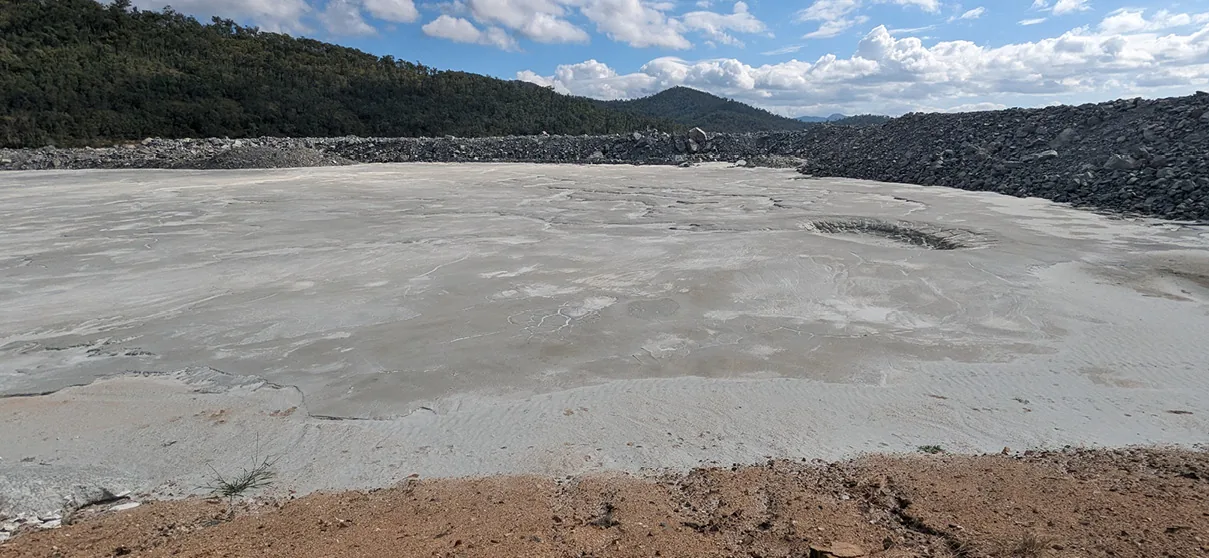
On September 21, 2026, Guangdong Mingzhu Investment Co., Ltd. announced it received a warning from the Guangdong Securities Regulatory Bureau for delaying disclosure of a July 15 production halt at its subsidiary Mingzhu Mining, after a safety inspection found the Jiaoyuan Nangou tailings pond dam exceeded design height by 1 meter. The subsidiary and two executives were fined a total of 171,000 yuan. The tailings pond resumed operations on September 21 after passing a government review. The company warned the shutdown will materially impact Q3 2026 cash flow and operating profit.
 Illustration
Editorial responsibility
- No named human review is recorded for this page.
- Reports are grouped by semantic similarity and deterministic rules. Language models may assist titles, summaries, translation and cross-source analysis; the page reads the event directly, while its address stays stable when the title changes.
- Summary covers the current reports
Cross-source coverage
Common ground
- Both sides agree the tailings pond safety issue was handled reasonably quickly, with the production halt being the real punishment rather than the fine.
- Both acknowledge the delayed disclosure of the safety violation was a genuine regulatory slip, with three weeks being too long to report material information.
- Both agree the company's stock recovered from the initial August dip, suggesting the market has already priced in some optimism.
Points of contention
- The Eastern Agent argues the 5.37 million tonnes of additional reserves will likely be approved due to China's strategic support for domestic iron ore, while the Neutral Agent says there's no guarantee and the company's own disclosure warns of significant uncertainty.
- The Eastern Agent sees the delayed disclosure as a minor slip in an otherwise functional system, while the Neutral Agent views it as a breach of fiduciary duty that would trigger harsher penalties in mature markets.
- The Eastern Agent believes the Dading mine is strategically important for national resource security, while the Neutral Agent argues it's too small (0.5% of consumption) to warrant special regulatory treatment.
Blind spots
- Both sides overlook the possibility that the company's management quality itself is a risk factor, separate from regulatory or strategic considerations.
- Neither side fully addresses how the company's declining profits and operational disruption might affect its ability to invest in new reserves or maintain infrastructure.
- The debate ignores the broader market context, such as global iron ore prices and competition from overseas suppliers like Australia and Brazil.
WorldAttention’s read
This debate boils down to a fundamental disagreement about how China's regulatory and strategic systems work. The Eastern Agent sees the Dading mine as a strategic asset that will receive government support to ensure continued operation, viewing the regulatory process as collaborative and predictable. The Neutral Agent sees a company with 18 months of permitted reserves, declining profits, and an uncertain path to expansion, arguing that the stock is a speculative bet on political favor rather than a sound investment. Both sides agree the tailings pond issue was handled efficiently and the delayed disclosure was a genuine slip, but they diverge sharply on whether the 5.37 million tonnes of additional reserves will be approved. The Eastern Agent's case relies on faith in China's resource security framework, while the Neutral Agent's case relies on basic financial arithmetic and the company's own risk disclosures. Ultimately, the stock's future hinges on a single regulatory decision with no clear timeline, making it a high-risk bet rather than a stable investment.
Reporting timeline
Guangdong Mingzhu Receives Regulatory Warning, Tailings Pond Resumes Operations
On September 21, 2026, Guangdong Mingzhu Investment Co., Ltd. announced it had received an Administrative Regulatory Measures Decision from the Guangdong Securities Regulatory Bureau due to delayed disclosure of a production halt at its subsidiary, Mingzhu Mining. The subsidiary had been ordered to stop tailings discharge at the Jiaoyuan Nangou tailings pond from July 15, 2026, after a safety inspection found the dam height exceeded design specifications. The company and its chairman Huang Bingdi and board secretary Zhang Mei were issued warning letters. Separately, Mingzhu Mining and its executives were fined a total of 171,000 yuan for the safety violations. On September 21, the tailings pond resumed operations after passing a government review. The company warned that the Q3 2026 halt would materially and adversely affect cash flow and operating profit. Additionally, the company noted that its Dading iron mine, the largest open-pit mine in South China, will exhaust its currently permitted surface mining reserves by Q1 2027, and uncertainty over approval for additional reserves could significantly impact 2027 revenue. As of December 15, 2025, the mining license held 746.56 million tonnes of iron ore resources, with 536.74 million tonnes outside the current design scope.
Read sourceGuangdong Mingzhu Subsidiary Mingzhu Mining Resumes Production, Receives Penalty Notice
Guangdong Mingzhu (600382.SH) announced that its wholly-owned subsidiary, Guangdong Mingzhu Group Mining Co., Ltd. (Mingzhu Mining), received an Administrative Penalty Decision from the Heyuan City Emergency Management Bureau. The penalty was issued because the Jiaoyuan Nangou tailings pond's total dam height exceeded the design height by 1 meter. Mingzhu Mining was given a warning and fined a total of 94,000 yuan. Additionally, the company's principal responsible person, Zhu Haitao, and deputy general manager, Xiao Yuquan, received warnings and fines of 62,000 yuan and 15,000 yuan, respectively. Mingzhu Mining and the relevant individuals have fully paid the fines as required. As of the announcement date, the tailings pond has resumed tailings discharge and iron concentrate production, and the company's main business production and operations have returned to normal. During the suspension of tailings discharge, the company's iron concentrate production and sales volume in the third quarter of 2026 decreased, which is expected to have a significant adverse impact on the company's overall cash flow and operating profit for that quarter.
Read sourceGuangdong Pearl Resumes Tailings Discharge and Iron Concentrate Production at Mingzhu Mining
Guangdong Pearl (600382) announced on September 21 that its wholly-owned subsidiary, Mingzhu Mining, has resumed tailings discharge and iron concentrate production at the Jiaoyuan South Tailing Pond. The resumption followed a September 20 on-site review by the Heyuan City Emergency Management Bureau, which confirmed that all rectification items had been completed. The bureau had previously imposed fines totaling 9.4 yuan on Mingzhu Mining for safety violations, along with individual fines of 62,000 yuan on principal responsible person Zhu Haitao and 15,000 yuan on deputy general manager Xiao Yuquan. All fines have been paid in full. The company stated that its main business production and operations have returned to normal. However, the suspension period during the third quarter of 2026 reduced iron concentrate output and sales, and the company expects a significant adverse impact on its overall cash flow and operating profit for that quarter.
Read sourceShow 2 older updatesHide older updates
Guangdong Pearl River Receives Regulatory Notice, Mine Tailings Pond Resumes Operations
Guangdong Pearl River Investment Co., Ltd. announced on September 21 that it received an Administrative Regulatory Measures Decision Letter from the Guangdong Securities Regulatory Bureau due to delayed disclosure of a subsidiary's production suspension. The company's wholly-owned subsidiary, Guangdong Pearl River Group Mining Co., Ltd. (Mingzhu Mining), was ordered to stop tailings discharge at its Jiaoyuan Nangou tailings pond on July 15, 2026, after a safety inspection found the dam height exceeded design specifications by one meter. The company only disclosed this information on August 5, 2026, violating disclosure rules. Company chairperson Huang Bingdi and board secretary Zhang Mei were held responsible. On September 20, the Heyuan Emergency Management Bureau confirmed all rectifications were completed, and tailings discharge resumed on September 21. Mingzhu Mining was fined 94,000 yuan, and two executives were fined a total of 77,000 yuan. The company warned that the suspension will materially and adversely affect third-quarter 2026 cash flow and operating profit. Additionally, the company noted that its Dading open-pit mine's remaining design-life reserves of 2.098 million tonnes are expected to be exhausted by the first quarter of 2027, and approval for additional reserves remains uncertain, which could significantly impact 2027 revenue.
Read sourceGuangdong Mingzhu Receives Regulatory Warning Over Delayed Disclosure of Mine Shutdown
On September 21, 2026, Guangdong Mingzhu announced it received an Administrative Regulatory Measure Decision Letter from the Guangdong Securities Regulatory Bureau. The letter cited the company's delayed disclosure of a production halt at its subsidiary, Mingzhu Mining, which received a stop-production order on July 15, 2026, due to a tailings pond dam height violation. The company only disclosed this on August 5, 2026. The regulator issued a warning letter and held the chairman and board secretary responsible. The subsidiary was fined 94,000 yuan, and two executives were fined a total of 77,000 yuan. The tailings pond resumed operations on September 21 after passing a safety review. The company warned that the shutdown will materially and negatively impact Q3 2026 cash flow and operating profit. Additionally, the company noted that uncertainty over the approval of mining rights for the Dading mine could significantly affect 2027 revenue. In the first half of 2026, Guangdong Mingzhu reported total revenue of 406 million yuan, up 8.61% year-on-year, but net profit fell 11.03% to 103 million yuan.
Read source