Global Quadruped Robot Shipments Surge 92.5% in H1 2026, Industrial Revenue Outpaces Consumer Sales
Global quadruped robot shipments exceeded 49,000 units in H1 2026, up 92.5% year-on-year, with market size surpassing $400 million. Industrial applications generated over two-thirds of revenue despite accounting for less than 40% of shipments, while consumer and education segments contributed 60% of shipments but less than one-third of revenue. Unitree led overall market share at 37%, while Zhiyuan Kuto and Deep Robotics led industrial segments.
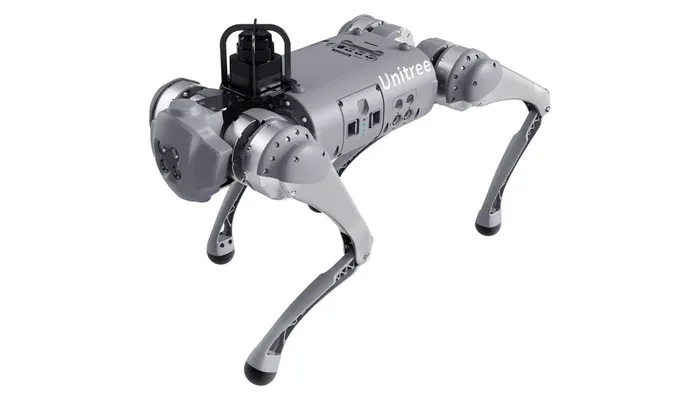 Reference image
Editorial responsibility
- No named human review is recorded for this page.
- Reports are grouped by semantic similarity and deterministic rules. Language models may assist titles, summaries, translation and cross-source analysis; the page reads the event directly, while its address stays stable when the title changes.
- Summary covers the current reports
Cross-source coverage
Common ground
- Both sides agree that industrial inspection and security patrols are the main drivers of growth, not military applications.
- Both acknowledge that Chinese companies like Unitree, Deep Robotics, and Zhiyuan Kuto are leading in shipment volume and deployment scale.
- Both agree that the talent pipeline from university labs using these robots is a real long-term advantage.
Points of contention
- Neutral Agent argues that shipment volume is misleading and that industrial revenue growth is the true measure of market strength, while Eastern Agent sees volume as strategic market penetration and ecosystem building.
- Neutral Agent claims that Western companies like ANYbotics and Boston Dynamics have a trust and reliability advantage from years of field data, while Eastern Agent argues that Chinese companies' larger deployment scale gives them a data and iteration advantage.
- Eastern Agent views the market as a unified Chinese-led ecosystem, while Neutral Agent insists it is bifurcated into low-margin consumer and high-value industrial segments with different competitive dynamics.
Blind spots
- Both sides overlook the possibility that the consumer and industrial segments may converge faster than expected, with shared technology blurring the lines between them.
- Neither side fully addresses how regulatory differences between regions (e.g., safety certifications in the West vs. China) could shape competitive advantages.
- The debate ignores the role of software and AI algorithms as the true differentiator, focusing mostly on hardware and deployment numbers.
WorldAttention’s read
The quadruped robot market is growing fast, with Chinese companies leading in shipment volume and deployment scale, especially in industrial inspection. However, the real profit center is in high-value industrial applications, where reliability and software maturity matter more than unit sales. Western firms like ANYbotics and Boston Dynamics have an edge in trust and field-proven reliability, but Chinese companies are closing the gap through massive real-world data collection and ecosystem building. The talent pipeline from university labs gives Chinese firms a future advantage, but the hype cycle will ultimately favor those who can deliver dependable, long-term solutions—whether from the East or West. Investors should focus on industrial revenue growth and software capabilities, not just shipment numbers or national origin.
Reporting timeline
Global Quadruped Robot Shipments Surge in H1 2026, Industry Applications Drive Growth, Forecast to Top 90,000 Units
According to reports from Counterpoint Research and IDC, global quadruped robot shipments accelerated in the first half of 2026. Counterpoint Research reported shipments of nearly 35,000 units, with 40% from industrial applications. IDC data showed over 49,000 units shipped, a 92.5% year-on-year increase, with a market size exceeding $400 million. Unitree Technology led overall market share at 37%, followed by Zhiyuan Kuto at 16.3% and Zhishen Technology at 12.6%. However, revenue distribution was skewed: education and consumer segments contributed 60% of shipments but less than one-third of revenue, while industrial applications generated over two-thirds of revenue from under 40% of shipments. In the industrial segment, Zhiyuan Kuto, Deep Robotics, and Zhishen Technology led with shares of 27.8%, 26%, and 18.9% respectively. IDC reported the industrial market size exceeded $270 million, up 125.1% year-on-year, with deployments up 260.5%. Counterpoint Research forecasts full-year 2026 global shipments will exceed 90,000 units for the first time, with industrial revenue continuing to outpace entertainment and education segments.
Read sourceGlobal quadruped robot shipments near 35,000 in H1 2026; industry applications drive growth shift
According to Counterpoint Research data released on September 21, global quadruped robot shipments reached nearly 35,000 units in the first half of 2026, with 40% coming from industry applications. Unitree Technology led overall market share at 37%, primarily driven by entertainment and education sectors. However, in the industry application segment, Zhiyuan Kuto ranked first with 27.8% market share, followed by Deep Robotics at 26% and Zhishen Technology at 18.9%. Counterpoint forecasts full-year 2026 global shipments will exceed 90,000 units for the first time, with B-end industry applications contributing higher revenue than entertainment and education. The report notes that competition is shifting from hardware performance to vertical solution delivery and AI capabilities, including perception-control models and VLA (vision-language-action) models for autonomous decision-making in complex environments such as industrial inspection, security patrol, and fire emergency response.
Read sourceIDC: Global Quadruped Robot Shipments Surpass 49,000 in H1 2026, Up 92.5% Year-on-Year
According to IDC data reported by Zhitong Finance, the global quadruped robot market shipped over 49,000 units in the first half of 2026, a 92.5% year-on-year increase, with a market size exceeding $400 million. A key structural trend is that consumer and educational research segments account for 60% of shipments but less than one-third of revenue, while industrial and government applications, with under 40% of shipments, generate over two-thirds of revenue. The industrial application market grew 194.2% to $76.75 million. Chinese firms like Unitree, DEEP Robotics, and AGIBOT are expanding across consumer and industrial markets, while Western firms like ANYbotics and Boston Dynamics focus on specialized professional scenarios. IDC analyst Li Junlan notes that the commercialization path is becoming clearer, with industrial applications deepening into inspection, security, and complex operations. The report advises firms to choose between a cost-and-ecosystem strategy for consumer markets or a scenario-and-solution strategy for industrial markets, warning against resource dilution.
Read sourceShow 2 older updatesHide older updates
Global Quadruped Robot Shipments Reach 35,000 in First Half of 2026, Driven by Vertical Industry Demand
According to a report from research firm Counterpoint cited by People's Financial News on September 21, global quadruped robot shipments reached nearly 35,000 units in the first half of 2026, with 40% used in industry applications. The surge in demand across various vertical industries is expected to continue driving growth in the quadruped robot sector. Counterpoint forecasts that global shipments will exceed 90,000 units for the full year 2026, with annual revenue reaching $1.5 billion. The report identifies Unitree as the leader in the entertainment and education robotics segment, while Zhiyuan Kuku and Deep Robotics rank first and second respectively in industry applications. Looking ahead, Counterpoint predicts the global quadruped robot market will surpass $10 billion by 2030, with a compound annual growth rate exceeding 60%, and industrial inspection and security patrol applications accounting for approximately 60% of the market.
Read sourceIDC: Global Quadruped Robot Shipments Top 49,000 in H1 2026, Up 92.5% Year-on-Year
According to IDC data reported by Zhitong Finance and Stockstar, global quadruped robot shipments exceeded 49,000 units in the first half of 2026, a 92.5% year-on-year increase, with market size surpassing $400 million. The market shows a structural divergence: education, research, and home consumption account for about 60% of shipments but less than one-third of revenue, while government, industrial manufacturing, and public utility applications generate over two-thirds of revenue with less than 40% of shipments. Industry applications are the core growth engine, with market size exceeding $270 million (up 125.1%) and deployments growing 260.5%. Chinese firms like Unitree, DEEP Robotics, AGIBOT, and Micbot lead in consumer and research markets, while ANYbotics and Boston Dynamics focus on specialized professional scenarios. The report forecasts the market will evolve from single-machine inspection to complex operations, with data and embodied intelligence becoming new competitive barriers. IDC recommends distinct strategies for consumer/research markets (cost reduction and ecosystem) versus industry markets (scenario understanding and delivery capability).
Read source