AI demand drives MLCC spot prices up to tenfold, creating market divergence
Multilayer ceramic capacitor (MLCC) prices surged up to tenfold in spot markets, driven by AI computing demand that shifted production from consumer to high-end models. Overseas leaders Murata, Taiyo Yuden, and Samsung Electro-Mechanics raised prices 15-35% for AI server MLCCs. By early July, consumer-grade prices corrected sharply, while high-capacity AI server and automotive MLCCs remain in short supply. Analysts predict the supply gap for high-end MLCCs will persist from Q4 2026 to H1 2027.
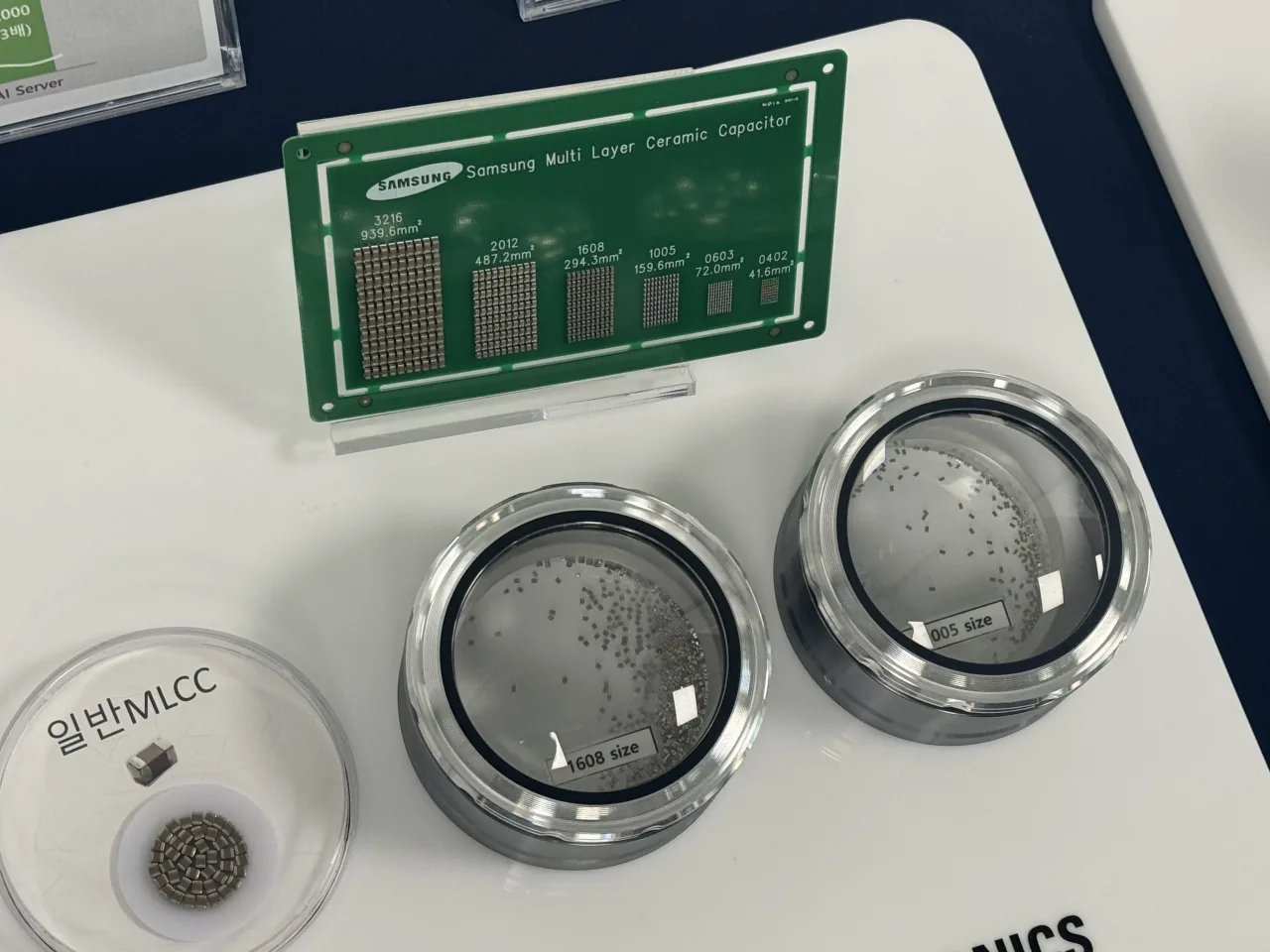 Reference image
Editorial responsibility
- No named human review is recorded for this page.
- Reports are grouped by semantic similarity and deterministic rules. Language models may assist titles, summaries, translation and cross-source analysis; the page reads the event directly, while its address stays stable when the title changes.
- Summary covers the current reports
Cross-source coverage
Reporting timeline
MLCC Prices Surge Up to Tenfold on AI Demand, Creating Market Divergence Between Consumer and High-Capacity Models
Multilayer Ceramic Capacitors (MLCCs), essential components in electronics, are experiencing extreme price divergence driven by AI demand. Spot market prices for high-capacity MLCCs used in AI servers have surged up to tenfold, with prices changing hourly. This surge, ignited by overseas leaders like Japan and South Korea raising prices 15-35%, has led to stockpiling and speculation in Shenzhen's Huaqiangbei market. However, by early July, consumer-grade MLCC prices pulled back after a sharp rise due to weak downstream demand. Analysts attribute the core driver to a structural supply-demand imbalance from AI server, AI workstation, and high-speed optical module upgrades. A single AI workstation requires 2-3 times more MLCCs, and a 1.6T optical module needs 500-1,000 units. Domestic manufacturers are accelerating capacity expansion to fill gaps left by overseas leaders prioritizing AI specs, with some orders booked through Q2 2027. Institutional forecasts suggest the supply gap for high-end MLCCs will persist from Q4 2026 to H1 2027, with full balance unlikely in 2027.
Read sourceMLCC Prices Surge Up to Tenfold in Spot Market, AI Server Demand Drives Rally
A price surge in multilayer ceramic capacitors (MLCCs), initially triggered by overseas leaders like Murata, Taiyo Yuden, and Samsung Electro-Mechanics, has seen dramatic fluctuations in the Shenzhen Huaqiangbei spot market. In June, the spot market experienced 'one price per hour' conditions, with some popular models increasing 7-8 times in a month and spot prices reaching 2-10 times original levels. By early July, consumer MLCC prices corrected significantly. Merchant Chen Zhixiao cited the common 0603-104 model, which rose from 5 yuan per 1,000 pieces in Q2 to 30 yuan at the June peak, then fell to 10 yuan. The market is now split: ordinary consumer MLCCs have normalized, while high-capacity MLCCs for AI servers and automotive applications remain in short supply and rising. AI workstation upgrades increase MLCC consumption 2-3 times per device, and high-speed optical module orders have doubled year-on-year. Some domestic manufacturers' AI high-end orders are booked through Q2 2027, with lead times extending from 6-8 weeks to 16 weeks.
Read sourceMLCC Prices Surge Up to Tenfold as AI Demand Drives Market Volatility
Multilayer Ceramic Capacitors (MLCCs), essential components in electronics from smartphones to AI servers, have experienced extreme price volatility. Driven by surging AI computing demand, overseas manufacturers shifted production capacity from consumer-grade to high-end AI products, triggering supply fears. By June, spot prices for some popular models surged 7-8 times in one month, reaching 2-10 times original levels. However, by early July, prices reversed as channel distributors offloaded inventory amid weak consumer electronics demand. Merchant Chen Zhixiao cited the common 0603-104 capacitor, which rose from 5 yuan per thousand units in Q2 to 30 yuan at its late June peak, before falling back to 10 yuan. The market shows a hot-cold dichotomy between AI-driven high-capacity models and standard consumer-grade products.
Show 2 older updatesHide older updates
AI Demand Drives MLCC Shortages and Price Hikes Through 2027, Analysts Say
According to East Money's industry research, the MLCC (multilayer ceramic capacitor) market is experiencing a strong upcycle driven by AI demand, leading to severe shortages and price surges for high-capacity models used in AI servers and automotive applications. CCTV Finance reports that while ordinary consumer-grade products have pulled back after an initial surge, high-capacity MLCC spot prices have skyrocketed several-fold. Major manufacturers are intensifying actions: Yageo adjusted prices on July 1, Samsung Electro-Mechanics announced a 30% uniform price hike from August 1 with further increases planned for Q4, Taiyo Yuden began raising prices on September 1, and Murata notified customers it will discontinue certain MLCC specifications in fiscal 2026 to free capacity for AI servers. Samsung Electro-Mechanics signed a long-term supply agreement worth over 5.2 billion RMB for AI server MLCCs with order visibility through end-2027. China Galaxy Securities believes this MLCC upcycle, catalyzed by AI, has strong sustainability. Several concept stocks including Fenghua Advanced Technology and Boqian New Materials are expected to see net profit growth exceeding 170% year-on-year, according to consensus forecasts from multiple institutions.
Read sourceMLCC Prices Surge Up to Tenfold as AI Demand Drives Structural Supply Imbalance
The article reports a dramatic price surge in the multilayer ceramic capacitor (MLCC) market, driven by AI computing power demand. Overseas leaders like Murata, Taiyo Yuden, and Samsung Electro-Mechanics issued price increases of 15-35% for high-capacity AI server MLCCs. In the Shenzhen Huaqiangbei spot market, prices fluctuated wildly, with some models increasing 7-8 times in a month and spot prices reaching 2-10 times original levels. By early July, consumer-grade MLCC prices corrected sharply after a surge, while high-capacity AI server and automotive-grade MLCCs remain in short supply. Analyst Hu Yang notes the industry is shifting from consumer electronics to AI computing and new energy vehicles. Domestic manufacturers have orders scheduled into 2027 and are expanding production, but the agency predicts the supply gap for high-end MLCCs will continue from Q4 2026 to H1 2027, with only marginal relief after new capacity in H2 2027.
Read source