AI Investment Shifts from Parameter Competition to Commercial Deployment at Hangzhou Expo
At the 5th Global Digital Trade Expo in Hangzhou, a white paper by Zhejiang University Holding Group stated that AI competition is shifting from "parameter competition" to "commercial deployment," with model adaptability and low cost becoming core enterprise demands. Embodied intelligence is identified as the primary investment focus, with capital moving from complete machines to "brains and components." Experts noted that AI infrastructure investment is forward-looking, but industry penetration remains uneven.
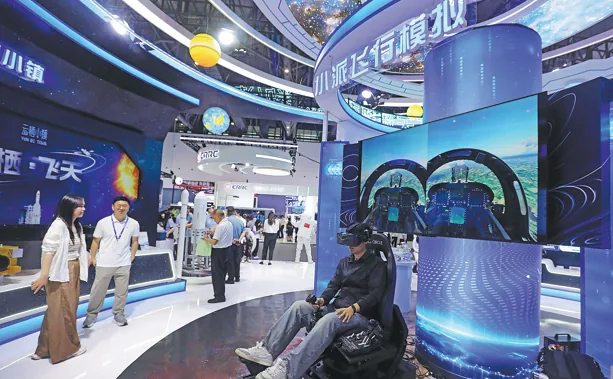 Reference image
Editorial responsibility
- No named human review is recorded for this page.
- Reports are grouped by semantic similarity and deterministic rules. Language models may assist titles, summaries, translation and cross-source analysis; the page reads the event directly, while its address stays stable when the title changes.
- Summary covers the current reports
Cross-source coverage
Reporting timeline
AI Investment Logic Shifts from Parameter Competition to Commercial Deployment at Global Digital Trade Expo
At the 5th Global Digital Trade Expo in Hangzhou, the 'Digital Trade Venture Capital Day' event highlighted a systemic shift in AI investment logic. A white paper released by Zhejiang University Holding Group stated that AI competition is moving from 'parameter competition' to 'commercial deployment,' with model adaptability and low cost becoming core enterprise demands. The report identified embodied intelligence as the primary investment focus, with capital moving from whole-machine investments to 'brains and components.' Yu Feipeng, general manager of Zhejiang University Holding Group, noted that while AI infrastructure investment is inherently超前 (forward-looking), high spending does not necessarily mean business models are invalid, though industry penetration remains uneven. He compared the current AI wave to the fourth industrial revolution, where China aims to lead. Other speakers, including venture capitalists and former Xiaomi partner Wang Xiang, emphasized that Physical AI requires real-world data for training, with muscle electrical signal parsing being a promising path. In healthcare, AI-assisted diagnosis is expected to become routine with medical insurance coverage, though challenges remain in data silos and model generalization across different hospital equipment.
AI Investment Logic Shifts from Parameter Competition to Commercial Deployment, White Paper Says
At the fifth Global Digital Trade Expo in Hangzhou, the 'Digital Trade Venture Capital Day' event featured the release of a white paper by Zhejiang University Holding Group titled 'China AI Technology New Consumption Industry and Investment Trends White Paper (2026).' The white paper argues that AI competition is shifting from 'parameter competition' to 'commercial deployment,' with model adaptability and low cost becoming core enterprise demands. It identifies embodied intelligence as the primary investment focus, with capital moving from 'investing in complete machines' to 'investing in brains and components.' Yu Feipeng, General Manager of Zhejiang University Holding Group, noted that while AI infrastructure investment is inherently超前 (forward-looking), high spending does not necessarily mean the business model is invalid, though AI penetration across industries remains uneven. He compared the current AI wave to the fourth industrial revolution, suggesting China may achieve parallel or leading development. Other speakers, including Cao Guoxiong of Puhua Group and Wang Xiang of Gaoshan Xinyu, discussed the need for real-world data to train Physical AI systems and the potential for AI agents to restructure manufacturing. Liang Xiao of Zhejiang University School of Medicine reported that an AI diagnostic system for liver cancer achieved over 95% detection rate for lesions larger than 1 cm and 93.46% accuracy in malignancy assessment across more than 10,000 cases, predicting that AI-assisted diagnosis and insurance reimbursement will become routine.
Read sourceAI Investment Logic Shifts from Parameters to Deployment at Digital Trade Expo
The fifth Global Digital Trade Expo, held in Hangzhou from September 23-27, featured a revamped 'Digital Trade Investment Day' connecting 100 venture capital firms, 100 professional investors, and 100 tech projects in AI, hard tech, healthcare, and biotech. A white paper released by Zhejiang University Holding Group highlights a systemic shift in AI investment logic: competition is moving from model parameters to real-world deployment, with model adaptability and low cost becoming core demands. The report identifies tech-driven consumption as a key scenario for AI scaling, embodied intelligence as the top funding priority, and overseas expansion requiring integrated capabilities in product definition, model iteration, compliance, and localization. Experts noted that AI infrastructure investment is inherently超前 (forward-looking) and high spending does not necessarily invalidate business models, though uneven industry penetration and bubble concerns persist. In healthcare, AI-assisted diagnosis and insurance payment are expected to become routine, with multi-modal medical AI models covering full life-cycle health management. Physical AI, still in validation stage, is seen as a transformative force that could reconfigure manufacturing workflows, with robots initially deployed in hazardous environments and service roles. Data scarcity for physical-world AI training remains a key challenge, with electromyographic signal parsing proposed as a potential breakthrough.
Show 2 older updatesHide older updates
AI Investment Logic Shifts from Parameter Competition to Commercial Deployment, Report Says
At the 5th Global Digital Trade Expo in Hangzhou, the 'Digital Trade Venture Capital Day' event highlighted a systemic shift in AI investment logic. A white paper released by Zhejiang University Holding Group stated that AI competition is moving from 'parameter competition' to 'commercial deployment,' with model adaptability and low cost becoming core enterprise demands. The report identified tech-driven new consumption as a key scenario for AI scale deployment, and noted that embodied intelligence has become the primary fundraising track, with capital moving from 'whole machine' to 'brain and components.' Experts including Yu Feipeng of Zhejiang University Holding Group and Cao Guoxiong of Puhua Group discussed AI's potential as the fourth industrial revolution, the need for real-world data for Physical AI training, and the reconstruction of manufacturing processes by AI agents. In healthcare, AI-assisted diagnosis and insurance payment are expected to become routine, with a multi-center study showing over 95% detection rate for liver lesions larger than 1 cm using an AI model developed by Sir Run Run Shaw Hospital.
Read sourceAI Investment Logic Shifts from Parameters to Deployment at Digital Trade Expo
At the 5th Global Digital Trade Expo in Hangzhou, industry leaders discussed the accelerating commercialization of AI. A white paper by Zhejiang University Holding Group noted that AI competition is shifting from 'parameter competition' to 'deployment competition,' with model adaptability and low cost becoming core enterprise demands. Investment logic is systematically moving earlier, with capital flowing from complete machines to 'brains and components' in embodied AI. Yu Feipeng, general manager of Zhejiang University Holding Group, observed that while AI infrastructure investment is inherently超前 (forward-looking), high spending does not necessarily mean the business model is invalid, though AI penetration across industries remains uneven. Physical AI is still in the validation stage, with real-world data scarcity a key challenge. In healthcare, AI-assisted diagnosis and insurance payment are expected to become routine, with multi-center trials showing over 95% detection rate for liver lesions larger than 1 cm. The article also highlights that China, largely absent from previous industrial revolutions, now aims to lead in the AI-driven fourth industrial revolution.
Read source