GAC Group to acquire FAW Toyota stake; FAW becomes second-largest shareholder
On September 14, 2026, GAC Group announced a plan to issue new A-shares to acquire a partial stake in FAW Toyota Motor Co., Ltd. from FAW Group. Upon completion, FAW will become GAC's second-largest strategic shareholder, holding approximately 30% equity. The deal does not involve a merger of GAC Toyota and FAW Toyota, and Toyota Motor will become FAW Toyota's largest shareholder. The transaction aligns with China's state-owned auto industry consolidation policy.
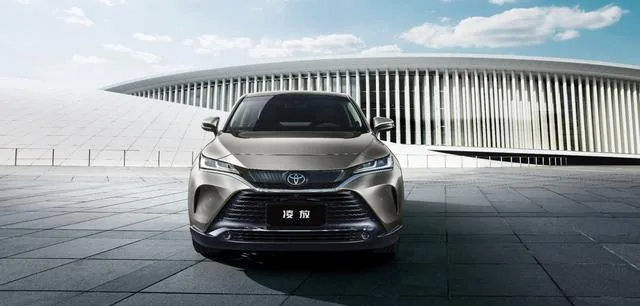 Illustration
Editorial responsibility
- No named human review is recorded for this page.
- Reports are grouped by semantic similarity and deterministic rules. Language models may assist titles, summaries, translation and cross-source analysis; the page reads the event directly, while its address stays stable when the title changes.
- Summary covers the current reports
Cross-source coverage
Common ground
- This deal is a defensive survival play, not a full merger, and it's driven by GAC's financial losses and the brutal price war in China's auto market.
- The political economy of Chinese state-owned enterprises is essential to understanding the deal, and Western corporate finance models alone can't explain it.
- The real test will be whether GAC and FAW actually integrate their operations and share technology, not just the deal structure itself.
- Consumer behavior is a wildcard—Chinese buyers are abandoning joint venture brands, which puts pressure on both GAC and FAW to adapt.
Points of contention
- Whether Toyota is the real winner with asymmetric leverage or a tool being used by China's government that will lose influence as hybrid tech declines.
- Whether this cross-shareholding will lead to actual factory closures and capacity reduction, or just reshuffle ownership without solving overcapacity.
- Whether the deal represents a strategic masterstroke of Chinese industrial governance or just a photo op that changes nothing, given SOEs' history of avoiding painful restructuring.
- Whether GAC's losses create real urgency for integration or if local governments will continue to subsidize money-losing plants to protect jobs.
Blind spots
- The looming 15th Five-Year Plan and its explicit targeting of overcapacity could force real rationalization, but this policy hammer is often underestimated.
- The timeline of hybrid technology's decline—while hybrids are still growing, charging infrastructure and falling battery costs may shift the market faster than expected.
- The possibility that this deal creates a governance mechanism for future capacity coordination, even if immediate factory closures are unlikely.
- The geopolitical signal this sends to other foreign automakers about China's willingness to restructure its state-owned sector on its own terms.
WorldAttention’s read
This deal is a defensive survival play, not a full merger, driven by GAC's financial losses and the brutal price war in China's auto market. It creates a cross-shareholding structure that buys time for GAC and FAW, but the real test is whether they can overcome their history of siloed behavior to actually integrate R&D, share platforms, and reduce capacity. Toyota holds significant leverage through its hybrid IP, but that leverage may fade as the market shifts to EVs and China's charging infrastructure expands. The political economy of Chinese SOEs means factory closures are unlikely in the short term, but the looming 15th Five-Year Plan could force real rationalization. Consumer behavior is the wildcard—if buyers keep abandoning joint venture brands, this deal just rearranges deck chairs. Ultimately, this is a necessary but insufficient step: it positions GAC and FAW to survive, but success depends on whether they can build a competitive joint EV platform within the next 3-5 years. Without that, it will be remembered as another Chinese SOE photo op that changed nothing.
Reporting timeline
FAW to Become GAC's Second-Largest Shareholder in State-Owned Auto Industry Restructuring
On September 14, 2026, GAC Group announced a preliminary agreement to purchase a stake in a joint venture held by FAW Group, which will make FAW GAC's second-largest strategic shareholder. The deal, involving an undisclosed joint venture widely believed to be FAW Toyota, marks a major cross-entity consolidation in China's state-owned auto sector. The move aligns with government policy encouraging industry consolidation, as outlined in the September 11 'Fifteenth Five-Year Plan' for intelligent connected new energy vehicles. Both companies face significant pressures: FAW's joint venture profits and sales have declined sharply, with FAW-Volkswagen and FAW Toyota sales dropping 25% and 27.4% respectively in H1 2026, while GAC reported a net loss of 44.67 billion yuan despite revenue growth. Experts interviewed, including China Automobile Dealers Association expert Li Yanwei and economist Pan Helin, note potential benefits from complementary technologies and market channels, but highlight challenges including cross-regional interest conflicts between central and local state ownership, potential need to coordinate with Toyota on asset adjustments, and risks of internal competition if overlapping models and platforms are not reduced.
Read sourceGAC Group Plans to Acquire Stake in FAW Toyota, Reshaping China's Auto Landscape
GAC Group announced plans to acquire approximately 25% of FAW Toyota from FAW Group, paying around 200 billion yuan via new share issuance. The deal, confirmed by Caijing, would make FAW Group the second-largest shareholder in GAC. GAC, facing its first annual loss in 2025 of 87.84 billion yuan and a 76% loss expansion in H1 2026, needs the profit injection from FAW Toyota (2025 net profit over 73 billion yuan). FAW Group, which lacks a listed passenger car platform, gains access to GAC's A+H listing and its battery technology (e.g., 130 million installed units of弹匣 battery). The transaction also aims to reduce internal competition between FAW Toyota and GAC Toyota, which has hurt Toyota's China sales (down 19% year-to-date). The deal is seen as a low-friction state-owned enterprise reform model, avoiding a full merger while allowing cross-shareholding. Challenges remain in asset valuation and operational integration.
Read sourceFAW and GAC Restructuring Signals New Governance Challenge for State-Owned Automakers
On September 14, GAC Group announced a share-swap agreement with FAW Group, where GAC will issue new A-shares to acquire a stake in a FAW-owned joint venture, likely FAW-Toyota. FAW will become GAC's second-largest shareholder with about 30% equity, without cash changing hands. The deal is seen as a 'light restructuring' aimed at integrating the 'North-South Toyota' operations and addressing financial pressures: GAC reported a net loss of 87.84 billion yuan in 2025, while FAW faces declining sales and potential央企 restructuring pressure. Industry experts, including Cui Dongshu and Ji Xuehong, note that the equity alliance avoids full merger complexities but poses governance challenges due to differing corporate cultures and incentive systems. The transaction aligns with government calls for auto industry consolidation, as outlined in the 15th Five-Year Plan for intelligent connected NEVs, and may serve as a model for other state-owned automakers like Dongfeng and SAIC facing similar structural issues.
Read sourceShow 2 older updatesHide older updates
GAC Group to Buy Part of FAW Toyota Stake; No Merger of North and South Toyota
On September 14, GAC Group announced plans to purchase part of the equity of a vehicle joint venture held by FAW Co., Ltd. by issuing shares and raising supporting funds. Sources indicate the joint venture is FAW Toyota Motor Co., Ltd. The transaction is not expected to involve FAW Toyota Auto Sales Co., Ltd., and GAC will not acquire the entire FAW Toyota stake held by FAW. The deal will not directly lead to a merger of GAC Toyota and FAW Toyota. After completion, FAW Toyota will continue to exist as a separate entity with shareholders FAW Group, GAC Group, and Toyota. Toyota Motor will become the largest shareholder of FAW Toyota. Additionally, sources revealed that FAW Group may hold approximately 30% of Guangzhou Automobile Group shares after the transaction.
GAC Group Plans to Acquire Partial Stake in FAW Toyota; Full Merger on Hold
On September 14, GAC Group announced a plan to acquire a partial equity stake in an unspecified joint-venture vehicle manufacturer held by FAW Group through share issuance, along with raising supporting funds. The unspecified manufacturer is identified as FAW Toyota Motor Co., Ltd. Sources indicated that the transaction likely does not involve FAW Toyota Sales Co., Ltd., and GAC Group will not fully acquire FAW Group's stake in FAW Toyota. The deal will not directly lead to a merger between GAC Toyota and FAW Toyota. After completion, FAW Toyota will continue as a legal entity, with shareholders becoming FAW Group, GAC Group, and Toyota-related entities, while Toyota Motor Corporation will become the largest shareholder. Additionally, sources revealed that FAW Group may hold approximately 30% of GAC Group's shares following the transaction.
Read source