G7 agrees to release 100 million barrels of oil and diesel after Trump export ban threat
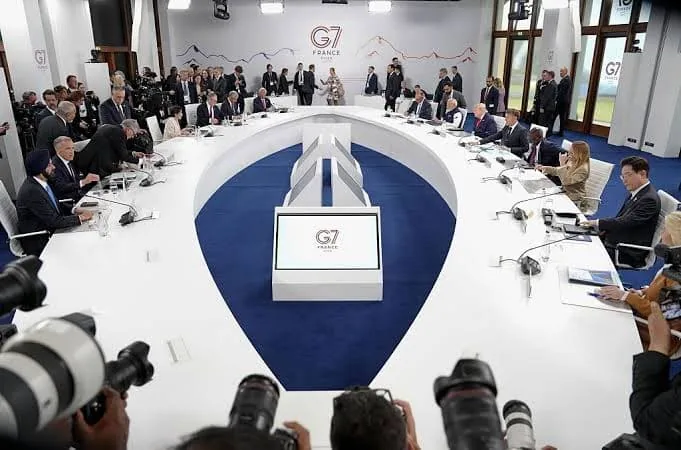
The G7 nations agreed on October 2, 2026, to release 100 million barrels of oil and diesel from emergency reserves through the IEA to stabilize supply and prices. The decision followed a threat by US President Donald Trump to ban diesel exports if European countries did not tap their stocks. The release will begin immediately over four months, with a frontloaded diesel release within 20 days. Trump later said an export ban was "never really on the table" and praised Europe's contribution.
 Reference image
Editorial responsibility
- No named human review is recorded for this page.
- Reports are grouped by semantic similarity and deterministic rules. Language models may assist titles, summaries, translation and cross-source analysis; the page reads the event directly, while its address stays stable when the title changes.
- Summary covers the current reports
Cross-source coverage
Common ground
- The U.S. holds significant leverage as the world's top diesel exporter, making it a key player in global diesel supply.
- Strategic diesel reserves are not effective tools for long-term price control and are better suited for emergency supply disruptions.
- The G7's discussion about releasing strategic reserves is partly driven by domestic political pressures to show action on high fuel prices.
- Multiple supply shocks, including China's reduced diesel exports and European sanctions on Russian oil, are tightening global diesel markets.
Points of contention
- Whether the U.S. is coercing Europe through implicit threats of an export ban or if it's a mutual standoff where both sides have leverage.
- If the Trump-era export ban threat still influences current negotiations under the Biden administration or if it was a failed bluff that Europe learned to ignore.
- Whether Europe can realistically replace U.S. diesel with supplies from India and the Middle East without major disruptions.
- If the G7's actions are genuine supply management or just political theater with token releases that won't solve underlying shortages.
Blind spots
- The debate largely ignores how China's 60% drop in diesel exports is a major structural factor tightening global supply, independent of U.S. policy.
- Both sides assume strategic reserves can be used for price manipulation, but historical data shows they have never sustainably moved prices.
- The long-term impact of Europe's diversification efforts since 2022, like increased imports from India and Saudi Arabia, is underestimated.
WorldAttention’s read
The roundtable shows that while the U.S. has clear leverage as the top diesel exporter, the real story is more complex than simple coercion. Europe is not helpless—it has been diversifying suppliers, and the U.S. threat of an export ban has never been fully carried out. However, both sides are stuck in a standoff where they're using strategic reserves as a political tool rather than addressing the actual supply shortage, which is driven by factors like China's export collapse and refinery constraints. In the end, any G7 release will likely be too small to matter, and the underlying power imbalance will persist until both sides stop treating this as theater and start tackling the real structural issues.
Reporting timeline
G7 to release 100 million barrels of oil and diesel, will it curb prices?
The Group of Seven (G7) nations have announced a coordinated release of 100 million barrels of oil and diesel from emergency reserves through the International Energy Agency (IEA). This move aims to curb rising energy prices, which have been exacerbated by the war in Ukraine and subsequent sanctions on Russia. The release includes a significant amount of diesel, a fuel critical for transportation and industry. According to reports from Al Jazeera, Reuters, and Time Magazine, the effectiveness of this release in lowering prices for consumers, particularly in the United States, remains uncertain. CNN reports that European nations agreed to the release under pressure from the United States, which is facing high fuel prices ahead of midterm elections. The Economist notes this action coincides with Russia targeting bridges in Kyiv. Analysts suggest the release may provide temporary relief but is unlikely to fundamentally alter global supply dynamics or permanently lower prices.
Read sourceIEA says 325 million barrels of emergency oil released; G7 to release diesel reserves
The International Energy Agency (IEA) announced the release of 325 million barrels of emergency oil reserves. Separately, the G7 group of nations agreed to release 100 million barrels of diesel and other fuel reserves through the IEA to combat soaring energy prices. The New York Times reports that the U.S. and its allies agreed to release diesel reserves as prices soar. However, Politico reports that Europe is fuming against what it calls a White House demand for more diesel, with one European official quoted as calling it 'blackmail.' Time Magazine questions how much the release of emergency fuel reserves will help Americans, noting the complex global oil market dynamics. The coordinated releases aim to stabilize markets and lower prices amid supply concerns following Russia's invasion of Ukraine.
Read sourceG7 to release 100 million barrels of oil and diesel after Trump export ban threat
The G7 has announced a coordinated release of 100 million barrels of oil and diesel to ease supply concerns and prevent further price spikes, following a threat by US President Donald Trump to ban US diesel exports. The release, coordinated through the International Energy Agency (IEA), will begin immediately and last for four months, including a frontloaded substantial diesel release within the first 20 days. G7 leaders stated there will be no export restrictions on energy products between member states. Trump had warned he would ban diesel exports if European countries did not tap their own stocks, aiming to ease pressure on US consumers ahead of midterm elections. After the G7 agreement, Trump said an export ban was 'never really on the table' and praised Europe's contribution. The price of Brent crude briefly dropped below $100 a barrel but rose to around $102 due to renewed strikes between Saudi Arabia and the Houthis in Yemen. The UK, which imports over half its diesel with 31% from the US, welcomed the measures. The release aims to stabilize supplies amid constraints from the Middle East conflict and Russia's own diesel export ban.
Read sourceShow 2 older updatesHide older updates
Von der Leyen Welcomes G-7 Decision to Release Oil Reserves, US Drops Diesel Export Ban Threat
On October 2, 2026, the G-7 nations agreed to immediately release oil and diesel reserves to stabilize supply and prices, a move welcomed by European Commission President Ursula von der Leyen. In a post on X, von der Leyen stated, 'We welcome the decision of the G-7 states not to impose export bans against allies, as well as the continued solidarity between partners.' The decision came after US President Donald Trump had threatened at the end of September to consider a diesel export ban that would have affected European countries. Von der Leyen expressed support for the release of fuel reserves coordinated by the International Energy Agency (IEA), adding that Europe's citizens 'need and deserve affordable energy' and that the G-7 would coordinate closely to achieve this goal. The German government also welcomed the release of 100 million barrels of oil and oil products like diesel as a sign of the group's capacity to act and unity. Berlin emphasized the importance of ensuring sufficient reserves remain for future supply security and noted that the US had backed away from its diesel export ban threat during a video conference of G-7 leaders, while maintaining sanctions against Russia over its invasion of Ukraine.
Read sourceG7 Leaders May Discuss Diesel Stock Release Steps on Friday, Source Says
According to a source cited by Reuters, Group of Seven (G7) leaders may discuss next steps regarding the potential release of diesel inventories on Friday afternoon. The source indicated that any agreement to release diesel stocks should include a commitment from the United States to avoid imposing a unilateral ban on diesel exports. The report, sourced from tradealpha, highlights ongoing international coordination efforts to address diesel supply concerns, with the US pledge seen as a key condition for a broader G7 deal.