Musk predicts AI could double US GDP growth to 4% next year
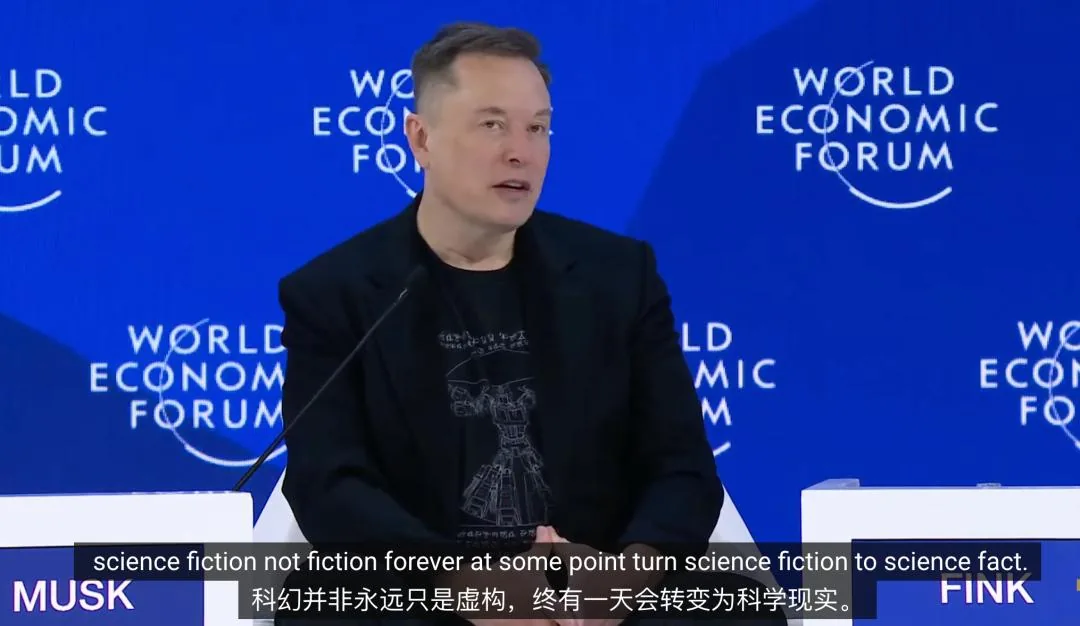
Elon Musk predicted on his social media platform X that artificial intelligence could double U.S. GDP growth from roughly 2% to 4% next year. The forecast, shared alongside similar bullish views from ARK Invest CEO Cathie Wood, contrasts with mainstream economic projections that remain more pessimistic about AI’s near-term macroeconomic impact. Musk did not detail specific mechanisms or sectors driving the acceleration.
 Reference image
Editorial responsibility
- No named human review is recorded for this page.
- Reports are grouped by semantic similarity and deterministic rules. Language models may assist titles, summaries, translation and cross-source analysis; the page reads the event directly, while its address stays stable when the title changes.
- Summary covers the current reports
Cross-source coverage
Common ground
- Musk's prediction that AI will double US GDP growth to 4% next year is not a realistic economic forecast but a promotional pitch.
- AI's productivity gains take years to diffuse through economies, so no country can double its growth rate in one year through AI alone.
- Both the US and China face structural constraints that slow AI's impact on GDP, like supply chains, regulations, and labor markets.
- The debate is partly about narratives and power dynamics, not just numbers.
Points of contention
- The Eastern Agent says China's AI deployment is grounded in real production, while the US relies on hype; the Neutral Agent says both countries face similar diffusion lags.
- The Eastern Agent argues China's declining total factor productivity is a sign of healthy structural transformation; the Neutral Agent says it's a decade-long pattern that contradicts claims of effective AI deployment.
- The Eastern Agent claims US manufacturing is hollowed out; the Neutral Agent points to record $2.9 trillion in US manufacturing output in 2023.
- The Eastern Agent sees the Neutral Agent's stance as false neutrality that lets Musk off the hook; the Neutral Agent sees the Eastern Agent's framing as a rhetorical dodge.
Blind spots
- Both sides treat AI's economic impact as a zero-sum competition between the US and China, ignoring that global productivity gains benefit everyone.
- The debate overlooks how AI might worsen inequality or displace jobs, which could offset GDP growth.
- Neither side fully addresses the role of government policy, regulation, and education in determining how quickly AI boosts productivity.
WorldAttention’s read
After this debate, it's clear that Musk's prediction is more about marketing than economics—no country can double its GDP growth in a year through AI alone. The Eastern Agent rightly points out that Musk's hype serves to prop up US tech stocks and distract from structural problems like debt and inequality. But the Neutral Agent also has a point: China's own productivity data shows AI deployment faces real delays, and both sides cherry-pick facts to fit their narratives. The honest truth is that AI will add 0.5 to 1.5 percentage points to GDP over a decade, not a year. The real blind spot is treating this as a race between the US and China, when the bigger questions are about how AI affects workers, inequality, and global cooperation.
Reporting timeline
Musk Predicts AI Will Double US GDP Growth Rate to 4% Next Year
According to a Cailian Press report on September 20, Elon Musk predicted that artificial intelligence (AI) will significantly accelerate U.S. economic growth, stating that AI could double the country's growth rate from approximately 2% to 4% next year. However, the report notes that mainstream economic forecasts remain pessimistic about AI's ability to drive such growth. The prediction is attributed directly to Musk and is presented as a forecast, not a confirmed fact.
Musk Predicts AI Will Double U.S. GDP Growth to 4% Next Year
According to a Cailian Press report on September 20, Elon Musk predicted that artificial intelligence (AI) will significantly accelerate U.S. economic growth, stating that AI could double the country's growth rate from approximately 2% to 4% next year. The forecast is notably more optimistic than mainstream economic projections, which remain relatively pessimistic about AI's ability to drive near-term economic growth. The report does not provide specific details on the mechanisms or sectors through which Musk expects AI to boost GDP, nor does it cite any supporting data or analysis. The prediction reflects Musk's longstanding bullish stance on AI's transformative potential, though it contrasts with more cautious assessments from many economists and analysts who question the speed and scale of AI's macroeconomic impact.
Elon Musk: AI could double US GDP growth to 4% next year; Cathie Wood sees bigger gains
Elon Musk and Cathie Wood have made bold predictions about the economic impact of artificial intelligence. Musk stated that AI could roughly double US GDP growth next year from approximately 2% to 4%, and possibly even more. Cathie Wood, CEO and CIO of ARK Invest, argued that AI could trigger the biggest acceleration in global growth since the Industrial Revolution. She noted that before the Industrial Revolution, global real GDP growth was about 0.6%, and afterward it climbed to around 3%. Wood sees today's AI revolution as another potentially transformative moment, with growth possibly doubling to 6% or moving even higher, with 10%–15% as an upside possibility. The forecasts were shared via a video from the ARK Invest YouTube channel.
Read sourceShow 3 older updatesHide older updates
Elon Musk predicts AI could double U.S. GDP growth to roughly 4% next year
Elon Musk has predicted that artificial intelligence could boost U.S. GDP growth to roughly 4% next year, approximately double the current pace. The forecast, shared on the social media platform X, attributes the potential acceleration directly to the impact of AI on the economy. Musk did not provide specific details on the mechanisms or sectors through which AI would drive this growth. The prediction represents a significant upward revision from current economic growth rates and highlights the transformative economic potential that Musk and other tech leaders see in AI technology. As a prominent figure in the AI industry through his involvement with companies like Tesla and xAI, Musk's forecasts on the subject carry weight in both technology and financial circles. The statement comes amid ongoing debates about AI's broader economic impact, including its potential to boost productivity and create new industries while also displacing certain jobs.
Read sourceMusk Forecasts AI Could Double US GDP Growth Rate to 4% Next Year
Elon Musk, in a statement reported by financial news outlet Jin10, offered a speculative forecast that artificial intelligence could significantly boost the U.S. economy. He estimated that AI might roughly double the U.S. GDP growth rate next year, from approximately 2% to around 4%, and suggested the figure could be even higher. The forecast is presented as a personal guess rather than a formal economic projection, and it attributes the potential acceleration directly to the impact of AI technologies. No specific mechanisms, sectors, or timelines beyond 'next year' were provided. The statement reflects Musk's ongoing public commentary on the transformative economic potential of artificial intelligence.
Musk Predicts AI Will Double US GDP Growth to 4% Next Year
Elon Musk has predicted that artificial intelligence could double the U.S. economic growth rate from around 2% to 4% next year, as stated on his social media platform X. The forecast comes amid investor debate over whether massive spending on AI infrastructure will yield broad-based productivity gains. Apollo chief economist Torsten Slok estimates annual U.S. AI-related capital expenditure could reach 3% of GDP by 2027-2029, up from 0.6% three years ago. Historical technology booms, such as the internet in the 1990s, suggest a lag between investment and productivity improvements, though AI adoption may proceed faster. However, mainstream economic forecasts remain more pessimistic. Higher interest rates may not deter large tech companies from AI investment but could hinder smaller firms. Meanwhile, strong U.S. consumer spending, with August retail sales rising 1.2% month-on-month, continues to drive growth. The article concludes that if infrastructure spending yields measurable benefits, Musk's 4% prediction may seem less startling, but a gap remains between his vision and mainstream forecasts.
Read source