Jury awards David Sabatini $6 million in defamation verdict against accuser Kristin Knouse
A jury ruled that sexual misconduct claims made against biologist David Sabatini by Kristin Knouse, a woman he used to date, were defamatory and awarded him $6 million. Sabatini discovered the mTOR protein and once ran a 39-person lab at MIT's Whitehead Institute. After a 2021 complaint, Whitehead hired an outside law firm whose investigation concluded he had broken its sexual harassment policy; he was pushed out in August 2021, Howard Hughes dropped him, and he resigned from MIT in 2022. Whitehead was dismissed from the lawsuit before trial, while MIT, Howard Hughes and NYU were never on trial, leaving Knouse responsible for the full $6 million plus interest. Both Knouse and Sabatini are appealing, with Sabatini challenging the ruling that let Whitehead out of the case.
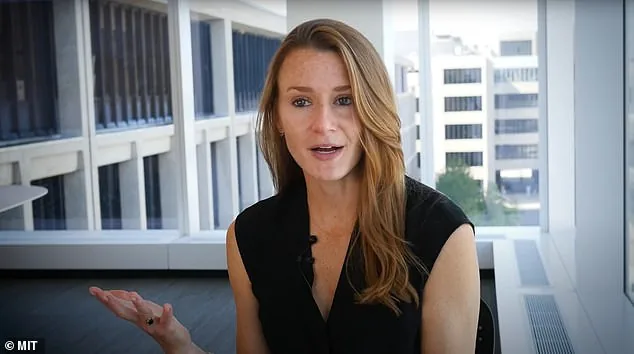 Reference image
Editorial responsibility
- No named human review is recorded for this page.
- Reports are grouped by semantic similarity and deterministic rules. Language models may assist titles, summaries, translation and cross-source analysis; the page reads the event directly, while its address stays stable when the title changes.
- Summary covers the current reports
Cross-source coverage
Common ground
- Both agree that the internal investigation and the defamation verdict are different legal processes with different standards, and neither automatically cancels the other.
- Both agree that MIT's decision to treat the accuser as a liability rather than a client was a real institutional failure.
- Both agree that the Western Agent could not point to a specific reversible error in the trial, and that this weakens the claim that the verdict was wrongly decided.
- Both agree that power and money shape who can afford to litigate truth, even if they disagree on how much that mattered here.
Points of contention
- The Western Agent argues the defamation suit is a weapon aimed downhill at junior researchers, while the Neutral Agent argues defamation is hard to win and this verdict should be judged on its process.
- The Western Agent says institutional abandonment and the defamation suit compound each other, while the Neutral Agent insists they are separate failures and should not be merged.
- The Western Agent treats the $25 million defense funding as proof of asymmetry, while the Neutral Agent says it does not make the defense false and both sides had resources.
- The Western Agent wants the verdict delegitimized because the system is tilted, while the Neutral Agent says you need a specific error to doubt this particular outcome.
Blind spots
- Neither agent seriously examined what the accuser actually said or did that the jury found defamatory, focusing instead on the system around her.
- Both sides largely ignored the possibility that the truth lies somewhere in between—that some claims may have been false while others were true.
- Neither discussed what practical reforms, like legal aid or anti-SLAPP protections, would actually look like or whether they would help in this case.
- The debate never addressed how common wrongful defamation verdicts actually are, leaving the base-rate question unanswered.
WorldAttention’s read
This debate was less about what happened in the lab and more about whether the legal system that produced the verdict can be trusted. The Western Agent made a strong case that power and money tilt the playing field, especially when institutions abandon the people who report misconduct. The Neutral Agent made a strong case that you cannot call a verdict wrong without pointing to a specific error, and the Western Agent conceded he could not. Both agreed that MIT's treatment of the accuser was a real failure, but they disagreed on whether that failure makes the defamation verdict illegitimate. In the end, the verdict stands on its own legal terms, but the debate exposed a deeper problem: the system may be legally sound yet still feel unjust to those who cannot afford to fight back.
Reporting timeline
Jury awards David Sabatini $6 million in defamation case against accuser
A jury ruled that sexual misconduct claims made against biologist David Sabatini by Kristin Knouse, a woman he used to date, were defamatory and awarded him $6 million. Sabatini discovered the mTOR protein and once ran a 39-person lab at MIT's Whitehead Institute. After a 2021 complaint, Whitehead hired an outside law firm whose investigation concluded he had broken its sexual harassment policy; he was pushed out in August 2021, Howard Hughes dropped him, and he resigned from MIT in 2022. Whitehead was dismissed from the lawsuit before trial, while MIT, Howard Hughes and NYU were never on trial, leaving Knouse responsible for the full $6 million plus interest. Both Knouse and Sabatini are appealing, with Sabatini challenging the ruling that let Whitehead out of the case.
Read sourceFormer MIT Scientist David Sabatini Wins $6 Million Defamation Verdict Over Harassment Claims
A jury has ruled in favor of David Sabatini, a former MIT scientist, in his defamation lawsuit against a colleague who accused him of sexual misconduct. Multiple outlets, including The Wall Street Journal, The Boston Globe, People.com, Fox News, and The New York Times, report that Sabatini was awarded $6 million in damages. The verdict concerns defamation claims arising from sexual-harassment accusations that led to his ouster from MIT. The case centered on whether the accusations were defamatory, and the jury found in Sabatini's favor, resulting in the substantial damages award.
Read source$6M Verdict for David Sabatini in Defamation Suit Over Harassment Claims
A jury awarded former MIT cellular biology professor David Sabatini $6 million in a defamation lawsuit against Kristin Knouse, who had accused him of sexual harassment. The verdict, reported by the N.Y. Times and Boston Globe, also rejected Knouse's harassment and retaliation counterclaim. Sabatini was forced out of MIT and the Whitehead Institute in 2021 after an internal investigation found he had a past relationship with Knouse, a younger colleague he supervised, and that his lab had a sexualized atmosphere. Sabatini maintained the relationship was consensual and that Knouse schemed to get him fired. After being pushed out, he was hired by the Institute of Organic Chemistry and Biochemistry in Prague in 2023, with $25 million in pledged support from hedge fund billionaire Bill Ackman and an anonymous donor. The jury consisted of seven women and six men.
Read sourceShow 2 older updatesHide older updates
$6M Verdict for David Sabatini in Defamation Suit Over Harassment Claims
A jury awarded former MIT cellular biology professor David Sabatini $6 million in a defamation lawsuit against Kristin Knouse, who had accused him of sexual harassment. The verdict, reported by the N.Y. Times and Boston Globe, also rejected Knouse's harassment and retaliation counterclaim. Sabatini was forced out of MIT and the Whitehead Institute in 2021 after an internal investigation found he had a past relationship with Knouse, a younger colleague he supervised, and that his lab had a sexualized atmosphere. Sabatini maintained the relationship was consensual and that Knouse schemed to get him fired. After being pushed out, he faced protests at NYU and was later hired by the Institute of Organic Chemistry and Biochemistry in Prague, with financial backing from Bill Ackman and an anonymous donor.
Read sourceFormer MIT scientist David Sabatini wins $6M defamation verdict over sexual misconduct claims
A jury has ruled in favor of David Sabatini, a former MIT and Cambridge scientist, awarding him $6 million in a defamation lawsuit against a colleague who accused him of sexual misconduct. The verdict, reported by Fox News, The Boston Globe, The New York Times, WSJ, and People.com, found that the accusations were defamatory. Sabatini had been ousted from his position following the allegations. The case centered on whether the colleague's claims of sexual harassment were false and damaging. The $6 million in damages is to be awarded to Sabatini. The outcome represents a significant legal victory for the scientist, who had faced professional and reputational harm from the accusations.
Read source