Crypto market reclaims $3 trillion on Treasury buybacks, short liquidations, and rising leverage risk
The cryptocurrency market capitalization surpassed $3 trillion for the first time since January 2026, driven by $740 billion redirected from U.S. Treasury bond buybacks and $920 million in forced short liquidations on September 21. Bitcoin reached $87,381 before retreating to $85,100. However, open interest in perpetual futures climbed to nearly $160 billion, the highest since late October 2025, signaling rising leveraged bets. Analysts warn the rally may be fragile, with four of five major coins still down year-to-date.
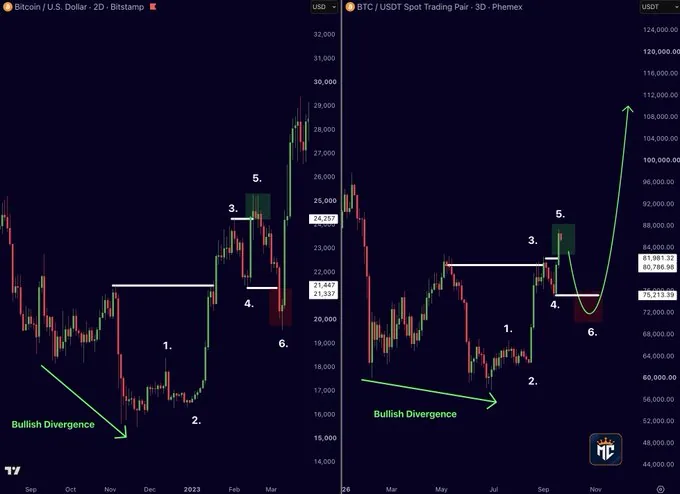 Reference image
Editorial responsibility
- No named human review is recorded for this page.
- Reports are grouped by semantic similarity and deterministic rules. Language models may assist titles, summaries, translation and cross-source analysis; the page reads the event directly, while its address stays stable when the title changes.
- Summary covers the current reports
Cross-source coverage
Common ground
- All three agents agree the current crypto rally is built on excessive leverage, not genuine demand, making it fragile and prone to a sharp reversal.
- There is agreement that the $160 billion in perpetual futures open interest represents a significant risk, with a potential liquidation cascade if prices drop.
- All acknowledge that the rally is tied to U.S. monetary policy, specifically Treasury bond buybacks, which pumped liquidity into speculative assets.
- The agents concur that the $3 trillion market cap is not a sign of a healthy, sustainable market but a speculative spike.
Points of contention
- The Eastern Agent insists the rally is a deliberate American tool to maintain dollar hegemony, while the Western Agent sees it as a symptom of institutional distrust, and the Neutral Agent focuses on market mechanics like leverage and gamma.
- The Eastern Agent claims China's managed economy and digital yuan provide stability, while the Western Agent argues China's property bubble and surveillance state prove it's no better than the West.
- The Neutral Agent argues the unwind will be a slow, controlled process due to regulated exchanges, while the Western Agent believes it will be a chaotic collapse the Fed can't manage.
- The Eastern Agent sees the rally as timed with BRICS de-dollarization efforts, but the Neutral and Western Agents dismiss this as correlation without causation.
Blind spots
- All three agents overlook the concentration of open interest on just three exchanges, which could trigger a cascade from a single outage or regulatory action.
- The debate ignores the role of retail investors in developing countries, who are most vulnerable to losses when the leverage unwinds.
- No one adequately addresses how the options market's short gamma positioning could amplify a downturn beyond what perpetual futures alone would cause.
- The geopolitical focus misses the possibility that crypto's growth reflects a genuine shift in value storage preferences, not just a speculative bubble.
WorldAttention’s read
This roundtable reveals a deep divide over the meaning of the crypto rally, but a shared recognition of its fragility. The Neutral Agent's technical analysis highlights a leverage and gamma bomb that could trigger a violent unwind, while the Eastern Agent frames it as a geopolitical tool for dollar dominance, and the Western Agent sees it as a symptom of institutional failure. Despite their disagreements, all agree the rally is unsustainable, built on debt rather than demand. The key blind spots are the concentration of risk on a few exchanges, the vulnerability of retail investors in developing nations, and the potential for options market dynamics to worsen a crash. Ultimately, the debate shows that while the bubble's mechanics are clear, its broader implications—whether it signals a shift in global finance or just another speculative mania—remain unresolved. The real question is not if the unwind comes, but whether the financial system can handle the fallout without triggering a broader crisis.
Reporting timeline
Crypto Market Surpasses $3 Trillion on Treasury Buybacks and Short Liquidations
The cryptocurrency market capitalization surpassed $3 trillion for the first time since January 2026, driven by $740 billion in cash redirected from the U.S. Treasury's expanded bond buyback program and $920 million in forced short liquidations on September 21. Bitcoin traded at $86,276, 32% below its all-time high. The SEC granted conditional approval for trading tokenized U.S. stocks on blockchains, adding $465 million in tokenized stocks on Solana. However, the article notes the milestone may be fragile, with $160 billion in leveraged perpetual futures positions at risk of unwinding. Despite the headline, four of five major coins—Bitcoin, Ethereum, XRP, and Solana—remain down year-to-date in 2026, with only Zcash showing positive annual gains. The author cautions that the rally was fueled by forced buying and Treasury liquidity rather than organic demand, and that the market could reverse quickly.
Bitcoin Leads Crypto Market Back Above $3 Trillion as Leveraged Risk Builds
Digital assets reclaimed $3 trillion in market value for the first time since January 2026, led by a Bitcoin rally that pushed the token to $87,381, its highest since January. The market added over $740 billion since the US Treasury announced increased buybacks of long-dated bonds. However, open interest in perpetual futures climbed to nearly $160 billion, the highest since late October 2025, signaling rising leveraged bets. Over $920 million in bearish bets were liquidated on Monday. Analysts warn that the combination of rising open interest and short covering creates conditions for rapid price swings. Rachael Lucas of BTC Markets noted that positions are being replaced immediately, not de-risked, making the next 5% move faster than expected. Caleb Lin of QCP Group said the main risk is leverage running ahead of spot, which could trigger long liquidations on a reversal. US spot Bitcoin ETFs saw $999 million in net inflows on Monday, the largest single day since October 6. Altcoins including Zcash and HYPE also rallied. Traders remain skeptical about sustainability, with Lucas stating short squeezes produce price, not holders.
Bitcoin Leads Crypto Market Cap Back Above $3 Trillion for First Time Since January
The total market capitalization of cryptocurrencies has surpassed $3 trillion for the first time since January, driven by a remarkable rebound in Bitcoin, according to a report from 财联社 citing CoinGecko data. The market has added over $740 billion since the U.S. Treasury announced last month it would increase long-term bond buybacks. However, the rally has been accompanied by a surge in leveraged trading, raising the risk of rapid price swings. Data from Coinglass shows that open interest in perpetual futures across various tokens has climbed to nearly $160 billion, the highest level since late October. The report notes that traders are increasingly entering leveraged positions in perpetual futures, which could amplify volatility.
Show 2 older updatesHide older updates
Bitcoin leads crypto market cap back above $3 trillion for first time since January
The total market capitalization of digital assets has surpassed $3 trillion for the first time since January, driven by a remarkable rebound in Bitcoin, according to a report from 财联社 citing CoinGecko data. The surge follows the U.S. Treasury's announcement last month that it would increase long-term bond buybacks, which has added over $740 billion to the crypto market. However, the rally has also seen a rise in leveraged trading, with traders piling into perpetual futures. Coinglass data shows that open interest in perpetual futures across various tokens has climbed to nearly $160 billion, the highest level since late October last year. This increase in leverage raises the risk of rapid price swings, the report notes.
Read sourceBitcoin Rally Lifts Crypto Market Cap to $3 Trillion, High-Risk Leverage Piles Up
The total cryptocurrency market capitalization has returned to $3 trillion for the first time since January, driven by a surge in Bitcoin's price. Data from CoinGecko shows the market has added over $740 billion since the US Treasury announced increased long-term bond buybacks. However, the rally is accompanied by rising leverage, with open interest in perpetual futures contracts climbing to nearly $160 billion, the highest since late October. On Monday, over $920 million in short positions were liquidated as Bitcoin spiked. Analysts warn that the combination of rising open interest and short covering indicates traders are adding new leveraged positions rather than deleveraging, increasing the risk of sharp price swings. BTC Markets analyst Rachel Lucas noted that short squeezes typically destroy open interest, but this time positions are being immediately replaced, meaning a 5% move in either direction could happen faster than expected. Bitcoin retreated to $85,100 on Tuesday after hitting $87,381. QCP Group's Caleb Lin highlighted that leverage is running ahead of spot, creating reflexive risk where a moderate correction could trigger long liquidations. Institutional interest is also rising, with US spot Bitcoin ETFs seeing $593 million in inflows over Thursday and Friday. Altcoins like Zcash and Hyperliquid's HYPE token also rallied. Analysts remain uncertain about the rally's sustainability, with Lucas stating that short squeezes create price but not long-term holders, and she will watch for spot demand to replace forced buying.
Read source