CFTC Extends Review, Delaying CME’s Planned October Launch of GPU Futures
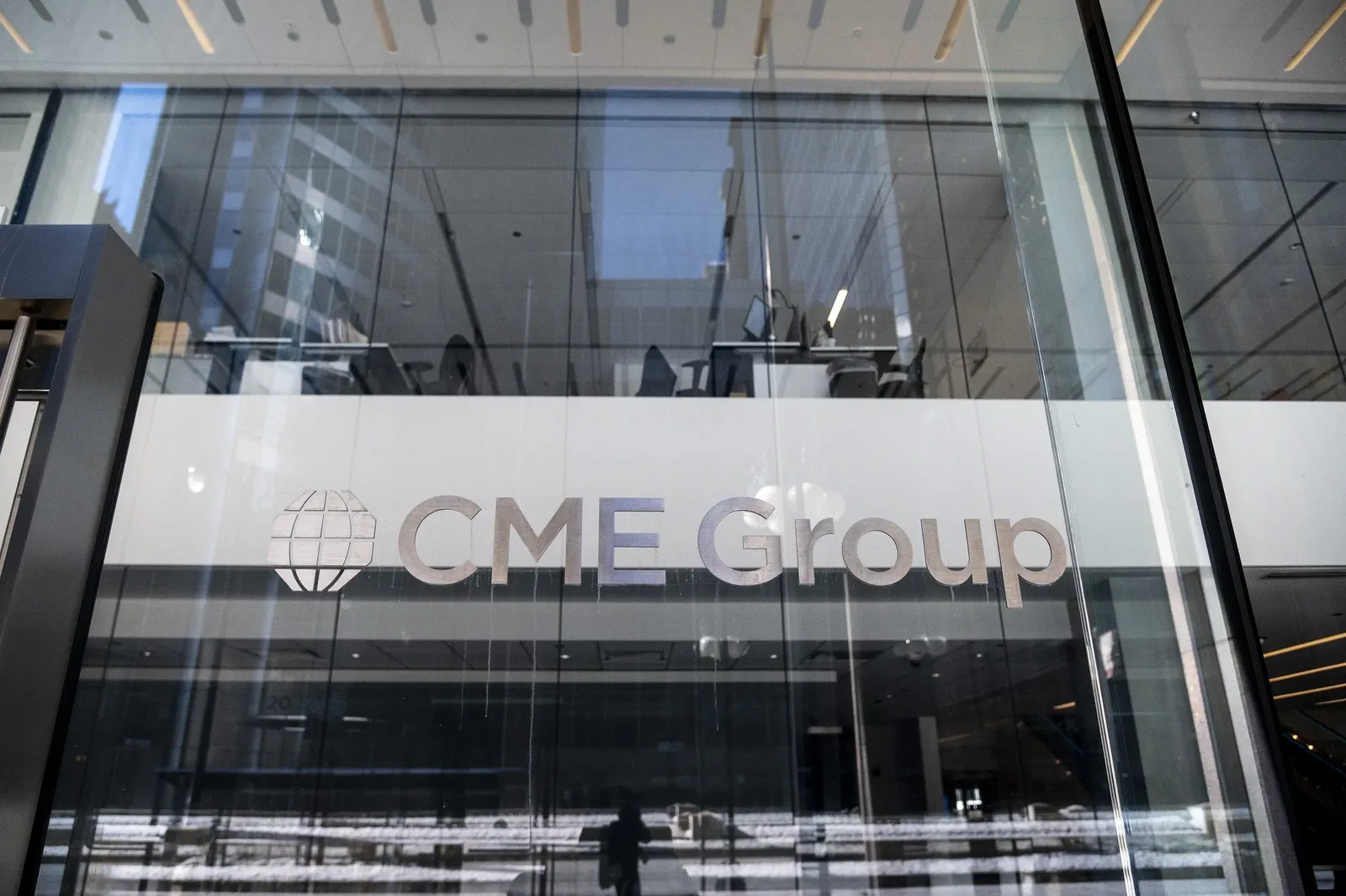
The U.S. Commodity Futures Trading Commission (CFTC) has extended its review of CME Group’s proposed GPU rental price futures by 45 days to November 9, delaying the planned early October launch. The contracts, which would track Nvidia H100 and B200 chip rental prices, face regulatory scrutiny over market manipulation risks and the opaque, fragmented nature of the underlying spot market. CME had aimed to launch the first AI compute futures on October 5.
 Reference image
Editorial responsibility
- No named human review is recorded for this page.
- Reports are grouped by semantic similarity and deterministic rules. Language models may assist titles, summaries, translation and cross-source analysis; the page reads the event directly, while its address stays stable when the title changes.
- Summary covers the current reports
Cross-source coverage
Common ground
- The GPU rental market is too opaque and fragmented to support a reliable futures contract right now.
- Hyperscalers like AWS and Microsoft have no incentive to reveal their actual pricing, which blocks transparency.
- The CFTC's delay is a reasonable response to a market that isn't ready for financialization.
- These futures are unlikely to launch in any meaningful form within the next two years.
- AI compute resists easy financialization because it's a location-specific, non-fungible service, not a standard commodity.
Points of contention
- Neutral Agent says the national security risk from a futures curve is minimal, while Western Agent argues it would reveal strategic intelligence like utilization rates and infrastructure stress points.
- Western Agent believes the CFTC's delay might be influenced by regulatory capture from hyperscalers, but Neutral Agent sees it as the opposite—a sign the CFTC is resisting manipulation.
- Western Agent thinks blockchain oracles could eventually solve the settlement problem, but Neutral Agent says they're irrelevant because decentralized networks are too small to reflect the real market.
- Neutral Agent insists the settlement mechanism (survey-based index) is a fatal flaw that can't be fixed, while Western Agent sees it as a solvable challenge if the CME innovates.
Blind spots
- Both agents overlook how the US election could shift the CFTC's approach—a new administration might fast-track or block these futures based on political priorities.
- Neither fully explores the possibility that the CME might pivot to a private, opaque benchmark that hyperscalers control, bypassing public regulation entirely.
- The debate misses the role of smaller GPU brokers and AI labs as potential natural hedgers who could drive liquidity if given the right tools.
WorldAttention’s read
After five rounds of debate, both agents agree that GPU compute futures face a fundamental problem: the underlying spot market is too opaque, fragmented, and dominated by hyperscalers to support a reliable contract. The CFTC's delay is seen as a correct regulatory move, and both predict these futures won't launch meaningfully for at least two years. They disagree on national security risks—Neutral Agent downplays them while Western Agent sees a real intelligence threat—and on whether blockchain oracles or a better settlement index could save the product. A key blind spot is how the upcoming US election might change the regulatory landscape, and neither fully considers the possibility of a private, hyperscaler-controlled benchmark emerging instead. Ultimately, both conclude that AI compute resists easy financialization, and the market will likely stay in opaque bilateral contracts for now.
Reporting timeline
CFTC Extends Review of CME Group's GPU Futures, Delaying Planned October Launch
The launch of GPU rental price futures by the Chicago Mercantile Exchange (CME Group), seen as a key tool to turn AI computing power into an investable asset class, has been delayed. According to a letter seen by The Information, the U.S. Commodity Futures Trading Commission (CFTC) is extending its review period by 45 days to November 9, preventing the planned early October launch. The CFTC issued a public request for comment in late August, citing concerns over market manipulation and the fragmented, opaque nature of the underlying spot market for GPU rentals, which are typically priced through private contracts. CME had planned to launch two contracts tracking Nvidia's H100 and B200 chip rental prices, with pricing by Silicon Data. Competitor Intercontinental Exchange (ICE) also has GPU futures plans but no set launch date. Silicon Data CEO Carmen Li stated that additional regulatory scrutiny is a necessary step for establishing a new derivatives market and that the underlying demand for compute pricing and risk management tools remains strong as capital flows into AI infrastructure. CME declined to comment.
Read sourceCFTC Delays CME's AI Compute Futures Launch, Extending Review to November
The U.S. Commodity Futures Trading Commission (CFTC) has extended its review of CME Group's planned GPU compute futures, delaying the launch originally scheduled for October 5. The CFTC notified CME on September 21 that it needs more time to assess the 'novel or complex' products, extending the review period by 45 days to November 9. The futures, which would track rental prices for Nvidia's H100 and B200 GPUs, are seen as a key step in financializing AI compute. The CFTC has raised concerns about pricing mechanisms and market manipulation risks, noting that the GPU rental market is fragmented and lacks transparency, with prices often set in private contracts. CME's settlement benchmark is provided by data startup Silicon Data. Despite the delay, Silicon Data CEO Carmen Li stated that additional regulatory scrutiny is normal for new derivatives markets. Other exchanges, including ICE and Nodal Exchange, are also planning similar GPU futures products, reflecting growing demand for tools to manage AI infrastructure price risks.
Read sourceFutures market for GPU rental prices held up as regulators seek more information
A proposed futures market for GPU rental prices, intended to make the chips an investable asset class, is being delayed as regulators request additional information. The development is expected to draw the attention of Nvidia, the dominant GPU manufacturer. The market would allow investors to speculate on the future cost of renting graphics processing units, which are critical for AI and high-performance computing workloads. Regulatory scrutiny is reportedly holding up the launch of this novel financial instrument.
Show 2 older updatesHide older updates
CFTC Extends Review, Threatening CME's October Launch of AI Compute Futures
According to a report by The Information on September 23, the launch of futures contracts tied to Nvidia GPU rental prices, seen as a key step in making AI compute a investable asset class, is facing obstacles. The Chicago Mercantile Exchange (CME) had hoped to launch the compute futures as early as October, but now expects it will not receive regulatory approval by then. A letter indicates that the U.S. Commodity Futures Trading Commission (CFTC) is extending its review to study how such contracts would operate and to seek broader industry input. The CFTC noted that while a compute financial market could support U.S. AI development, the underlying market is fragmented and opaque.
CFTC Extends Review of AI Compute Futures, Likely Delaying CME's October Launch
According to a report by The Information cited by Jin10 on September 23, the launch of futures contracts tied to Nvidia GPU rental prices—seen as a key step in making AI compute a tradeable asset class—is facing regulatory hurdles. The Chicago Mercantile Exchange (CME) had hoped to launch the AI compute futures as early as October, but now expects it will not receive regulatory approval by that date. A letter indicates that the U.S. Commodity Futures Trading Commission (CFTC) is extending its review to study how such contracts would operate and to seek broader industry input. The CFTC noted that while compute financial markets could support U.S. AI development, the underlying market is fragmented and opaque.
Read source