Chongqing Bank halts Meituan, JD co-lending products, retains only WeBank risk-sharing model
Chongqing Bank discontinued three personal internet loan products—Meituan's "Shenghuofei" and "Shengyidai" and JD.com's "Jintiao"—while retaining only WeBank's "Weilidai" under a joint-funding, risk-sharing model. The move, a first among city commercial banks, shifts from pure co-lending where banks bear most credit risk to partnerships where both parties contribute capital. The adjustment comes as Chongqing Bank's retail loan portfolio shrank 8.43% year-to-date to 88.55 billion yuan and its retail non-performing loan ratio rose to 3.32% as of June 30, 2026.
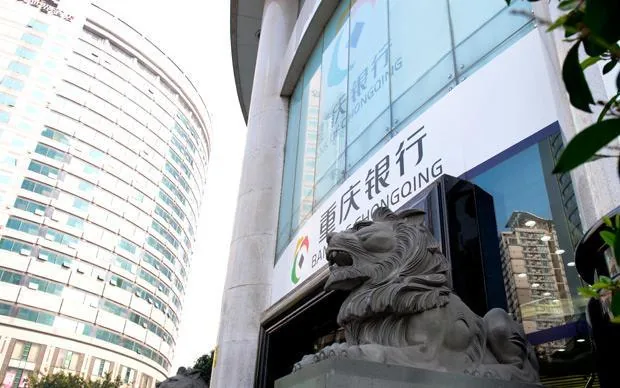 Reference image
Editorial responsibility
- No named human review is recorded for this page.
- Reports are grouped by semantic similarity and deterministic rules. Language models may assist titles, summaries, translation and cross-source analysis; the page reads the event directly, while its address stays stable when the title changes.
- Summary covers the current reports
Cross-source coverage
Common ground
- The old agency lending model, where tech platforms took no risk while banks bore all losses, was unsustainable and needed reform.
- The shift to a co-funding model with at least 30% capital from partners is a real structural improvement over the old system.
- WeBank being a licensed bank under PBOC supervision provides more regulatory alignment than unregulated platforms like Meituan or JD.
- Chongqing Bank's retail loan book shrinking 8.43% in six months shows the bank is under significant pressure to find new lending volume.
- The human cost of rising defaults—affecting small business owners, migrant workers, and families—is an important but under-discussed issue.
Points of contention
- Whether Chongqing Bank dropping three partners for one is smart risk management or dangerous risk concentration.
- Whether the 103,000 complaints on WeLidai are a warning sign of borrower distress or just normal friction in a large system.
- Whether the bank's move is a deliberate regulatory strategy or a desperate survival play due to shrinking loan books.
- Whether WeBank's leverage over Chongqing Bank is better or worse than the old model with multiple platforms.
Blind spots
- No one fully addressed why borrowers need high-interest loans in the first place—stagnant wages and rising costs are a deeper economic problem.
- The debate focused on bank and platform risks but ignored whether the complaint surge signals that borrowers are becoming unable to repay, not just unhappy.
- The long-term risk of a regional bank becoming a passive funding conduit for a tech giant's algorithm was raised but not fully explored.
WorldAttention’s read
Chongqing Bank's decision to drop Meituan and JD products while doubling down on WeBank's WeLidai is a calculated bet, not a clear win. On one hand, the co-funding model and PBOC oversight are real improvements over the old system where platforms took no risk. On the other hand, the bank is concentrating its lending into a single product with a surge in complaints, while its own retail loan book is shrinking fast. This looks more like a survival move than a master plan—the bank needs WeBank's massive customer base to keep lending. The biggest blind spot in the debate was the human side: why are so many people borrowing at 21.6% APR in the first place? Until that deeper economic issue is addressed, any restructuring is just rearranging deck chairs.
Reporting timeline
Chongqing Bank halts three online loan products, shifts to joint-venture model with risk sharing
Chongqing Bank has stopped offering three online loan products—Meituan's 'Shenghuofei', Meituan's 'Shengyidai', and JD.com's 'Jintiao'—according to an update on its official website. The only retained product, WeBank's 'Weilidai', is now classified as a 'joint-venture (non-co-lending)' model. Analysts interviewed by China Times interpret this as a strategic shift from pure co-lending (where banks provide all funds and platforms provide traffic) to a joint-venture model where both parties contribute capital and share risk. Su Shang Bank special researcher Xue Hongyan said the move signals that Chongqing Bank is not exiting cooperative lending entirely but is selectively pursuing risk-controllable partnerships, marking an industry transition toward tiered cooperation and risk-sharing mechanisms. Botong Consulting chief analyst Wang Pengbo noted that replicating this model is difficult for smaller banks due to multiple barriers, including finding qualified licensed partners with sufficient capital, meeting regulatory requirements for joint lending (partner minimum 30% contribution), and building independent risk-control capabilities. The article highlights that pure co-lending models often leave banks as passive capital providers, while joint-venture models align incentives and comply with new regulations requiring banks to maintain independent credit assessment and risk management. The shift is expected to concentrate funding toward top-tier platforms and squeeze smaller co-lending platforms that rely heavily on city commercial bank funding.
Read sourceChongqing Bank halts three online loan products, shifting from pure lending to risk-sharing partnerships
Chongqing Bank has updated its cooperative personal internet loan product list, discontinuing three products: Meituan 'Shenghuofei', Meituan 'Shengyidai', and JD 'Jintiao'. The bank is moving away from pure lending models where it provides all funds and platforms provide traffic, toward joint lending models where both parties contribute capital and share risk. Analyst Xue Hongyan from SuShang Bank said this signals the bank is not exiting cooperative lending but actively selecting risk-controllable partnerships. The industry is shifting from simply eliminating partners to restructuring risk-sharing mechanisms. Wang Pengbo from Botong Bank noted that many small and medium banks may struggle to replicate this model due to difficulty finding qualified partners with sufficient capital and licenses. The joint lending model requires partners to contribute at least 30% of loan capital per regulatory requirements, and banks must maintain independent risk assessment capabilities. The shift is expected to concentrate funding among large platforms like Meituan and JD that have their own lending licenses, while smaller platforms heavily reliant on city commercial bank funding will face greater pressure. The article cites regulatory requirements from the China Banking and Insurance Regulatory Commission mandating minimum partner capital contributions and concentration limits.
Read sourceChongqing Bank Halts Three Online Loan Products, Retains Only Risk-Sharing Model
Chongqing Bank has updated its personal internet loan product list, marking three products—Meituan 'Shenghuofei', Meituan 'Shengyidai', and JD 'Jintiao'—as 'stopped distribution'. The only retained product is 'Weilidai', a joint-loan product with WeBank, explicitly labeled as 'co-investment (non-auxiliary loan)'. This move, seen as a first among city commercial banks, draws a clear line between auxiliary loan (zhudai) models, where the bank bears most credit risk, and co-investment models where risk is shared proportionally. The decision comes as the bank's retail loan portfolio shrinks 8.43% year-to-date and its retail non-performing loan ratio rises to 3.32%. The adjustment coincides with the upcoming first anniversary of China's 'Auxiliary Loan New Regulations' (effective October 2025), which mandate stricter management of internet loan partnerships. Analyst Wang Pengbo from Botong Consulting notes the industry is moving toward 'fine screening' and that non-compliant institutions will gradually exit, with the sector expected to stabilize after compliance rectification.
Show 4 older updatesHide older updates
Chongqing Bank Halts Three Assistance Loans, Retains Only Risk-Sharing Product
Chongqing Bank has updated its personal internet loan product list, marking three products—Meituan 'Shenghuofei', Meituan 'Shengyidai', and JD 'Jintiao'—as 'stopped distribution', while retaining only 'Weilidai' (co-funded with WeBank) as a 'co-funded (non-assistance loan)' product. This move, seen as a first among city commercial banks, draws a clear line between assistance loans (where the bank bears most credit risk) and co-funded loans (where partners share risk proportionally). The bank's retail loan portfolio is under pressure, with retail loans shrinking 8.43% year-to-date and the retail non-performing loan ratio rising to 3.32%. The adjustment comes nearly one year after China's 'assistance loan new regulation' took effect in October 2025, which requires banks to manage platform operators and credit enhancement service providers via a list system. Analyst Wang Pengbo from Botong Consulting notes that the industry is moving toward 'fine screening' and that non-compliant institutions will gradually exit. Chongqing Bank's approach—stopping assistance loans while keeping co-funded ones—may be adopted by peers, but its ability to compensate for self-operated and customer acquisition shortcomings remains to be seen.
Chongqing Bank Halts Three Co-Lending Products, Retains Only Risk-Sharing Model
Chongqing Bank has updated its online personal loan product list, marking three products—Meituan 'Shenghuofei', Meituan 'Shengyidai', and JD 'JinTiao'—as 'stopped distribution'. The only retained product is 'WeiLiDai', a joint-loan model with WeBank, explicitly labeled as 'co-investment (non-co-lending)'. This move, seen as a first among city commercial banks, draws a clear line between co-lending (where the platform bears little credit risk) and joint-investment models (where risk is shared proportionally). The decision comes as the bank's retail loan portfolio shrinks 8.43% year-on-half to 88.55 billion yuan, with retail non-performing loans rising to 3.32%. Analyst Wang Pengbo from Botong Consulting notes that the broader co-lending industry is undergoing a 'fine screening' process, with resources concentrating on top platforms. The adjustment coincides with the upcoming one-year anniversary of China's 'Co-Lending New Regulations', which mandate banks to manage platform operators and credit enhancement service providers through a list system. Chongqing Bank's approach of retaining risk-sharing models while exiting pure co-lending may be adopted by other banks, though its long-term impact on self-operated and customer acquisition capabilities remains to be seen.
Chongqing Bank Retains WeBank's Weilidai as Only Online Consumer Loan Product
Chongqing Bank has discontinued three personal internet loan products—Meituan 'Shenghuofei', Meituan 'Shengyidai', and JD.com 'Jintiao'—while retaining only the 'Weilidai' product from WeBank, according to its latest personal internet loan product information table. The partnership with WeBank dates back to 2015, when the two banks signed a strategic cooperation agreement. Unlike typical loan facilitation models, the cooperation involves joint funding and risk-sharing, with both banks independently conducting risk control. The article notes that Weilidai has a lower maximum interest rate (21.6%) and longer maximum loan term (50 months) compared to Meituan's products (24% and 36 months). The decision comes as Chongqing Bank faces pressure in its retail banking business: as of June 30, 2026, its retail loan principal fell 8.43% year-on-year to 885.54 billion yuan, while the retail loan non-performing loan ratio rose to 3.32%. The analysis suggests the bank prioritizes risk control over scale growth, viewing WeBank as a stable partner despite WeBank's high complaint volume of 103,300 in 2025, mainly related to Weilidai and Weiyedai products.
Read sourceChongqing Bank Retains WeBank's WeLidai, Drops Meituan and JD Products
Chongqing Bank has discontinued three personal internet loan products—Meituan's 'Shenghuofei' and 'Shengyidai', and JD's 'Jintiao'—while retaining only WeBank's 'WeLidai' (微粒贷) product, according to its latest personal internet loan product information table. The bank's partnership with WeBank dates back to 2015, when they signed a strategic cooperation agreement. Unlike typical loan facilitation models, the two banks jointly fund loans and share risks, with each handling its own portion of lending, interest invoicing, dispute resolution, and collections. The article notes that WeLidai has a lower maximum interest rate (21.6%) and longer maximum loan term (50 months) compared to Meituan's products (24% and 36 months). The decision comes as Chongqing Bank faces retail loan portfolio pressure: as of June 30, 2026, its retail loan principal fell 8.43% year-on-year to 885.54 billion yuan, while the non-performing loan ratio for retail loans rose to 3.32%. The bank's reliance on WeBank is attributed to WeBank's large customer base of over 440 million individuals and 3.7 trillion yuan in assets under management, though WeBank received 103,300 complaints in 2025, mainly about WeLidai and Weiyedai products.
Read source