Chinese rice wine stocks surge as investors rotate from slumping baijiu sector
Since August 2024, Chinese rice wine (huangjiu) stocks have dramatically outperformed the struggling baijiu sector, with Kuaijishan shares surging 143.54% and hitting a record high of 41.21 yuan on September 23 before closing at 36.75 yuan. The rally is driven by major baijiu distributors shifting resources to rice wine, premiumization strategies by leading brands, and speculative capital rotation into small-cap stocks. However, only Kuaijishan reported revenue and profit growth in first-half results, while Guyue Longshan's revenue declined and Jinfeng Wine remained loss-making. Analysts caution the rally is expectation-driven and sustainability depends on actual earnings growth.
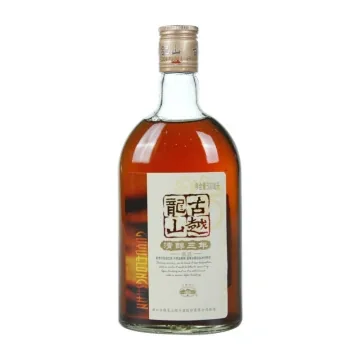 Reference image
Editorial responsibility
- No named human review is recorded for this page.
- Reports are grouped by semantic similarity and deterministic rules. Language models may assist titles, summaries, translation and cross-source analysis; the page reads the event directly, while its address stays stable when the title changes.
- Summary covers the current reports
Cross-source coverage
Common ground
- Policy signals and government vouchers are real factors that influence market behavior in China.
- Speculative capital and momentum trading are driving the recent stock price surges in yellow wine companies.
- Baijiu distributors entering the yellow wine space show a supply-side response to potential demand shifts.
- The rally needs to be validated by actual consumer sell-through data over the next few quarters.
- Geopolitical factors and capital rotation toward domestic assets are part of the broader context.
Points of contention
- Whether the rally reflects a genuine structural shift in consumer demand or just a short-term speculative trade.
- If government cultural campaigns can create lasting consumer behavior change or only temporary buzz.
- Whether yellow wine can overcome its shelf life and prestige limitations to become a premium national product.
- If the premiumization trend will squeeze out traditional working-class consumers or create a tiered market.
- Whether the price action is driven by retail speculation or institutional strategic allocation.
Blind spots
- The debate largely ignores the actual voices and preferences of traditional yellow wine drinkers.
- There is little discussion of how younger generations' cultural identity might reshape consumption independently of policy.
- The shelf life issue is treated as a fixed constraint, but innovation in packaging or use cases could change it.
- The role of social signaling and gift hierarchies in Chinese consumption is acknowledged but not deeply analyzed.
- The potential for the state to sustain artificial markets longer than short sellers can wait is not fully explored.
WorldAttention’s read
This debate reveals a clash between those who see the yellow wine rally as a speculative bubble driven by momentum trading and those who view it as a sign of deeper cultural and policy shifts in China's consumption landscape. While all sides agree that government signals and distributor moves are real, they disagree sharply on whether these factors translate into lasting consumer demand. The neutral agent insists on waiting for sell-through data, the eastern agent emphasizes cultural confidence and policy multipliers, and the regional agent warns that working-class traditions are being repackaged for financial gain. Ultimately, the blind spots—such as the actual preferences of traditional drinkers and the potential for innovation—suggest that the full story is still unfolding, and the market's direction will depend on whether premiumization can overcome practical and cultural barriers over the long term.
Reporting timeline
Shaoxing Rice Wine Stocks Surge as Investors Shift from Slumping Baijiu Sector
Chinese rice wine (huangjiu) stocks, led by Kuaijishan (601579.SH), have dramatically outperformed the struggling baijiu sector since August 2024, driven by expectations of industry restructuring and channel expansion. Kuaijishan's share price more than doubled in September alone, reaching a record high of 41.21 yuan before closing at 36.75 yuan on September 23. Rivals Guyue Longshan and Jinfeng Wine also saw significant gains. Analysts attribute the rotation to three factors: major baijiu distributors shifting resources to rice wine, premiumization strategies by leading brands, and a market preference for small-cap stocks amid limited liquidity. However, the rally is largely expectation-driven, as only Kuaijishan reported revenue and profit growth in its first-half results, while Guyue Longshan's revenue declined and Jinfeng remained loss-making. The article notes that while the industry's structural improvement is promising, sustained stock performance depends on actual earnings growth, which may take quarters to materialize.
Read sourceKuaijishan shares double in a month; Chinese rice wine market gains favor during Mid-Autumn and National Day holidays
Amid a downturn in the baijiu (white liquor) sector, Chinese rice wine (huangjiu) stocks have surged ahead of the Mid-Autumn Festival and National Day holidays. Kuaijishan (601579.SH) shares have risen 143.54% since August, hitting a record high of 41.21 yuan on September 23 before closing at 36.75 yuan. Fellow producers Guyue Longshan (600059.SH) and Jinfeng Wine (600616.SH) also saw gains. The article attributes the rally to three factors: channel expansion as major baijiu distributors shift resources to rice wine; premiumization strategies by leading brands; and a rotation of speculative capital into small-cap stocks amid a lack of market direction. However, the article notes that only Kuaijishan reported revenue and profit growth in its half-year results, while Guyue Longshan's revenue fell and Jinfeng Wine remained loss-making. Analysts cited in the article caution that the sector's structural improvement is a gradual process requiring sustained product and consumer cultivation, and that the sustainability of the stock rally depends on earnings growth.
Read sourceChinese rice wine stocks surge as baijiu distributors enter sector ahead of Mid-Autumn Festival
On September 23, A-share rice wine (huangjiu) stocks rallied sharply, with Guyue Longshan hitting the daily limit up and Kuaijishan reaching a record high, up 113% month-to-date. The surge is attributed to increasing numbers of major baijiu (white spirit) distributors entering the rice wine sector by signing national agency agreements. Kuaijishan has formed partnerships with multiple regional liquor distributors since April, including Henan MaoWujian Trade, Northeast China's Baishan Fangda Group, and Beijing Sugar Tobacco Liquor Group. Guyue Longshan upgraded its cooperation with Beijing Sugar Tobacco Liquor Group in May and signed a tripartite deal with Guangdong Yueqiang and Chongqing Agricultural Materials in September to launch a custom product. The upcoming Mid-Autumn and National Day holidays are also boosting seasonal sales, with companies launching gift boxes and promotional campaigns. Orient Securities views the rally as event-driven valuation recovery, noting accelerated channel expansion and premiumization logic, but warns about price stability and consumer cultivation. Shenwan Hongyuan Securities cautions that while capital markets are optimistic, the sector's premiumization and national expansion still require long-term validation.
Read sourceShow 4 older updatesHide older updates
Huangjiu 'Three Musketeers' Surge as Market Bets on National Expansion and Changing Tastes
On September 23, shares of China's three major Huangjiu (yellow wine) producers surged, with Kuaijishan hitting a record high after a 7-day, 5-limit-up streak, Guyue Longshan hitting its highest since January 2022, and Jinfeng Wine also spiking. The rally is driven by expectations that Huangjiu will expand beyond its traditional Jiangsu-Zhejiang-Shanghai stronghold, as more major baijiu distributors take on national Huangjiu agency roles. Huatai Securities forecasts a restructuring of the industry's volume-price logic, citing steady consumption upgrades and leading companies jointly cultivating the brand. Meanwhile, the baijiu sector faces a tepid pre-holiday season, with distributors adopting cautious restocking strategies. BOC International notes that the Huangjiu boom reflects an upgrade and iteration of traditional liquor business models, as consumer preferences shift toward 'low-alcohol, relaxed and healthy' drinking habits amid a sharp contraction in business banquet scenarios. The analysts caution that sustained terminal repurchase rates need monitoring. The article also notes that the Ministry of Culture and Tourism launched the 2026 National Day holiday consumption month, with over 31 billion yuan in vouchers to be issued.
Read sourceNon-Baijiu Stocks Surge as China Launches National Holiday Tourism Month
On September 23, non-baijiu liquor stocks rose 3.31% in intraday trading, led by gains in yellow wine and other alcoholic beverage shares. Key movers included Guyue Longshan (600059) up 10.01%, Jinfeng Wine (600616) up 9.98%, Kuaijishan (601579) up 8.30%, Baorun (002568) up 5.90%, and Changyu A (000869) up 4.99%. The rally followed the Ministry of Culture and Tourism's launch of the 2026 National Day Culture and Tourism Consumption Month in Mile City, Yunnan Province. The event runs from late September to late October, featuring over 20,000 cultural tourism activities and more than 310 million yuan in consumption vouchers to boost holiday travel and spending. Guohai Securities research notes that beer and beverage revenues faced pressure in the first half of 2026 due to weather disruptions and weak demand, along with rising raw material costs. Looking ahead, the brokerage recommends focusing on restaurant channel recovery for beer and travel-driven demand for beverages. The article profiles leading stocks: Guyue Longshan as a premium yellow wine leader with national distribution; Kuaijishan as the top revenue yellow wine company; Jinfeng Wine as the third-ranked player with its Shikumen brand; Baorun as the dominant premix cocktail maker with over 70% market share; and Changyu as China's largest wine producer.
Read sourceNon-Baijiu Stocks Surge as China Launches National Day Tourism Consumption Month
On September 23, non-baijiu (non-white liquor) stocks rose 3.31% in intraday trading, led by gains in yellow wine and other beverage shares. Key movers included Guyue Longshan (600059) up 10.01%, Jinfeng Wine (600616) up 9.98%, and Kuaijishan (601579) up 8.30%. The rally followed the Ministry of Culture and Tourism's launch of the 2026 National Day Cultural Tourism Consumption Month in Mile City, Yunnan Province, running from late September to late October. The initiative includes over 20,000 cultural tourism events and more than 310 million yuan in consumption vouchers to boost holiday travel and spending. Separately, a Guohai Securities research report noted that beer and beverage revenues faced pressure in the first half of 2026 due to weather disruptions and weak demand, along with rising raw material costs. The brokerage recommended monitoring restaurant channel recovery for beer and travel-driven demand for beverages. The article also profiles five related stocks: Guyue Longshan (yellow wine leader), Kuaijishan (top revenue in yellow wine), Jinfeng Wine (third-ranked yellow wine), Baorun (Baijiu) (premixed cocktail leader with 70% market share), and Changyu A (China's largest wine producer).
Read sourceKuaijishan stock doubles in a month; Chinese rice wine gains favor over baijiu during holidays
This article from East Money News analyzes the recent outperformance of Chinese rice wine (huangjiu) stocks compared to baijiu stocks during the Mid-Autumn Festival and National Day holiday period. Since August, Kuaijishan (会稽山) shares surged 143.54%, while Guyue Longshan (古越龙山) and Jinfeng Wine (金枫酒业) rose 38.51% and 29.02% respectively. In contrast, the CSI Baijiu Index fell 10.12%. The article attributes this shift to several factors: baijiu's ongoing downturn with high inventory and price inversion; rice wine's channel expansion as top baijiu distributors shift resources; premiumization strategies by rice wine leaders; and stock-picking by speculative funds in small-cap names. However, the article notes that only Kuaijishan achieved revenue and profit growth in the first half, while Guyue Longshan saw revenue decline and Jinfeng Wine remained loss-making. Analysts cited caution that rice wine's structural improvement is a gradual process requiring sustained product and consumer cultivation, and that the rally's sustainability depends on earnings delivery.
Read source