Chinese small factories shift to small-batch, fast-response model for higher margins
Small manufacturers in Yiwu and Shaoxing, Zhejiang, are shifting from large-volume orders to a "small order, fast response" (小单快反) model, prioritizing batches of 50-200 pieces. Executives report profit margins of 20-50% on small orders versus 5-10% on large orders. The shift is driven by e-commerce platforms like SHEIN and TEMU, market uncertainty, and inventory risk. Factories invest in in-house equipment and coordinate across industrial clusters to enable rapid, demand-driven production.
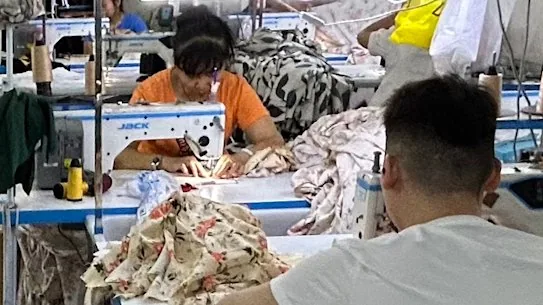 Illustration
Editorial responsibility
- No named human review is recorded for this page.
- Reports are grouped by semantic similarity and deterministic rules. Language models may assist titles, summaries, translation and cross-source analysis; the page reads the event directly, while its address stays stable when the title changes.
- Summary covers the current reports
Cross-source coverage
Reporting timeline
Chinese Small Factories Shift from Million-Yuan Orders to 50-Piece Small Orders for Higher Margins
This article from Time Weekly, republished by NetEase Finance, examines how small Chinese manufacturers, particularly in Yiwu and Shaoxing, are adopting a 'small order fast response' (小单快反) supply chain model. Instead of pursuing large orders worth hundreds of thousands or millions of yuan, factories like Yiwu Heting Outdoor Products and Zhejiang Yifan Daily Products now prioritize small orders of 50-200 pieces, which yield higher profit margins (20-50%) compared to large orders (5-10%). This shift is driven by market uncertainty, e-commerce platforms (including cross-border ones like SHEIN and TEMU), and the need to avoid inventory risks. The model relies on flexible production, local industrial clusters for rapid subcontracting, and real-time sales data to drive production. Executives interviewed note that while small orders require more complex scheduling and coordination across multiple suppliers, they reduce inventory costs and allow factories to follow actual demand rather than speculative bulk production. The article highlights how this transformation is reshaping China's manufacturing base, turning entire cities into coordinated production networks for small batches.
Chinese small factories shift from large orders to small-batch, fast-response production model
This article from Time Weekly, republished by NetEase Finance, examines how small manufacturers in China's industrial clusters, particularly in Yiwu and Shaoxing, are adopting a 'small order, fast response' (小单快反) supply chain model. Factory owners like Yan Qing of Heting Outdoor and Shu Kai of Yifan Daily Necessities report that they now prefer orders of 50-200 items over traditional 500,000 yuan or million-yuan orders, as smaller orders yield higher profit margins (20-50% vs. 5-10%). The shift is driven by e-commerce platforms (including cross-border ones like SHEIN and TEMU), AI-assisted design by small buyers, and the need to avoid inventory risk. Factories are investing in in-house equipment for faster turnaround, using industrial clusters to outsource specialized tasks, and assigning dedicated staff to coordinate supply chains. The model transforms inventory management from 'produce-to-stock' to 'produce-to-demand', allowing factories to test markets with minimal risk and reorder based on real sales data. The article notes that while large orders have not disappeared, the new flexibility is becoming standard across many industrial belts.
Chinese small factories shift from big orders to small-batch, fast-response production model
Chinese small factories, particularly in Zhejiang's industrial clusters like Yiwu and Shaoxing, are increasingly adopting a 'small-batch, fast-response' (小单快反) supply chain model, moving away from traditional large-volume orders. Executives from companies like Yiwu Heting Outdoor Products and Zhejiang Yifan Daily Products explain that small orders of 50-200 units now offer higher profit margins (20-50%) compared to large orders (5-10%), while reducing inventory risk. The model, driven by e-commerce platforms (1688, SHEIN, TEMU) and social media sellers (Xiaohongshu), allows factories to test market demand with minimal upfront production. This shift requires factories to invest in in-house equipment for faster turnaround, build flexible supplier networks, and assign dedicated staff to coordinate production across multiple factories. The article notes that while large orders have not disappeared, the new approach enables factories to maintain continuous machine operation amid market uncertainty, effectively turning an entire city's industrial ecosystem into a single responsive production network.
Read sourceShow 2 older updatesHide older updates
Small Chinese factories shift from million-yuan orders to 50-piece batches under 'small order, fast response' model
Chinese small and medium manufacturers, particularly in Yiwu and Shaoxing, are increasingly adopting a 'small order, fast response' (小单快反) supply chain model, moving away from traditional large-volume orders. Yan Qing, CEO of Yiwu Heting Outdoor Products, reports that orders of 50-200 pieces now yield higher profit margins (20-50%) than 500,000-yuan orders (5-10%). Shu Kai, general manager of Zhejiang Yifan Daily Products, notes that this model requires renegotiating supplier relationships to handle fragmented, urgent orders. The shift is driven by e-commerce platforms (1688, SHEIN, TEMU) and individual sellers using AI for design, who test markets with small batches before scaling. Factories are investing in in-house equipment to reduce lead times, and relying on regional industrial clusters to flexibly allocate production across multiple facilities. The article cites National Bureau of Statistics data showing finished goods inventory at 6.73 trillion yuan as of end-2025, highlighting the inventory pressure that 'small order, fast response' aims to alleviate.
Read sourceChinese Small Factories Shift from Million-Yuan Orders to 50-Piece Small Orders for Higher Margins
Chinese small factories, particularly in manufacturing hubs like Yiwu and Shaoxing, are increasingly adopting a 'small order, fast response' (小单快反) supply chain model. This shift, driven by market uncertainty and the rise of e-commerce platforms like SHEIN and TEMU, sees factories prioritizing small batches (50-200 pieces) over traditional large orders. Executives like Yan Qing of Yiwu Hetting Outdoor Products report that small orders yield profit margins of 20-30%, compared to 5-10% for large orders. The model reduces inventory risk and allows for rapid market testing. However, it requires complex coordination across a network of specialized suppliers within an industrial cluster, effectively 'scheduling a city' to fulfill a single order. The trend is reshaping factory operations, with investments in in-house equipment for faster turnaround and new partnerships with small buyers, including high school students using AI for design. This represents a fundamental shift from mass production to flexible, demand-driven manufacturing.
Read source