Lithium Carbonate Futures Swing Sharply, Falling Over 3% to 128,860 Yuan per Ton
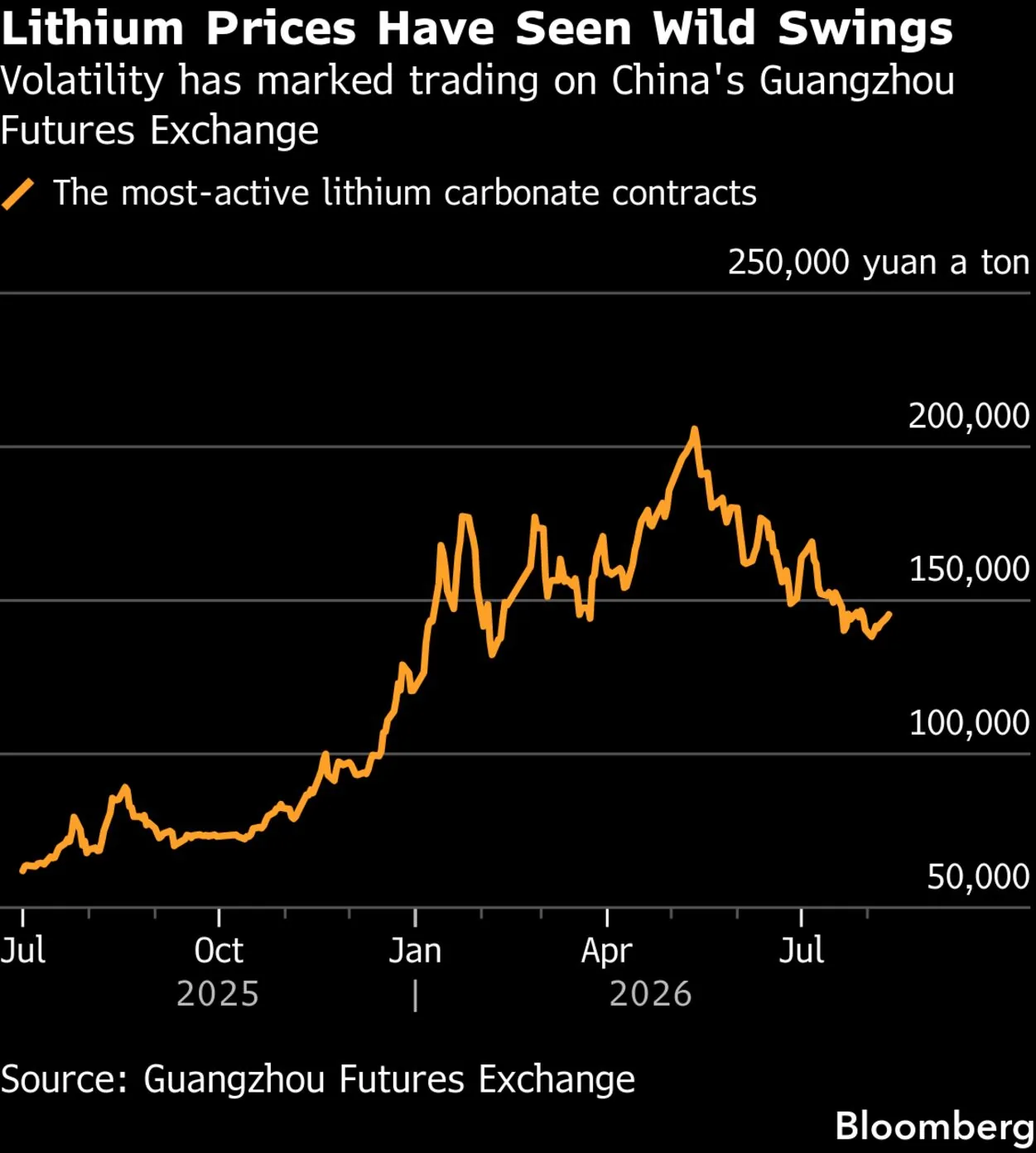
Lithium carbonate futures on Chinese exchanges experienced sharp volatility, with prices surging over 3% to 132,340 yuan per ton on September 21, then falling over 3% to 128,860 yuan per ton by September 23. The main contract also saw a 4% gain to 133,600 yuan per ton and a 2% drop to 130,460 yuan per ton in separate sessions. No specific causes for the swings were provided in the reports.
 Illustration
Editorial responsibility
- No named human review is recorded for this page.
- Reports are grouped by semantic similarity and deterministic rules. Language models may assist titles, summaries, translation and cross-source analysis; the page reads the event directly, while its address stays stable when the title changes.
- Summary covers the current reports
Cross-source coverage
Common ground
- Both sides agree that a 3-6% daily swing in lithium carbonate futures is normal commodity volatility, not a crisis.
- Both acknowledge that Western media ran alarmist headlines during the 80% price crash but went quiet on the recovery.
- Both recognize that the 40% drop in open interest since March 2024 is a legitimate concern about market depth.
- Both agree that China's Guangzhou Futures Exchange is still maturing and that all major commodity exchanges go through volatile phases.
Points of contention
- The Neutral Agent argues the volatility shows thin liquidity and unreliable hedging, while the Eastern Agent says it's normal price discovery for a maturing market.
- The Neutral Agent sees 60% dependency on Australian spodumene as a concentration risk, while the Eastern Agent calls it strategic integration with a stable trade partner.
- The Eastern Agent claims GFE pricing gives Chinese manufacturers a cost advantage, but the Neutral Agent says the margin improvement comes from falling raw material costs, not exchange mechanics.
- The Neutral Agent says the headlines are noise without fundamentals, while the Eastern Agent says they show China building independent pricing power.
Blind spots
- Neither side fully addresses how the 40% drop in open interest might signal that participants are fleeing due to unreliable hedging, not just global risk-off conditions.
- Both overlook the possibility that the 6% intraday swing could be driven by algorithmic trading rather than genuine supply-demand signals.
- The debate misses the environmental and social costs of China's domestic lepidolite production in Jiangxi province, which could affect long-term supply.
- Neither considers how policy changes in other countries, like Australia or Chile, might disrupt the spodumene supply chain regardless of trade agreements.
WorldAttention’s read
This debate shows that the lithium carbonate price swings are being interpreted through two very different lenses: one focused on market mechanics and fundamentals, the other on geopolitical strategy and sovereignty. Both sides agree the volatility is normal for a maturing market, but they clash on whether it signals strength or weakness. The real blind spot is that neither side has hard data on downstream demand or inventory levels, so the headlines remain just numbers without context. Ultimately, the 130,000 yuan price level reflects a temporary balance between unprofitable domestic mines and still-profitable Australian imports, and until we see actual order books from battery makers, these debates are more about narratives than reality.
Reporting timeline
Lithium Carbonate Futures Fall Over 3% to 128,860 Yuan per Ton
According to a report from Chinese financial media outlet Cailianshe on September 23, the main contract for lithium carbonate futures fell by more than 3% in trading, with the latest price reported at 128,860 yuan per ton. The brief dispatch provides a snapshot of the commodity's price movement on that day, reflecting ongoing volatility in the lithium market, which is a key raw material for electric vehicle batteries. No further context or analysis was provided in the original item.
Read sourceLithium Carbonate Futures Fall 2% to 130,460 Yuan per Ton in Day Trading
According to data from Jin10, the main lithium carbonate futures contract fell 2.00% during intraday trading on the Chinese market, currently quoted at 130,460 yuan per ton. The report provides a snapshot of the commodity's price movement without attributing the decline to any specific cause or offering forecasts.
Read sourceLithium Carbonate Futures Surge 4% to 133,600 Yuan per Ton
The main contract for lithium carbonate futures on the Chinese market rose by 4.00% during the trading day, reaching a price of 133,600 yuan per ton, according to data from financial information provider Jin10. This price movement reflects a significant intraday gain for the key battery material, which is a critical component in electric vehicle batteries and energy storage systems. The report does not provide specific reasons for the price increase, such as changes in supply-demand dynamics, policy developments, or broader market trends. The data point is a snapshot of market activity and does not include forecasts or attributed opinions.
Read sourceShow 2 older updatesHide older updates
Guangzhou Futures Exchange Lithium Carbonate Futures Surge Over 3%
On September 21, according to People's Financial News, the main contract for lithium carbonate on the Guangzhou Futures Exchange (GFEX) surged over 3%, reaching 132,340 yuan per ton. This price movement reflects a significant intraday gain for the key battery metal futures contract, which is closely watched by the electric vehicle and energy storage industries. The report provides a snapshot of the market activity at that time, indicating strong bullish momentum in the lithium carbonate futures market. No specific reasons for the price increase, such as supply disruptions or demand shifts, were cited in the brief dispatch.
Read sourceGuangzhou Futures Exchange Lithium Carbonate Main Contract Surges Over 3%
The main contract for lithium carbonate on the Guangzhou Futures Exchange (GFEX) rose by more than 3% during trading, reaching a price of 132,340 yuan per ton. This price movement reflects a significant gain for the battery material, which is a key component in electric vehicle batteries and energy storage systems. The report, sourced from stockstar_stock_live, provides a snapshot of the commodity's performance on the exchange. No specific reasons for the price increase, such as changes in supply-demand dynamics, policy announcements, or market sentiment, were provided in the brief item. The price level indicates the current market valuation for delivery under the main contract terms.
Read source