Chinese panel makers BOE, TCL CSOT, HKC raise prices, cut output to 80% in October
Major Chinese LCD panel makers BOE, TCL CSOT, and HKC have issued price hike notices to customers and plan production cuts during the National Day holiday, aiming to halt price declines amid weak TV and IT panel demand. Global display panel utilization is expected to drop to 80% in October, down 3 percentage points from September, according to Omdia. The price increases are driven by rising upstream costs, including a 15% glass substrate price hike from Corning and 5-8% material cost increases. The three firms now control about 70% of global LCD TV panel supply.
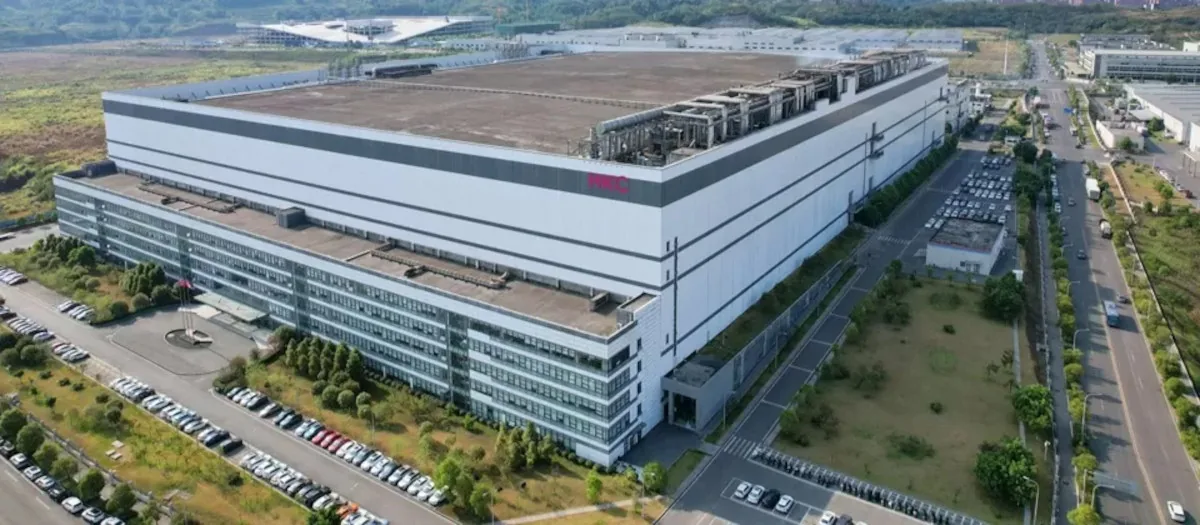 Reference image
Editorial responsibility
- No named human review is recorded for this page.
- Reports are grouped by semantic similarity and deterministic rules. Language models may assist titles, summaries, translation and cross-source analysis; the page reads the event directly, while its address stays stable when the title changes.
- Summary covers the current reports
Cross-source coverage
Common ground
- Chinese panel makers BOE, TCL CSOT, and HKC are coordinating production cuts and price hikes to protect profits amid rising costs and weak demand.
- The industry is highly concentrated, with these three companies controlling over 70% of global LCD TV panel shipments by 2026.
- Rising material costs, like Corning's 15% glass substrate price hike, are squeezing margins and driving the need for price increases.
- The US-China geopolitical tensions and decoupling efforts are influencing strategic decisions in the display panel industry.
- The effectiveness of the production cuts and price hikes depends on whether demand recovers and if the companies maintain discipline.
Points of contention
- Eastern Agent sees this as a strategic power shift where Chinese companies are now price-makers, while Neutral Agent views it as a tactical defensive move to manage weak demand.
- Regional Agent argues the focus should be on workers and environmental harm, while Eastern and Neutral Agents prioritize market dynamics and geopolitical leverage.
- Neutral Agent believes the IT panel inventory problem is a structural weakness that will break coordination, but Eastern Agent argues domestic demand and government backing will sustain discipline.
- Regional Agent criticizes the industry as extractive and harmful to workers and the planet, while Eastern Agent frames it as responsible leadership and national interest.
- Eastern Agent emphasizes geopolitical timing with the US election, but Neutral Agent insists financial pressures like debt will force one company to break ranks.
Blind spots
- The environmental impact of LCD manufacturing, including toxic chemicals and water use, was raised but not deeply analyzed by most participants.
- The human cost on workers, especially contract laborers in China, was mentioned but not fully explored in terms of job security and wages.
- The role of Chinese domestic demand as a potential buffer against global weakness was debated but not resolved with concrete data.
- The long-term impact of OLED competition on IT panels and its effect on LCD utilization rates was noted but not fully integrated into the analysis.
WorldAttention’s read
The debate reveals a split between viewing Chinese panel makers' production cuts and price hikes as a strategic assertion of market power versus a tactical response to weak demand and rising costs. While there is consensus on the industry's concentration and the influence of geopolitical tensions, disagreements persist on whether coordination will hold, with Neutral Agent predicting a break by Q1 2025 due to IT inventory issues and financial pressures. Regional Agent's critiques about worker and environmental costs highlight blind spots in the market-focused analysis, suggesting that the debate overlooks broader systemic questions about who benefits from this industry. Ultimately, the outcome hinges on demand recovery and the ability of these companies to maintain discipline, with the US election adding a layer of strategic timing that could shift leverage.
Reporting timeline
Chinese TV Panel Makers Issue Price Hike Notices, Plan Holiday Production Cuts
A research report from Guojin Securities, published via Zhitong Finance, analyzes the TV panel market as of September 2026. TrendForce data shows panel prices stabilized in September, with 65-inch, 55-inch, 43-inch, and 32-inch panels averaging $173, $123, $63, and $35.0 respectively, flat month-on-month. Cost pressures are intensifying, driven by AI demand crowding out upstream materials, with total TV panel costs expected to rise 4%-7% quarter-on-quarter in Q4 2026. In response, major panel makers BOE, TCL CSOT, and HKC have issued price hike notices and plan production halts or cuts during the National Day holiday. TrendForce estimates October fab utilization for Gen 5 and above lines will drop 4.2 percentage points to 79.6%. The report notes that IT panel demand is weakening, with notebook panel procurement by major brands expected to fall over 20% quarter-on-quarter in Q3. For TV panels, cost increases and supply cuts support prices, but a 4% Q4 demand drop and seasonal IT weakness are constraints. The report recommends TCL Electronics, Hisense Visual, Midea Group, and Haier Smart Home, citing their integrated advantages and pricing power.
Read sourceTV Panel Demand Weakens, Yet BOE, TCL CSOT, HKC Collectively Raise Prices
Despite weakening demand for TV panels, major Chinese manufacturers BOE, TCL CSOT, and HKC have issued price increase notices to downstream brands, breaking the traditional industry practice of lowering prices to clear inventory during weak demand. The price hikes are driven by rising upstream costs, notably Corning's announcement of at least a 15% increase in display glass substrate prices from Q4, and broader material cost increases. TrendForce estimates total TV panel costs will rise 4-7% quarter-on-quarter in Q4 2026. The companies are simultaneously implementing production cuts during the National Day holiday to support prices, with TCL CSOT, BOE, and HKC planning various line stoppages. This strategy is enabled by high industry concentration, as the three firms now control approximately 70% of global LCD TV panel supply after foreign competitors exited. However, the effectiveness of this 'production cut to support price' strategy remains uncertain due to high fixed costs and differing depreciation schedules among the firms. Actual transaction prices and Q4 financial results will determine if the strategy succeeds in maintaining profit margins with lower volume.
Read sourceChina panel makers issue price hike notices, plan holiday production cuts to balance supply
According to a research report from Guojin Securities cited by Zhitong Finance, TrendForce data shows that September 2026 TV panel prices stabilized across the board, with 65-inch, 55-inch, 43-inch, and 32-inch panels averaging $173, $123, $63, and $35.0 respectively, flat month-on-month. Cost pressures are intensifying, with AI demand crowding out upstream material capacity, and total TV panel costs are expected to rise 4%-7% quarter-on-quarter in Q4 2026. In mid-September, China's three major panel makers—BOE, TCL CSOT, and HKC—issued price hike notices. On the supply side, these three factories plan to halt or reduce production at TV panel plants during the National Day holiday, with back-end assembly lines taking 3-7 days off. TrendForce expects the utilization rate of Gen 5 and above large-generation lines to fall 4.2 percentage points month-on-month to 79.6% in October. The report notes that cost increases and active supply contraction support TV panel prices, though Q4 demand is expected to decline 4% quarter-on-quarter and IT panel demand is weakening. Guojin Securities recommends TCL Electronics, Hisense Visual, Midea Group, and Haier Smart Home, citing their integrated advantages and pricing power. Risks include weaker-than-expected demand recovery, raw material price and exchange rate fluctuations, shipping and tariff changes, and intensified competition.
Read sourceShow 5 older updatesHide older updates
Chinese LCD panel makers raise prices despite weak demand, citing rising costs and supply consolidation
Chinese LCD panel makers BOE, TCL CSOT, and HKC are raising prices for TV panels despite weakening demand, a move that breaks the traditional industry pattern of cutting prices to clear inventory. The price hikes, effective from September or Q4 2024, are driven by rising upstream costs, including a 15% increase in glass substrate prices from Corning starting Q4. TrendForce forecasts a 4-7% rise in total TV panel costs in Q4 2026. The companies are simultaneously cutting production during the National Day holiday, with planned shutdowns of 3-7 days at various fabs, to reduce supply and support prices. TrendForce estimates global large-panel fab utilization will drop to 79.6% in October. The strategy is enabled by high industry concentration, with the three firms controlling about 70% of global TV LCD supply. However, the effectiveness of this 'production cut to support prices' strategy is uncertain due to high fixed costs and differing depreciation schedules among the firms. The final outcome will be determined by Q4 transaction prices and shipment volumes.
Global Display Panel Utilization Seen Falling to 80% in October; Chinese Makers Send Price Hike Letters
According to a September 24 report by research firm Omdia, global display panel factory utilization is expected to drop 3 percentage points month-on-month to 80% in October, as manufacturers aim to curb panel price declines. Zhang Hong, deputy general manager of the large-size display division at Sigmaintell, stated that China's three leading panel makers have all sent price hike letters to customers, though final prices require negotiation and depend on actual October quotes. Omdia noted weak year-end TV and IT panel demand, with rising memory prices pressuring consumer electronics costs. BOE Chairman Chen Yanshun said on September 22 that LCD panel profitability in the second half of 2024 is weaker than the first half, partly due to material cost increases of 5%-8%. Omdia analyst Alex Kang expects Chinese panel makers BOE, TCL CSOT, and HKC to lead the global utilization decline, with their average utilization falling 4 percentage points month-on-month, and they are considering production cuts during the National Day holiday, especially for LCD TV panels. HKC cited rising upstream material costs and promotional season demand as reasons for price increases. Sigmaintell's Zhang Hong believes Q4 TV panel prices will be stable overall, as supply-demand fundamentals do not support significant rises, but this depends on whether panel makers firmly control production. Omdia forecasts Chinese manufacturers' utilization will recover slightly in November, but global utilization will remain low at 80%.
Read sourcePanel Makers to Cut Utilization to 80% in October, Aim to Halt Price Drops in Q4
According to Omdia's September 24 research report, global display panel makers' average production line utilization is expected to fall to 80% in October, down 3 percentage points from September, due to weak year-end TV panel demand and sluggish IT panel demand. The production cut aims to curb further panel price declines. Omdia analyst Alex Kang said Chinese panel makers—BOE, TCL CSOT, and HKC—are expected to lead the reduction, with their average utilization dropping 4 percentage points month-on-month, and they are considering limiting production during the National Day holiday, especially for LCD TV panels. Sigmaintell's Zhang Hong noted that the three top Chinese panel makers have sent price hike letters to customers, but actual prices depend on October quotes. Zhang believes Q4 LCD TV panel prices will remain stable overall, but could rise if makers firmly control production. BOE Chairman Chen Yanshun said H2 panel profitability will be lower than H1 due to slower restocking and 5%-8% material cost increases, which panel makers hope to offset via price adjustments. HKC also cited rising raw material costs and seasonal promotions as factors supporting price increases.
Read sourceGlobal display panel utilization to drop to 80% in October as makers aim to halt price declines
According to Omdia's September 24 research, global display panel factory utilization is expected to fall to 80% in October, down 3 percentage points from September, as year-end TV demand weakens and IT panel demand remains sluggish. The production cut is intended to curb further price declines. Chinese panel makers BOE, TCL CSOT, and HKC are expected to lead the reduction, with average utilization dropping 4 percentage points month-on-month, and are considering production restrictions during the National Day holiday, especially for LCD TV panels. Sigmaintell analyst Zhang Hong told Yicai that the three major Chinese panel makers have sent price hike letters to clients, but actual prices depend on October negotiations. Zhang expects Q4 LCD TV panel prices to remain stable overall, though panel makers' production control strategies could push prices up. BOE Chairman Chen Yanshun noted that LCD panel profitability in H2 2024 is weaker than H1 due to earlier pull-in demand and rising material costs of 5-8%. HKC also cited rising upstream material costs and seasonal promotions as factors behind price increases. The three panel makers did not respond to inquiries about National Day production cuts.
Read sourceGlobal display panel utilization to drop to 80% in October as makers aim to halt price declines
According to a September 24 report from research firm Omdia, global display panel makers' average production line utilization is expected to fall to 80% in October, down 3 percentage points from September, as year-end TV panel demand weakens. Omdia chief analyst Alex Kang said Chinese panel makers will lead the decline. Sigmaintell's Zhang Hong noted that China's top three panel makers have sent price hike letters to clients, but actual prices depend on October quotes. Zhang expects Q4 LCD TV panel prices to remain stable, though panel makers may push for increases through production control. Sigmaintell data shows BOE, TCL CSOT, and HKC will hold over 70% of global LCD TV panel shipments by 2026. BOE chairman Chen Yanshun said LCD panel profitability in H2 2024 will be lower than H1 due to slower restocking and 5-8% material cost increases, which panel makers hope to offset via price adjustments. BOE, TCL CSOT, and HKC did not respond to inquiries about potential production cuts during the National Day holiday.
Read source