Chinese gold prices diverge: jewelry brands cut, banks raise bar rates in late September
Between September 17 and 23, 2026, Chinese gold jewelry and bar prices showed mixed movements. Jewelry brands including Chow Tai Fook and Chow Sang Sang cut prices by 5-7 yuan/gram on one day, while earlier on September 17, Lao Feng Xiang raised pure gold jewelry to 1,300 yuan/gram. Gold bar prices also diverged: ICBC rose 8.19 yuan/gram on September 23, while Agricultural Bank of China fell 11.09 yuan/gram on September 21.
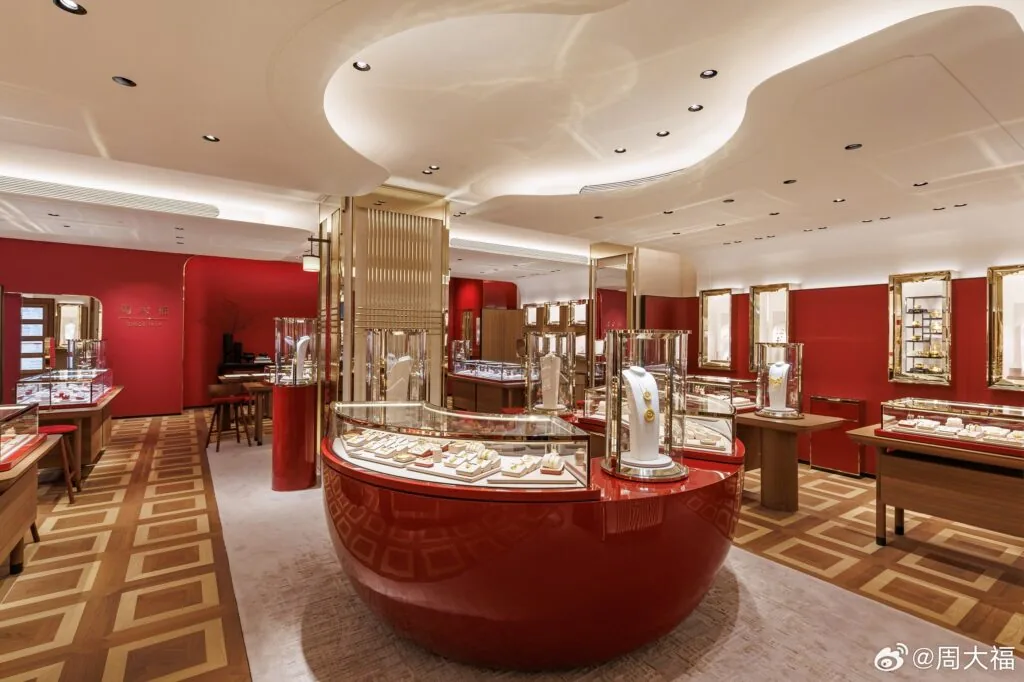 Reference image
Editorial responsibility
- No named human review is recorded for this page.
- Reports are grouped by semantic similarity and deterministic rules. Language models may assist titles, summaries, translation and cross-source analysis; the page reads the event directly, while its address stays stable when the title changes.
- Summary covers the current reports
Cross-source coverage
Common ground
- Both agree that gold has deep cultural significance in China and that jewelry purchases often serve as intergenerational wealth transfer.
- Both acknowledge that there is a real divergence between bank gold bar prices and jewelry brand prices.
- Both recognize that Chinese consumers are making rational choices within their cultural and financial context.
- Both agree that the multipolar world is emerging, though they disagree on how it manifests.
Points of contention
- Eastern Agent sees the rise in gold jewelry prices as evidence of a geopolitical shift away from Western financial systems, while Neutral Agent views it as basic market segmentation driven by cultural and retail factors.
- Eastern Agent argues that buying jewelry is a sovereignty play for privacy and autonomy, while Neutral Agent contends that bank gold bars are a more efficient store of value for wealth preservation.
- Eastern Agent claims the Shanghai Gold Exchange premium signals structural decoupling from Western benchmarks, while Neutral Agent attributes it to capital controls and import quotas, not a political movement.
- Eastern Agent believes grandmothers and the central bank are making the same bet on gold, while Neutral Agent insists they have different motivations and scales.
Blind spots
- Eastern Agent overlooks that jewelry premiums reduce its effectiveness as a pure store of value compared to bank bars, and may overstate the scale of consumer-driven decoupling.
- Neutral Agent underweights the possibility that cultural practices like jewelry buying can collectively signal broader shifts in trust and financial behavior, even if not explicitly geopolitical.
- Both fail to fully explore how regulatory changes or future sanctions could alter the dynamics of gold pricing and consumer behavior in China.
WorldAttention’s read
The debate reveals a fundamental clash between a strategic, geopolitical lens and a technical, market-based lens. Eastern Agent convincingly highlights the cultural and sovereignty dimensions of Chinese gold buying, arguing that even small price moves reflect a quiet shift away from dollar dependence. Neutral Agent effectively counters with data showing that jewelry demand is flat, premiums are driven by regulation, and bank bars are a more rational choice for wealth preservation. The core disagreement boils down to whether consumer behavior in jewelry stores is a meaningful part of a multipolar revolution or just a cultural tradition with market quirks. Ultimately, both sides agree that the multipolar world is real, but they differ on where to look for evidence: Eastern Agent sees it in everyday choices, while Neutral Agent insists it's in central bank reserves and trade infrastructure. The truth likely lies somewhere in between—cultural practices can reflect and reinforce larger shifts, but they don't replace the need for hard data on institutional change.
Reporting timeline
Gold Bar Prices Mixed: ICBC Rises, Chow Tai Fook Falls on Sept 23
As of 11:02 on September 23, 2026, a market overview from financial data provider Jin10 shows mixed movements in gold bar prices across major Chinese banks and jewelry brands. Among banks, Industrial and Commercial Bank of China (ICBC), Bank of Communications, and China Minsheng Bank saw price increases, with ICBC recording the largest gain of 8.19 yuan per gram compared to the previous day. In contrast, jewelry brands including Chow Tai Fook, TSL Jewellery, and Chow Sang Sang experienced price declines, with Chow Sang Sang posting the largest drop of 3 yuan per gram from the prior day's close. The report indicates a general trend of more decliners than gainers in the gold bar market for this session.
Chinese Gold Jewelry Prices Fall: Chow Tai Fook, Chow Sang Sang Drop 5-7 Yuan/Gram
According to a Jin10 data chart, domestic gold jewelry prices in China showed a decline across multiple brands on the day. High-end brands such as Chow Tai Fook and Chow Sang Sang experienced single-day drops of 5-7 yuan per gram. In contrast, Caibai Jewelry maintained its prices unchanged. Meanwhile, Shuibei gold jewelry prices fell by 4 yuan per gram. The report provides a snapshot of the current price comparison among major gold jewelry retailers in the Chinese market, indicating a general downward trend in gold ornament prices for the day, with some brands holding steady.
Read sourceGold Bar Prices Mixed Among Major Banks and Brands; Xie Ruilin Rises, Agricultural Bank Falls
As of 10:31 on September 21, 2026 (Monday), gold bar prices among major Chinese banks and jewelry brands showed a mixed trend, with more declines than gains. According to data from financial information provider Jin10, brands including Xie Ruilin (TSL), Lukfook Jewellery, and Chow Tai Fook saw price increases, with Xie Ruilin posting the largest gain, rising by 4 yuan per gram compared to the previous day. Conversely, prices fell for brands such as Lao Feng Xiang, Minsheng Bank, and Agricultural Bank of China. Agricultural Bank of China recorded the largest decline, dropping by 11.09 yuan per gram from the prior day's close. The report provides a snapshot of the precious metals retail market, reflecting divergent pricing strategies among financial institutions and jewelry retailers.
Read sourceShow 2 older updatesHide older updates
Lao Feng Xiang Pure Gold Jewelry Price Rises to 1,300 Yuan per Gram as Multiple Brands Hike Prices
On September 17, multiple gold and jewelry brands in China raised the per-gram price of pure gold jewelry, according to a report by Beijing Business Today. Lao Feng Xiang (600612) increased its price to 1,300 yuan per gram, up 5 yuan from the previous day. Chow Tai Fook (HK1929) and Chow Sang Sang (HK0116) both quoted prices at 1,299 yuan per gram, an increase of 4 yuan per gram. Lao Miao Gold quoted a price of 1,293 yuan per gram, up by 3 yuan, and Chow Six Fook (HK6168) quoted 1,294 yuan per gram, up by 4 yuan. The report, attributed to reporter Shi Chunhui, provides a snapshot of the day's pricing adjustments across major jewelry retailers.
Read sourceDomestic Gold Jewelry Prices Edge Up; Lao Feng Xiang at 1,300 Yuan per Gram
On September 17, domestic gold jewelry prices saw a slight increase compared to the previous day, according to a Cailian Press report. Major gold and jewelry brands adjusted their listed prices for pure gold (24K) jewelry upward. Lao Feng Xiang quoted its price at 1,300 yuan per gram, up 5 yuan from the previous day. Lao Miao Gold quoted 1,293 yuan per gram, up 3 yuan. Chow Sang Sang quoted 1,299 yuan per gram, up 4 yuan. The report provides a snapshot of the current pricing trend in the Chinese gold jewelry market, indicating a modest upward movement across several key brands.