China A-shares plunge: ChiNext drops 4.53%, over 4,500 stocks decline on September 28
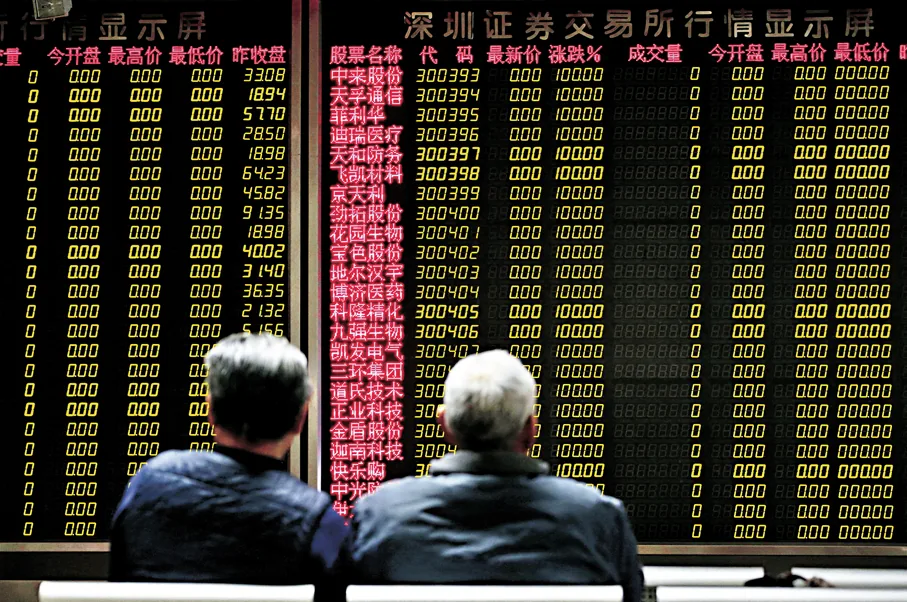
On September 28, China's A-share market experienced a broad decline, with the Shanghai Composite Index falling 1.67%, the Shenzhen Component Index dropping 3.44%, and the ChiNext Index plunging 4.53%. Over 4,500 stocks declined, while total turnover reached 1.7 trillion yuan. The pork and automobile sectors bucked the trend, while CPO, telecom, and semiconductor sectors led losses.
 Reference image
Editorial responsibility
- No named human review is recorded for this page.
- Reports are grouped by semantic similarity and deterministic rules. Language models may assist titles, summaries, translation and cross-source analysis; the page reads the event directly, while its address stays stable when the title changes.
- Summary covers the current reports
Cross-source coverage
Common ground
- The market dip is real, with significant declines in Shanghai, Shenzhen, and ChiNext, and nearly 4,300 stocks falling.
- Western media often applies a double standard, treating Chinese market dips as crises while similar US dips are called corrections.
- Retail investors are experiencing real financial pain from these market movements.
- Geopolitical factors, including US tech sanctions and Fed policy, are influencing China's markets.
- China has strong institutional buffers like capital controls, state-owned banks, and large forex reserves.
Points of contention
- Whether the dip is a normal market rotation or a sign of deeper structural problems.
- Whether the human cost is best addressed by systemic stability or by focusing on individual investor protection.
- Whether the date discrepancy in the data invalidates the broader debate or is just a procedural error.
- Whether China's market structure is comparable to other Global South markets like Egypt or Turkey.
- Whether the dip is driven by geopolitical containment or by domestic credit transmission issues.
Blind spots
- The debate ignored the broken credit transmission mechanism, where PBOC liquidity isn't reaching small businesses and consumers.
- No one discussed the moral hazard created by state guarantees that encourage risky retail speculation.
- The colonial legacy in how global capital flows and media narratives shape market perceptions was raised but not fully explored.
- The psychological impact on trust in the state as a stability guarantor was mentioned but not analyzed in depth.
WorldAttention’s read
This debate shows how confirmation bias can override data integrity, with everyone arguing about market movements without verifying basic facts like which trading day they were discussing. The real story is not whether a 2% drop is noise or a crisis, but that China's credit transmission mechanism is broken, institutional buffers protect the system more than individuals, and retail investors are bearing the real cost. Both technical analysis and geopolitical narratives miss the human impact on ordinary families, and until we address investor protection and financial literacy, the gap between systemic stability and individual pain will remain the central issue.
Reporting timeline
China A-shares close lower; ChiNext plunges 4.53%, pork concept stocks lead gains
China's A-share market closed lower on September 28, with all three major indices falling. The Shanghai Composite Index dropped 1.67% to 3,823.62 points, the Shenzhen Component Index fell 3.44% to 12,858.75 points, and the ChiNext Index plunged 4.53% to 3,139.82 points. Total两市 (two markets) turnover reached 1.7 trillion yuan. In terms of sectors, the pork concept led gains, with Dongrui Co., Ltd. rising 10.03%, Shennong Group up 3.86%, and Tiankang Biological up 3.69%. The chicken farming concept also performed strongly, with Huatong Co., Ltd. up 3.23% and Wens Co., Ltd. up 2.76%. The Alzheimer's concept remained active, with ST Wanbang up 10% and Lianying Medical up 3.39%. On the downside, the F5G concept weakened, with several stocks including FiberHome Telecommunication and Hengtong Optic-Electric falling by the 10% daily limit. The co-packaged optics (CPO) concept adjusted, with Yanan Technology falling 14.92% and Xunjiexing down 14.53%. Overall, 898 stocks rose while 4,554 fell. Zhongji Innolight led in turnover at 251.85 billion yuan, falling 9.03%.
Read sourceA-Share Market Ends Lower; Over 4,500 Stocks Fall, ChiNext Drops Over 4%
On the 28th, China's A-share market experienced a broad decline, with all three major indices closing lower. The Shanghai Composite Index fell 1.67%, the Shenzhen Component Index dropped 3.44%, and the ChiNext Index plunged 4.53%. Total market turnover reached 1.72 trillion yuan, with more than 4,500 stocks declining. Sector-wise, communication equipment suffered heavy losses, with CPO and optical communication concepts plummeting. Other declining sectors included electronic components, computer hardware, semiconductors, building materials, precious metals, education, motorcycles, and the internet. In contrast, sectors such as oil and gas, ports, automobiles, and electric power bucked the trend and rose. The report is attributed to Tencent Stock and sourced from China Economic Net.
Read sourceChina A-shares close lower; ChiNext plunges over 4%, pork stocks buck trend
China's A-share market closed lower on the day, with all three major indices opening lower and maintaining a volatile adjustment trend. The Shanghai Composite Index fell 1.67%, the Shenzhen Component Index dropped 3.44%, and the ChiNext Index plunged 4.53%. Over 4,500 stocks declined, with total turnover exceeding 1.7 trillion yuan. Sector-wise, the power sector was active against the trend, with Zhejiang New Energy hitting the daily limit. The auto manufacturing sector strengthened, with Anhui Jianghuai Automobile and Zotye Auto hitting their daily limits. Cybersecurity concepts saw unusual activity, with Yongxin Zhicheng and Zhongxin Saike hitting daily limits. Pork concepts rose, with Dongrui Co., Ltd. hitting the daily limit. On the downside, CPO concepts fell, with FiberHome Telecommunication and Yangtze Optical Fibre and Cable hitting the daily limit. Sectors including communication equipment, components, semiconductors, building materials, and non-ferrous metals led the declines.
Read sourceShow 17 older updatesHide older updates
China A-shares close lower; ChiNext plunges over 4%, pork concept stocks buck trend
China's A-share market closed lower on the day, with all three major indices opening lower and maintaining a volatile adjustment trend. The Shanghai Composite Index fell 1.67%, the Shenzhen Component Index dropped 3.44%, and the ChiNext Index plunged 4.53%. Over 4,500 stocks declined across the market, with total trading volume exceeding 1.7 trillion yuan. Sector-wise, the power sector showed resilience, with Zhejiang Xinneng hitting the daily limit up. The automobile manufacturing sector strengthened, with Anhui Jianghuai Automobile and Zotye Auto also hitting limit up. Cybersecurity concepts saw unusual activity, with Yongsheng Zhi Cheng and Zhongxin Saike hitting limit up. Pork concept stocks trended higher, with Dongrui Co., Ltd. hitting limit up. On the downside, CPO concept stocks fell sharply, with FiberHome Telecommunication Technologies and Hengtong Optic-Electric hitting limit down. Sectors including communication equipment, components, semiconductors, building materials, and non-ferrous metals led the declines.
Read sourceChina A-shares close lower; ChiNext plunges over 4%, pork concept stocks buck trend
China's A-share market closed lower on the day, with all three major indices opening lower and maintaining a volatile adjustment trend. The Shanghai Composite Index fell 1.67%, the Shenzhen Component Index dropped 3.44%, and the ChiNext Index plunged 4.53%. Over 4,500 stocks declined across the market, with total turnover exceeding 1.7 trillion yuan. Sector-wise, the power sector was active against the trend, with Zhejiang Xinneng hitting the daily limit. The automobile manufacturing sector strengthened, with Anhui Jianghuai Automobile and Zotye Auto hitting their daily limits. Cybersecurity concepts saw unusual activity, with Yongxin Zhicheng and Zonergy hitting daily limits. The pork concept rose steadily, with Dongrui Co., Ltd. hitting its daily limit. On the downside, CPO concepts fell, with FiberHome Telecommunication Technologies and Yangtze Optical Fibre and Cable hitting their daily limits. Sectors including communication equipment, components, semiconductors, building materials, and non-ferrous metals led the declines.
Read sourceChina A-shares close lower; ChiNext plunges over 4%, pork concept stocks buck trend
China's A-share market closed lower on the day, with all three major indices opening lower and maintaining a volatile adjustment trend. The Shanghai Composite Index fell 1.67%, the Shenzhen Component Index dropped 3.44%, and the ChiNext Index plunged 4.53%. Over 4,500 stocks declined across the market, with total trading volume exceeding 1.7 trillion yuan. Sector-wise, the power sector showed active gains, with Zhejiang New Energy hitting the daily limit. The automobile manufacturing sector strengthened, with Anhui Jianghuai Automobile and Zotye Auto also hitting daily limits. Cybersecurity concepts saw unusual activity, with Yongsheng Zhi Cheng and Zhongxin Saike hitting limit-up. Pork concept stocks trended higher, with Dongrui shares hitting the daily limit. On the downside, CPO concept stocks fell, with FiberHome Telecommunication Technologies and Hengtong Optic-Electric hitting limit-down. Sectors including communication equipment, components, semiconductors, building materials, and non-ferrous metals led the declines.
Read sourceShanghai Composite Falls 1.67%; Auto Sector Rises After Weak Open
On September 28, China's A-share market saw a broad decline with the Shanghai Composite Index falling 1.67%, the Shenzhen Component Index dropping 3.44%, and the ChiNext Index losing 4.53%. Of all stocks, 898 advanced while 4,554 declined, with 35 hitting the daily upper limit and 57 hitting the lower limit. Total turnover in Shanghai and Shenzhen reached approximately 1.70 trillion yuan, up about 49.44 billion yuan from the previous session. Most industry sectors fell, with components, communication equipment, precious metals, electronic chemicals, rare earths, non-metallic materials, semiconductors, power equipment, and consumer electronics leading the losses. The automobile sector bucked the trend by opening lower and then rallying, with Jianghuai Automobile and Zhongtai Automobile hitting their daily upper limits. The pork sector expanded gains in the afternoon, with Dongrui Shares also hitting the upper limit. On the downside, the components sector was weak, with multiple stocks including Fenghua High-Tech hitting their daily lower limits. The precious metals sector performed poorly, with Shandong Gold hitting its lower limit.
Read sourceChina's Shanghai Composite Falls 1.67%; Cybersecurity Stocks Gain
On September 28, China's four major stock indices all closed lower. The Shanghai Composite Index fell 1.67%, the Shenzhen Component Index dropped 3.44%, the ChiNext Index declined 4.53%, and the Science and Technology Innovation Board Composite Index lost 4.31%. Total trading volume on the Shanghai and Shenzhen stock exchanges reached 1.7 trillion yuan, an increase of 49.4 billion yuan from the previous trading day. More than 4,500 stocks across the market declined. Despite the broad market downturn, cybersecurity stocks showed relative strength. The report is sourced from China's First Financial (Yicai) and published on East Money's market analysis section.
Read sourceChina A-shares fall sharply; ChiNext drops 4.53%, auto sector gains
On September 28, China's A-share market experienced a broad decline, with all three major indices closing lower. The Shanghai Composite Index fell 1.67% to 3823.62 points, the Shenzhen Component Index dropped 3.44% to 12858.75 points, and the ChiNext Index plunged 4.53% to 3139.82 points. The STAR 50 Index also fell 4.06% to 1555.98 points. Despite the overall downturn, the automobile and vehicle manufacturing sector showed relative strength, with stocks like Jianghuai Automobile and Zhongtong Automobile gaining. Other notable sectors included Alzheimer's, chicken, and pork concepts, as well as CPO and optical communication modules. Market breadth was negative, with 898 stocks rising (35涨停) and 4554 stocks falling (57跌停). Total trading volume reached approximately 1.7 trillion yuan, with 804.544 billion yuan on the Shanghai exchange and 898.255 billion yuan on the Shenzhen exchange. The report is sourced from Beijing Business Today via East Money.
Read sourceChina A-shares close lower; ChiNext drops over 4%, pork concept stocks buck trend
China's A-share market closed lower on the day, with all three major indices opening lower and maintaining a volatile adjustment trend. The Shanghai Composite Index fell 1.67%, the Shenzhen Component Index dropped 3.44%, and the ChiNext Index plunged 4.53%. Over 4,500 stocks declined across the market, with total trading volume exceeding 1.7 trillion yuan. Sector-wise, pork concept stocks, including Dongrui Co., bucked the downtrend and rose. Other notable sectors mentioned include electric power, new energy vehicles (BYD, Jianghuai Automobile, Zhongtai Automobile), cybersecurity (Yongxin Zhicheng, Zhongxin Saike), CPO concept (Fenghuo Communication, Hengtong Optic-Electric), communication equipment, and semiconductors. The information was sourced from the International Financial News.
Read sourceA-Share Market Review: ChiNext and STAR Indices Fall Over 4%, Auto Stocks Surge
On September 28, China's A-share market experienced a broad decline, with major indices opening lower and continuing to fall throughout the day. Over 4,500 stocks declined. The Shanghai Composite Index fell 1.67%, the Shenzhen Component Index dropped 3.44%, the ChiNext Index plunged 4.53%, and the STAR Composite Index lost 4.31%. In terms of sector performance, the automobile manufacturing sector saw a notable rebound, with stocks such as Jianghuai Automobile and Zotye Auto rising. Other sectors mentioned include glass substrates, cybersecurity, real estate, precious metals, and food. The article is sourced from China National Radio Finance and published on East Money's market analysis platform.
Read sourceShanghai Composite Index Falls 1.67%, Over 4,500 Stocks Decline
On September 28, China's A-share market saw a broad decline with all three major indices closing lower. The Shanghai Composite Index fell 1.67% to 3,823.62 points, the Shenzhen Component Index dropped 3.44% to 12,858.75 points, and the ChiNext Index lost 4.53% to 3,139.82 points. Total两市 (Shanghai and Shenzhen) turnover reached 1.7028 trillion yuan, expanding by nearly 50 billion yuan from the previous trading day. Market breadth was heavily negative, with 4,554 stocks declining, 898 advancing, and 105 unchanged. The report, sourced from China News Service, noted declines across multiple sectors including auto manufacturers (JAC Motors, Zotye Auto, Dongfeng Motor, BAIC BluePark), small home appliances (Hongzhi Tech, Joyoung, Bear Electric), livestock farming (Dongrui, Shennong, Tiankang, Muyuan), and technology components (Jianghai, Fenghua, Zhongjing, Taitai, Dongshan Precision, Ultrasonic Electronics). Defensive sectors such as baijiu (liquor), electric power, and banking were also mentioned, while electronics, precious metals, semiconductors, and consumer electronics were among the sectors listed as declining.
Read sourceShanghai Composite Falls 1.67%, ChiNext Drops 4.53%; Oil Sector Rises on Crude Prices
China's A-share markets opened lower on September 28 and continued to decline, with the Shanghai Composite Index closing down 1.67% at 3823.62 points, the Shenzhen Component Index falling 3.44% to 12858.75 points, and the ChiNext Index plunging 4.53% to 3139.82 points. Trading volume rose to 1.7028 trillion yuan from 1.6533 trillion yuan the previous day. Most sectors declined, with only 896 stocks rising versus 4549 falling. The oil and petrochemical sector bucked the trend, rising on higher international crude prices, with stocks such as BOMCO, Rongsheng Petrochemical, and PetroChina gaining. Utilities and agriculture also showed some strength. Telecom stocks led the decline, followed by electronics and non-ferrous metals. Analysts offered mixed views: Guojin Securities recommended focusing on non-ferrous metals (gold, copper, aluminum); Huatai Securities favored telecom, PCB, and paper; CITIC Securities and others offered sector-specific advice; and Mega Fund suggested the market will likely continue 'shrinking volume, grinding bottom, and structural rotation' in the last three trading days before the holiday, advising investors to maintain balanced positions, control overall仓位, avoid high-valuation theme stocks, and wait for volume recovery and clearer main lines.
Read sourceA-Share Market Sees Broad Decline Ahead of Mid-Autumn Festival; Analyst Advises Risk Control
On September 24, China's A-share market experienced a broad decline with shrinking volume, as the Shanghai Composite Index fell 1.22% to 3888.37 points, the ChiNext Index dropped 2.68% to 3288.95 points, and the Shenzhen Component Index lost 2.34%. Total trading volume across the Beijing, Shanghai, and Shenzhen exchanges decreased by 114 billion yuan to 1.7 trillion yuan. Over 4,300 stocks closed lower, while only 1,120 advanced. Defensive sectors like banking and oil & gas provided some support, while technology stocks, including PCB, communications equipment, and consumer electronics, led the losses. Analyst Bi Mengran from Geshang Fund attributed the decline to pre-holiday risk aversion ahead of the long Mid-Autumn and National Day holidays, external pressures on growth stocks from high overseas long-term interest rates, and a lack of a new sustained market theme. She noted that the sell-off is not panic-driven but reflects a typical pre-holiday weakness, predicting continued low-volume, volatile trading with defensive sectors outperforming. Bi advised investors to control overall risk by reducing high-risk positions and maintaining fundamentally sound core holdings while strictly managing leverage.
Read sourceA-Share Market Sees Broad Decline Ahead of Mid-Autumn Festival Holiday
On September 24, China's A-share market experienced a broad decline with over 4,300 stocks falling, as trading volume continued to shrink. The Shanghai Composite Index fell 1.22% to 3,888.37 points, the ChiNext Index dropped 2.68%, and the Shenzhen Component Index lost 2.34%. Total trading volume across the Shanghai, Shenzhen, and Beijing exchanges decreased by 114 billion yuan to 1.7 trillion yuan. Banking, oil and gas, and communication sectors provided some support, while technology stocks, including PCB, communication equipment, and consumer electronics, led the losses. Ge Shui fund researcher Bi Mengran attributed the decline to pre-holiday risk aversion ahead of the long Mid-Autumn and National Day holidays, external pressures on growth stocks from high overseas long-term interest rates, and a lack of a new sustained market theme. Bi noted that the current weakness is typical of pre-holiday patterns and does not indicate a fundamental deterioration. She advised investors to control overall risk, reduce holdings in high-risk stocks, and maintain positions with fundamental support while strictly managing leverage.
Read sourceA-Share Market Sees Broad Decline Ahead of Mid-Autumn Festival; Analyst Advises Risk Control
On September 24, China's A-share market experienced a broad decline with shrinking trading volume, as the Shanghai Composite Index fell 1.22% to 3,888.37 points, the ChiNext Index dropped 2.68%, and the Shenzhen Component Index lost 2.34%. Over 4,300 stocks closed lower, while only 1,120 advanced. Total trading volume across the Shanghai, Shenzhen, and Beijing exchanges decreased by 114 billion yuan to 1.7 trillion yuan. Analyst Bi Mengran from Geshang Fund Research attributed the decline to pre-holiday risk aversion ahead of the Mid-Autumn and National Day holidays, high overseas long-term interest rates pressuring growth stocks, and a lack of new market leadership. She noted that the sell-off does not indicate panic but reflects typical pre-holiday weakness and reduced risk appetite. Bi advised investors to control overall risk by reducing high-risk positions lacking earnings support while maintaining fundamentally sound core holdings and strictly managing leverage. Defensive sectors like banking and coal showed relative strength, while technology, metals, and pharmaceutical stocks led the declines.
Read sourceA-share Market Falls on '9·24' Anniversary; 4,306 Stocks Decline
On September 24, 2024, the second anniversary of the '9·24' rally, China's A-share market experienced a significant downturn. The Shanghai Composite Index fell 1.22% to 3,888.37 points, the Shenzhen Component Index dropped 2.34% to 13,316.97 points, and the ChiNext Index declined 2.68% to 3,288.95 points. Total market turnover was 1.6691 trillion yuan, down 114 billion yuan from the previous day. A total of 4,306 stocks fell, while only 1,120 rose. The decline was attributed to multiple factors: rising U.S. Treasury yields (the 10-year yield hit 5.13%, a 16-year high) pressuring high-valuation tech stocks, pre-holiday risk aversion, and profit-taking in previously hot sectors like PCB, precious metals, and real estate. Defensive sectors such as wind power equipment and banking stocks saw gains. The Sichuan index fell 1.32%, with Xinhua Winshare rising for a fifth consecutive day. An industry insider summarized the day's performance as a result of rising external risks, pre-holiday caution, and profit-taking in hot sectors.
Read sourceXinhua Media Hits 4 Consecutive Daily Limits; China Shipbuilding Sector Leads Gains
As of the close on September 24, China's A-share market saw broad declines, with the Shanghai Composite Index falling 1.22% to 3888.37 points, the Shenzhen Component Index dropping 2.34% to 13316.97 points, and the ChiNext Index losing 2.68% to 3288.95 points. Despite the overall market weakness, 52 stocks hit their daily price limits. According to the report from 21st Century Business Herald, the three strongest individual stocks based on consecutive limit-up days and Dragon and Tiger List data were Xinhua Media (600825), which achieved four consecutive limit-ups, Sanyangma (001317), and Huamai Technology (603042). In terms of concept sectors, the top three gainers were the China Shipbuilding (Zhongchuan) concept, the Horse Racing concept, and the Fujian Free Trade Zone concept. The report provides a table of the top 10 strong stocks and top 10 concept sectors for the trading day.
Read sourceChina A-shares close lower with nearly 4,300 stocks falling; Shenzhen, ChiNext down over 2%
On October 24, China's A-share market experienced a broad decline, with all three major indices closing lower. The Shanghai Composite Index fell 1.22%, the Shenzhen Component Index dropped 2.34%, and the ChiNext Index lost 2.68%. Total market turnover reached 1.67 trillion yuan, with nearly 4,300 individual stocks declining. Sector-wise, precious metals plunged sharply, dragging down gold stocks. CPO (chip-on-board), CRO (contract research organization), and innovative drug concept stocks also fell collectively. Other declining sectors included electronic components, biotechnology, semiconductors, communication equipment, pharmaceuticals, petrochemicals, real estate, agriculture, and computer hardware. In contrast, oil and gas, education, coal, and banking sectors posted gains. The report is attributed to the financial media outlet 中新经纬 (China News Service Jingwei).
Read sourceChina A-shares fall: nearly 4,300 stocks decline, Shenzhen and ChiNext down over 2%
On February 24, China's A-share market opened lower and closed with broad declines. The three major indices all fell, with the Shenzhen Component Index dropping 2.34% and the ChiNext Index falling 2.68%. Total market turnover reached 1.67 trillion yuan, and nearly 4,300 stocks ended in negative territory. Sector-wise, CPO (co-packaged optics) and gold stocks suffered heavy losses. Semiconductor, innovative drug, electronic components, biotechnology, communication equipment, pharmaceutical, petrochemical, real estate, agriculture, and computer hardware sectors all declined. On the upside, oil and gas, education, coal, and banking sectors posted gains. The report is sourced from Zhongxin Jingwei and distributed via Tencent Finance.
Read source