Chinese automakers adopt steer-by-wire chassis as new standard cuts costs to 200,000 yuan
Chinese automakers are rapidly adopting steer-by-wire chassis systems, with the entry price dropping to around 200,000 yuan. A new national standard (GB 17675—2025), effective July 1, 2026, removes the requirement for mechanical steering connections, clearing regulatory hurdles. Models including the IM LS6, Li Auto i9, and XPeng GX Ultra now feature the technology as standard. SAIC's in-house development is cited as a key cost driver. Industry targets set steer-by-wire costs below 4,000 yuan by 2025 and 2,500-3,000 yuan by 2030.
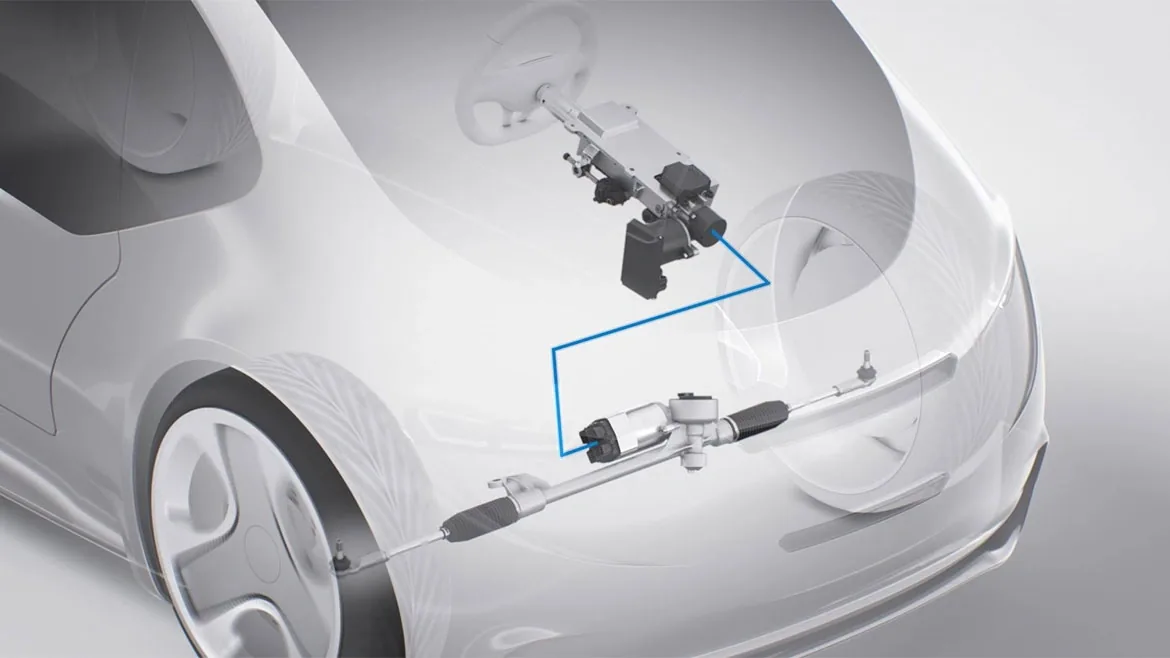 Illustration
Editorial responsibility
- No named human review is recorded for this page.
- Reports are grouped by semantic similarity and deterministic rules. Language models may assist titles, summaries, translation and cross-source analysis; the page reads the event directly, while its address stays stable when the title changes.
- Summary covers the current reports
Cross-source coverage
Reporting timeline
Chinese automakers rush to adopt line-control chassis, lowering entry price to 200,000 yuan
Chinese automakers are rapidly adopting line-control chassis systems, with the entry price dropping to around 200,000 yuan. A new national standard (GB 17675—2025), effective July 1, 2026, removes the requirement for mechanical steering connections, clearing regulatory hurdles for mass production. IM Motors' LS6, launched on September 23, offers full line-control chassis as standard from 197,900 yuan. Li Auto's i9 (369,800 yuan) and XPeng's GX Ultra (399,800 yuan) also feature it. IM CTO Xiang Jiao called 2025 the first year of mass adoption. Cost remains a barrier, but SAIC's self-developed white-box components reduce expenses. The China Society of Automotive Engineers targets line-control steering costs below 4,000 yuan by 2025 and 2,500-3,000 yuan by 2030, with 30% penetration. Guotai Haitan Securities forecasts China's smart chassis market to reach 107.86 billion yuan by 2030. Safety concerns over removing mechanical links are addressed by IM's technical director, who notes that fly-by-wire systems have improved aviation safety for 40 years.
Chinese automakers accelerate line-control chassis adoption; IM LS6 price drops to 200,000 yuan level
Chinese automakers are rapidly adopting line-control chassis technology, with IM Motors' LS6 becoming the first model to bring the feature to the 200,000 yuan price segment. A new national standard (GB 17675—2025), effective July 1, 2026, removes the requirement for mechanical backup connections in steering systems, clearing regulatory hurdles for production. The IM LS6, launched on September 23, comes standard with full line-control chassis at a starting price of 199,700 yuan. Li Auto's i9 and XPeng's GX Ultra also feature the technology, while NIO's ET9 is the first mass-produced model with full line-control steering. IM Motors CTO Xiang Jiao attributed the cost breakthrough to SAIC's in-house development and supply chain control. The China Society of Automotive Engineers targets line-control steering costs below 4,000 yuan by 2025 and 2,500-3,000 yuan by 2030, with 30% penetration. Guotai Haitan Securities forecasts China's smart chassis market to reach 107.86 billion yuan by 2030, with line-control steering accounting for 22.91 billion yuan. Industry experts argue that with proper redundancy, line-control systems can be safer than mechanical ones, citing a 40-year track record in aviation.
Chinese automakers accelerate wire-controlled chassis adoption; IM LS6 price drops to 200,000 yuan level
Chinese automakers are rapidly adopting wire-controlled chassis technology, with IM Motors' LS6 becoming the first model to bring it to the 200,000 yuan price tier. A new national standard (GB 17675—2025) effective July 1, 2026, removes the requirement for mechanical backup in steering systems, clearing regulatory hurdles for production. The IM LS6, launched on September 23, features full wire-controlled chassis as standard equipment at a starting price of 199,700 yuan. Li Auto's i9 and XPeng's GX Ultra also offer wire-controlled steering. However, Li Auto CEO Li Xiang noted the high cost of this technology in 400,000 yuan SUVs. IM Motors CTO Xiang Jiao attributed their cost reduction to SAIC's in-house development and supply chain control. The China Society of Automotive Engineers targets wire-controlled steering costs below 4,000 yuan by 2025 and 2,500-3,000 yuan by 2030, with 30% penetration. Haitong Securities forecasts China's smart chassis market to reach 107.86 billion yuan by 2030, with wire-controlled steering at 22.91 billion yuan. IM's technical director Pei Yichen argued that with proper redundancy, wire-controlled systems can be safer than mechanical ones, citing aviation history.
Read sourceShow 2 older updatesHide older updates
Chinese automakers rush to deploy steer-by-wire chassis, entry price drops to 200,000 yuan
Chinese automakers are rapidly deploying steer-by-wire (SBW) chassis systems, with the entry price dropping to the 200,000 yuan (approx. $28,000) level, according to a First财经 report. The article cites a new national standard (GB 17675—2025) effective July 2026 that removes the requirement for mechanical steering linkage, clearing regulatory hurdles for production SBW vehicles. Multiple models now feature the technology as standard: the IM LS6 (from 202,900 yuan), Li Auto i9 (369,800 yuan), and Xpeng GX Ultra (399,800 yuan). IM CTO Xiang Jiao called 2025 the 'first year of dense SBW deployment.' Li Auto CEO Li Xiang noted the high cost of SBW in 400,000-yuan EVs. IM attributed its cost reduction to in-house (white-box) development via parent SAIC. The China Society of Automotive Engineers targets SBW cost below 4,000 yuan by 2025 and 2,500-3,000 yuan by 2030, with 30% penetration. Guotai Haitan Securities forecasts China's intelligent chassis market at 107.8 billion yuan by 2030. IM technical director Pei Yichen argued that with proper redundancy, SBW can be safer than mechanical systems, citing 40 years of aerospace use.
Chinese automakers rush to adopt steer-by-wire chassis, lowering entry price to 200,000 yuan level
Chinese automakers are rapidly adopting wire-controlled chassis technology, with the entry price dropping to around 200,000 yuan ($27,600). A new national standard (GB 17675—2025) effective July 1, 2026, removes the requirement for mechanical steering linkages, clearing regulatory hurdles for production. SAIC's self-developed 'white-box' components and supply chain control are cited as key cost drivers. The China Society of Automotive Engineers targets steer-by-wire costs below 4,000 yuan by 2025 and 2,500-3,000 yuan by 2030, with 30% penetration supporting L4+ autonomous driving. Guotai Haitan Securities forecasts China's intelligent chassis market will reach 107.86 billion yuan by 2030, with a 24.5% CAGR from 2024. Models like the IM LS6 (from 197,900 yuan), Li Auto i9 (369,800 yuan), and XPeng GX Ultra (399,800 yuan) now feature wire-controlled chassis as standard. Industry experts argue that with proper safety redundancy, wire-controlled systems can be safer than mechanical ones, citing 40 years of use in commercial aviation.
Read source