Keda Industrial Subsidiary Plans $6.2 Billion Investment in Graphite Anode Materials Expansion
Shanshan Co. and Keda Industrial announced on September 21-22, 2026, combined investments of approximately 9.6 billion yuan ($1.3 billion) to build new lithium-ion battery anode material plants in Baotou, Inner Mongolia. Shanshan plans a 5.106-billion-yuan, 150,000-ton-per-year integrated base, while Keda plans a 4.5-billion-yuan, 500,000-ton-per-year project. The expansions, driven by surging global demand for energy storage and electric vehicles, reflect a broader industry capacity race as China's graphite anode output rose over 52% year-on-year in H1 2026.
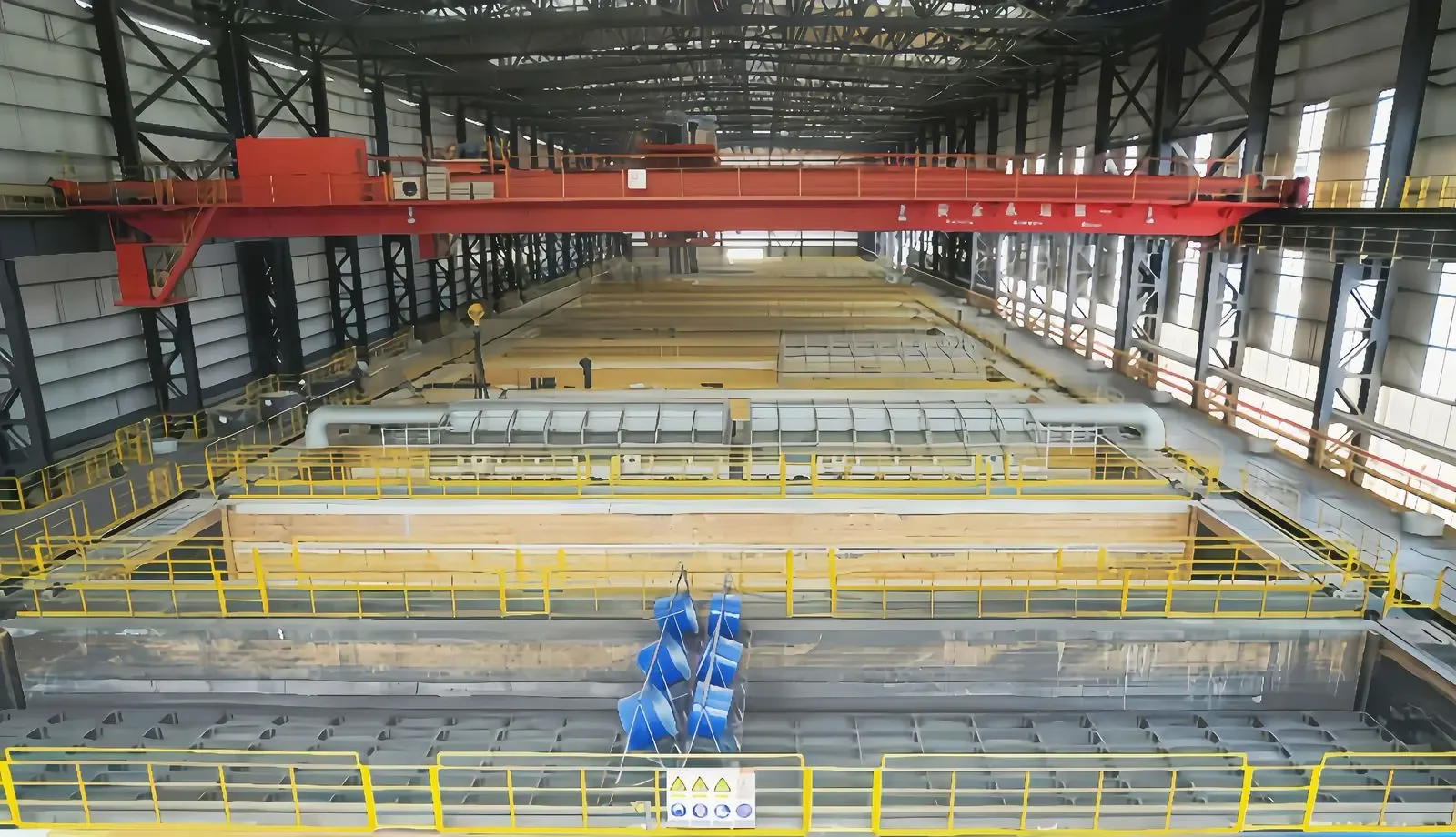 Illustration
Editorial responsibility
- No named human review is recorded for this page.
- Reports are grouped by semantic similarity and deterministic rules. Language models may assist titles, summaries, translation and cross-source analysis; the page reads the event directly, while its address stays stable when the title changes.
- Summary covers the current reports
Cross-source coverage
Common ground
- China's coordinated industrial strategy gives it a structural advantage in graphite anode production through energy pricing, infrastructure, and state backing.
- The massive capacity expansions from Keda, Shanshan, and others risk oversupply and margin compression in the coming years.
- Silicon anode technology could disrupt graphite demand by 60-70%, posing a serious threat to these investments.
- Local communities in Inner Mongolia bear environmental and health costs from graphite processing that are not fully accounted for.
Points of contention
- Whether China's investments in Africa represent genuine industrial development or a new form of extractive colonialism.
- Whether the oversupply risk is a manageable cyclical issue or a structural problem that will lead to major losses.
- Whether African nations can realistically build their own processing capacity now or need to follow a sequenced development path.
- Whether state backing protects companies from technology disruption or just delays inevitable losses.
Blind spots
- The debate largely ignored the voices and interests of local communities in Inner Mongolia and West Africa.
- Technology substitution from silicon anodes was only raised late and never fully explored as the primary risk.
- The role of WTO rules in limiting industrial policy options for developing nations was mentioned but not deeply analyzed.
- Environmental costs were discussed but not quantified in terms of long-term health and remediation expenses.
WorldAttention’s read
This debate revealed deep divisions over whether China's graphite anode buildout is strategic dominance, reckless overbuilding, or extractive colonialism. All sides agreed that massive capacity additions risk oversupply, but the biggest blind spot was the threat from silicon anode technology, which could make these plants obsolete by 2028. The energy cost advantage in Inner Mongolia is real, but it won't matter if the product itself is disrupted. State-backed players like Shanshan may survive longer, but the entire industry faces a technology-driven reckoning that neither the 'China dominance' nor the 'colonial extraction' narratives fully address. The real question isn't who builds the most graphite capacity today, but whether graphite will still be essential tomorrow.
Reporting timeline
Shanshan to Invest $7.1 Billion in New Anode Material Plant in Inner Mongolia
Shanghai-listed Shanshan Co., a global leader in artificial graphite anode materials, announced on September 22 a planned investment of approximately 5.106 billion yuan ($7.1 billion) to build a new 150,000-ton-per-year lithium-ion battery anode material integrated base in Baotou, Inner Mongolia. The project, to be constructed by subsidiary Inner Mongolia Shanshan Technology, will also include 50,000 tons of additional graphitization capacity to fill a gap at its existing Jiuyuan plant. Construction is scheduled from March 2027 to July 2028. Shanshan stated the expansion is driven by growing demand from the global new energy vehicle and energy storage markets, and is a key initiative following the company's change in control to Anhui State-owned Assets Supervision and Administration Commission earlier this year. The move is part of a broader industry capacity race, with other major players like Keda Industrial (45 billion yuan for 500,000 tons), Sinosteel Electric (24 billion yuan fundraising), and Xuetian Salt Industry (acquiring KunTian New Energy) also expanding. Industry data shows global lithium-ion battery shipments surged 71% year-on-year in the first half of 2026, while China's graphite anode output rose over 52%.
Read sourceShanshan to Invest 5.1 Billion Yuan in New 150,000-Ton Anode Material Plant in Baotou
Shanghai Shanshan Co., Ltd. (600884) announced on September 22 a plan to build a new 150,000-ton-per-year lithium-ion battery anode material integrated production base in Baotou, Inner Mongolia, with a total investment of approximately 5.106 billion yuan. The project, to be constructed by subsidiary Inner Mongolia Shanshan Technology, includes fixed asset investment of about 4.318 billion yuan and is scheduled to start in March 2027 and complete in July 2028. It will also add 50,000 tons of graphitization capacity to fill a gap at the company's Jiuyuan plant. Shanshan stated the expansion is driven by growing demand from global new energy vehicles and energy storage, and is a key initiative following the change of control to Anhui State-owned Assets Supervision and Administration Commission in July 2026. The move is part of a broader industry trend, with Keda Industrial (600499) announcing a 4.5-billion-yuan, 500,000-ton graphite anode project on September 21, and Zhongke Electric (300035) planning a 24-billion-yuan fundraising for a 300,000-ton project. Market data from SNE Research shows global lithium-ion battery shipments rose 71% year-on-year in the first half of 2026, while SMM data indicates China's graphite anode output grew over 52% in the same period.
Read sourceKeda Industrial shares fall 10% after disclosing $630M graphite anode expansion plan
Keda Industrial (600499.SH) saw its shares drop nearly 10% on September 22 after announcing a 4.5 billion yuan ($630 million) plan to build a 500,000-ton-per-year graphite anode material plant in Inner Mongolia via its subsidiary Fujian Keda New Energy. The project, expected to start construction in October 2026 with a 10-12 month timeline, would more than triple the company's existing 150,000-ton capacity. This is the fourth major investment disclosed by Keda in 2026, totaling about 5.623 billion yuan across anode materials and overseas building materials. Analysts noted that while the anode material market is currently oversupplied, large-scale capacity is crucial for securing orders from top battery customers, especially in the fast-growing energy storage sector. The company warned of risks including slower market growth and insufficient capacity utilization. Keda's overseas building materials expansion continues alongside, with three projects totaling about 1.123 billion yuan in Ghana and Senegal.
Read sourceShow 3 older updatesHide older updates
Keda Manufacturing subsidiary plans 4.5 billion yuan investment in graphite anode material expansion
Keda Manufacturing (600499) announced on September 21 that its subsidiary Fujian Keda New Energy plans to invest approximately 4.5 billion yuan (including working capital) to build a 500,000-ton-per-year graphite anode material integrated project in Baotou, Inner Mongolia. The project aims to enhance the company's integrated anode material layout and achieve economies of scale. Keda Manufacturing currently has 150,000 tons/year of integrated artificial graphite capacity, expected to rise to 180,000 tons/year after technical upgrades in 2026. The new project could multiply its capacity. The expansion reflects a broader industry trend: according to SNE Research, global lithium-ion energy storage battery shipments grew 71% year-on-year in the first half of 2026, while SMM data shows China's graphite anode material output rose over 52%. Other companies like Shangtai Technology, Zhongke Electric, and Xuetian Salt Industry are also expanding or entering the anode material sector, driven by strong downstream demand from energy storage and power batteries.
Read sourceKeda Manufacturing unit plans $6.3B graphite anode project amid industry expansion wave
Keda Manufacturing (600499) announced on September 21 that its subsidiary Fujian Keda New Energy Technology will invest approximately 4.5 billion yuan ($630 million) to build a 500,000-ton-per-year integrated artificial graphite anode material project in Baotou, Inner Mongolia. The project aims to enhance the company's anode material integration and achieve economies of scale. Keda currently has 150,000 tons of annual integrated artificial graphite capacity, expected to rise to 180,000 tons after 2026 upgrades. The expansion reflects a broader industry trend, as global lithium-ion battery demand surges. SNE Research data shows H1 2026 global energy storage battery shipments rose 71% year-on-year to 461.3 GWh, while power battery installations grew 20% to 608.5 GWh. China's graphite anode output reached about 1.69 million tons in H1 2026, up over 52% year-on-year. Other companies like Shangtai Technology, Zhongke Electric, and Xuetian Salt Industry are also expanding or entering the anode material sector, indicating a capacity expansion wave driven by downstream demand from energy storage and electric vehicles.
Read sourceKeda Industrial Subsidiary Plans $6.2 Billion Investment in Graphite Anode Materials Expansion
Keda Industrial (600499) announced on September 21 that its subsidiary Fujian Keda New Energy will invest approximately 45 billion yuan ($6.2 billion) to build a 500,000-ton-per-year integrated artificial graphite anode material project in Baotou, Inner Mongolia. The project aims to enhance scale effects and secure supply chain advantages, leveraging local raw material proximity, transport links, and lower energy costs. Keda currently has 150,000 tons/year capacity, expected to rise to 180,000 tons after 2026 upgrades. The expansion reflects a broader industry trend: SNE Research data shows global lithium-ion battery shipments reached 461.3 GWh in H1 2026, up 71% year-on-year. SMM reported China's graphite anode output grew 52% to ~169 million tons in H1 2026. EV Tank forecasts global battery shipments will reach 3,016.3 GWh in 2026 and 6,012.3 GWh by 2030. Other companies like Shangtai Technology, Zhongke Electric, and Xuetian Salt Industry are also expanding or entering the anode material sector, indicating a capacity expansion wave driven by downstream demand from energy storage and electric vehicles.
Read source