Chinese A-Share Firms Disclose Billions in AI Computing Power Contracts and Investments
On September 23-24, 2024, multiple Chinese A-share listed companies disclosed major investments and contracts in AI computing power. Guanghuan Xinwang announced an additional 1.265 billion yuan investment in its Horinger Smart Computing Center, raising total to 2.5 billion yuan. Aoni Electronics signed a $232.26 million GPU card procurement contract. Digital ZhengTong agreed to buy 64 servers for 576 million yuan. Xingyun Technology signed a five-year, 872 million yuan smart computing lease. The companies cited surging AI demand but noted increased financing needs.
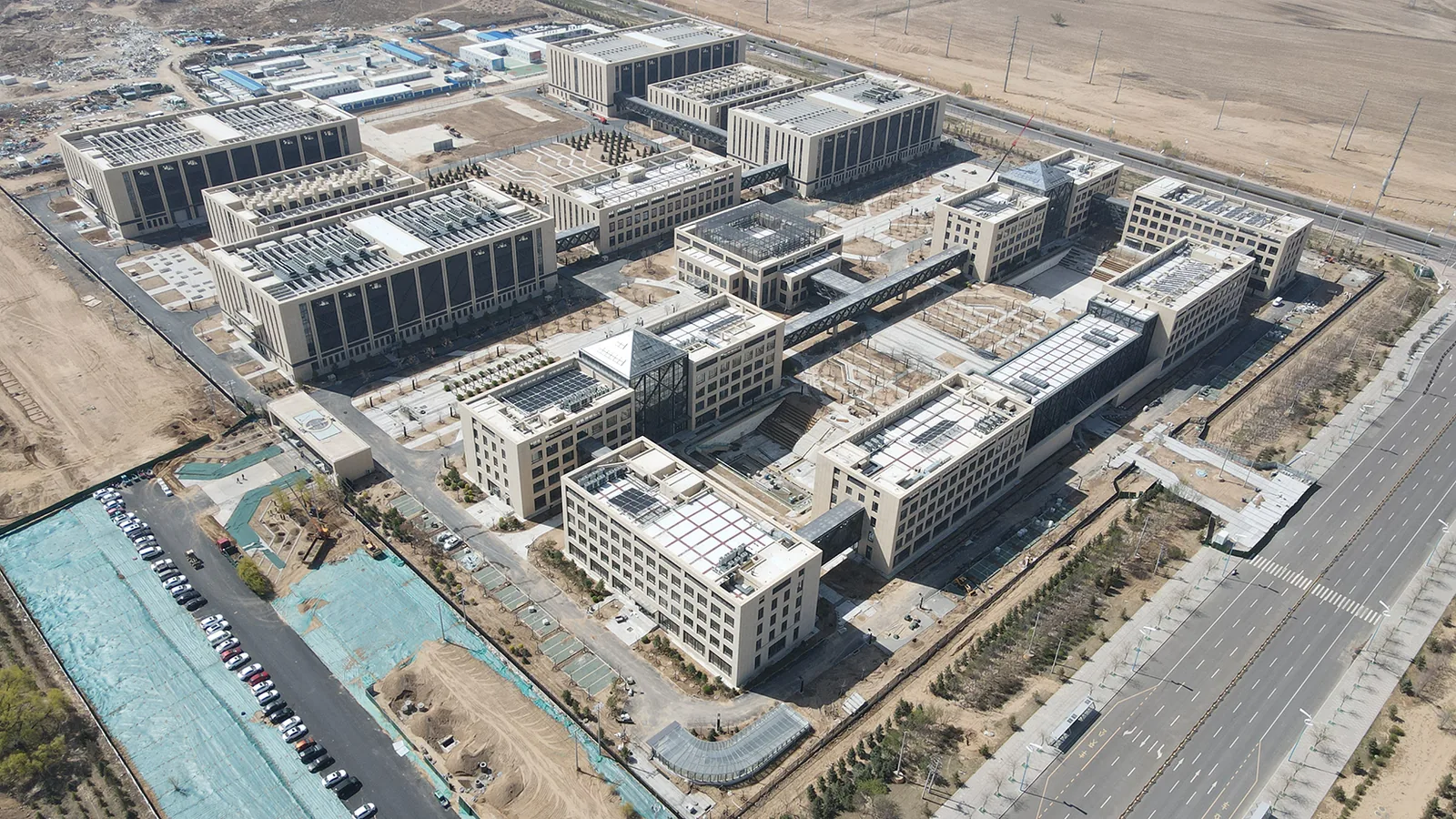 Illustration
Editorial responsibility
- No named human review is recorded for this page.
- Reports are grouped by semantic similarity and deterministic rules. Language models may assist titles, summaries, translation and cross-source analysis; the page reads the event directly, while its address stays stable when the title changes.
- Summary covers the current reports
Cross-source coverage
Common ground
- China needs domestic AI infrastructure to reduce dependence on Western technology and respond to export controls.
- The AI infrastructure buildout has a strategic national dimension beyond pure commercial logic.
- Execution risk is real—some companies may overextend or struggle with utilization in early years.
- China will likely have sovereign AI computing capability by 2030, regardless of individual company failures.
Points of contention
- Whether the massive investments reflect genuine market demand or speculative herd behavior.
- If unnamed clients and hedging language in announcements are standard confidentiality or red flags for weak demand.
- Whether the high-speed rail analogy applies to AI computing centers, given different depreciation timelines and demand models.
- If commercial viability and utilization rates are essential metrics or Western biases that miss the strategic picture.
Blind spots
- Both sides lack concrete utilization data for existing smart computing centers to settle the demand debate.
- The discussion overlooks how quickly AI hardware depreciates compared to traditional infrastructure like rail.
- Neither side addresses the risk of overcapacity if multiple companies build competing centers without coordination.
- The role of provincial governments in mandating demand is asserted but not backed by specific policy examples.
WorldAttention’s read
Both sides agree that China's AI infrastructure push is strategically necessary and will likely succeed at the national level by 2030. The core disagreement is about execution: the Eastern Agent sees the investments as coordinated, guaranteed, and justified by long-term sovereignty goals, while the Neutral Agent warns that many companies are overextending based on borrowed money and unconfirmed demand, risking bankruptcies when hardware depreciates quickly. The blind spots include a lack of hard utilization data, the unique depreciation risk of GPU clusters, and the potential for wasteful overcapacity. Ultimately, the national computing grid will probably be built, but the path will be messier and more costly than the Eastern Agent admits, with some companies failing along the way.
Reporting timeline
Multiple A-Share Companies Disclose Large Computing Power Orders Amid Surging Demand
On September 24, 2024, several A-share listed companies announced significant investments and contracts related to computing power, driven by surging demand for AI training and inference. Guanghuan Xinwang plans to invest an additional up to 12.65 billion yuan in its Horinger Smart Computing Center project, raising total investment to about 25 billion yuan, citing increased demand from large-scale AI clients. Aonijie Electronics announced its subsidiary will purchase GPU computing cards from Company B for a total of $232.26 million (approximately 15.56 billion yuan). Digital ZhengTong's subsidiary plans to buy 64 server units for 5.76 billion yuan to support its computing power services. Xingyun Technology's subsidiary signed a 5-year smart computing resource lease contract worth 8.72 billion yuan with a VE client, with delivery expected by September 30, 2026. The companies expect these moves to enhance competitiveness, support business transformation, and generate positive financial impacts, though some note increased funding needs and expenses.
Read sourceMultiple A-Share Companies Disclose Large Orders for AI Computing Power Investments
According to a report by China Fund News, several A-share listed companies have recently disclosed large-scale orders related to computing power (算力) investments, procurement, and leasing, driven by surging demand for AI computing resources. On September 24, 2024, Guanghuan Xinwang (光环新网) announced a plan to invest an additional up to 1.265 billion yuan in its Helingeer Smart Computing Center project, raising total investment to approximately 2.5 billion yuan, citing increased demand from AI training and inference workloads. On the same day, Aoni Electronics (奥尼电子) announced that its wholly-owned subsidiary signed a contract with Company B to purchase GPU computing cards for a total of $232.26 million (approximately 1.556 billion yuan). Digital ZhengTong (数字政通) announced its subsidiary plans to purchase 64 server units for an estimated 576 million yuan to support its computing power services. On September 23, Xingyun Technology (行云科技) announced that its subsidiary signed a five-year smart computing resource lease contract with a VE client worth a total of 872 million yuan. The companies stated these moves aim to enhance their competitiveness and business layout in the computing power market.
Read sourceMultiple A-Share Companies Disclose Large AI Compute Orders Amid Surging Demand
A report from China Fund News highlights a wave of large-scale AI compute-related investments and contracts disclosed by several A-share listed companies. On September 24, 2024, Guanghuan Xinwang announced plans to invest an additional up to 1.265 billion yuan in its Helingeer Smart Computing Center project, raising total investment to about 2.5 billion yuan, citing surging demand from AI training and inference workloads. Aonijie Electronics disclosed that its subsidiary signed a contract to purchase GPU computing cards from Company B for $232.26 million (approximately 1.556 billion yuan). Digital ZhengTong announced its subsidiary would purchase 64 server units for 576 million yuan to support its computing services. Xingyun Technology reported that its subsidiary signed an 872 million yuan smart computing resource lease contract with a VE client for a five-year term. The article attributes these moves to the rapid growth of AI compute demand and notes that some companies expect positive impacts on their financial results, while others acknowledge increased financing needs.
Read sourceShow 3 older updatesHide older updates
Chinese firms announce billions in AI compute orders; analyst flags shift to energy supply concerns
Several Chinese A-share listed companies disclosed major computing power (算力) contracts and investments on April 24-25, 2025, signaling continued expansion in AI infrastructure. DigitalCheng (数字政通) announced a 576 million yuan server procurement contract for its computing services subsidiary. Guanghuan Xinwang (光环新网) approved a 1.265 billion yuan追加 investment in its Helingeer smart computing center, doubling the total to 2.5 billion yuan, citing surging demand from AI large model training and inference entering commercial scale. Aoni Electronics (奥尼电子) disclosed a $232 million GPU computing card purchase contract. Xingyun Technology (行云科技) announced an 872 million yuan smart computing resource lease contract over five years. Separately, Shenwan Hongyuan Research noted that by H2 2026, global asset pricing's core contradiction has shifted from the AI narrative to recurring US-Iran conflict and energy supply shocks. The brokerage maintained a medium-term view favoring 'technology cycle + cyclical alpha', focusing on computing chains, high dividends, and resources, while stating A-share tech stocks need larger industrial catalysts to build consensus.
Read sourceChinese A-Share Firms Announce Major Computing Power Contracts and Investments
Multiple A-share listed companies in China have disclosed significant contracts and investments in the computing power (算力) sector. Digital Government (数字政通) announced a 576 million yuan server procurement contract. Guanghuan Xinwang (光环新网) plans to invest an additional 1.265 billion yuan to expand its Horinger smart computing center, increasing total investment to 2.5 billion yuan. Aoni Electronics (奥尼电子) signed a GPU procurement contract worth $232 million (approximately 1.556 billion yuan). Xingyun Technology (行云科技) secured an 872 million yuan smart computing resource leasing contract. Separately, China Life Insurance plans to invest up to 4.5 billion yuan in a fund focusing on AI and semiconductor equity. Alibaba, at its 2026 Apsara Conference, announced massive AI infrastructure spending, with capital expenditure reaching 126.1 billion yuan for the fiscal year, and plans to expand global data center capacity to over 20 GW by 2032. IDC and Inspur forecast China's smart computing power will reach 2576.5 EFLOPS in 2026, up 87.9% year-on-year. Huayuan Securities and Guotai Haitan Securities view the domestic computing power sector as highly prosperous, driven by AI demand.
Multiple A-Share Companies Disclose Major AI Compute Orders and Investments
On September 24, 2024, several A-share listed companies announced significant investments and contracts related to AI computing power. Beijing Sinnet Technology (光环新网) announced an additional investment of up to 1.265 billion yuan in its Horinger Smart Computing Center project, raising total investment to about 2.5 billion yuan, citing surging demand from AI model training and inference entering commercial scale. Aoni Electronic (奥尼电子) disclosed that its subsidiary signed a contract with 'Company B' to purchase GPU computing cards for $232.26 million (about 1.556 billion yuan). Digital China (数字政通) announced its subsidiary will purchase 64 servers for 576 million yuan to support its computing services. Additionally, Xingyun Technology (行云科技) announced a 5-year smart computing resource lease contract worth 872 million yuan with a VE client. The companies expect these deals to boost competitiveness and financial performance, though some noted increased financing needs.
Read source