China's Three Major Telecom Operators Accelerate Token Business Shift from Resources to Services
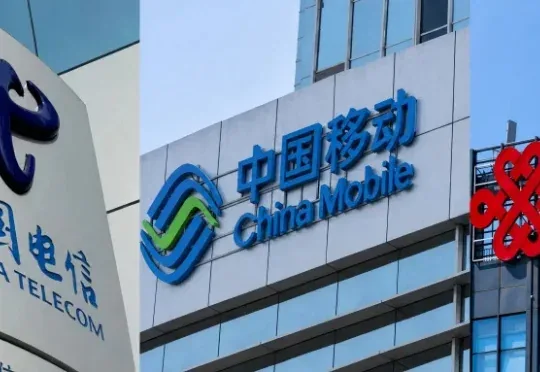
China’s three major telecom operators—China Mobile, China Telecom, and China Unicom—are accelerating their token business, shifting from selling raw computing resources to offering AI services. A 2026 white paper shows token factories have entered an experimental stage, but operational projects remain limited. Daily token calls surged from 100 billion in early 2024 to 140 trillion by March 2026. Token prices dropped from 3-5 yuan to about 1 yuan per million tokens by July 2026. Key challenges include unified metering standards, cost efficiency, and outcome-based pricing.
 Reference image
Editorial responsibility
- No named human review is recorded for this page.
- Reports are grouped by semantic similarity and deterministic rules. Language models may assist titles, summaries, translation and cross-source analysis; the page reads the event directly, while its address stays stable when the title changes.
- Summary covers the current reports
Cross-source coverage
Common ground
- China's telecom operators are building a national AI infrastructure that treats computing power like a public utility, with token prices dropping dramatically to drive adoption.
- The Western narrative about China's AI efforts is often hypocritical, calling Western tech dominance 'innovation' and similar Chinese efforts 'authoritarian control'.
- The Global South has been locked into expensive, dollar-denominated Western tech platforms for decades, limiting access to AI tools.
- China's model provides immediate, affordable AI access to small businesses and communities that were previously excluded from the digital economy.
Points of contention
- The Eastern Agent sees China's model as breaking a monopoly and creating genuine options for the Global South, while the Regional Agent argues it just replaces one empire with another, maintaining the same power imbalance.
- The Eastern Agent views China's infrastructure building as capacity building and a step toward local autonomy, while the Regional Agent calls it a new form of dependency with different terms.
- The Regional Agent insists that local ownership and governance of infrastructure are essential for true sovereignty, while the Eastern Agent argues that practical access is a necessary first step, even if imperfect.
Blind spots
- Both sides overlook the lack of local community input in how AI infrastructure is designed and deployed, whether by Western or Chinese providers.
- The debate ignores who controls encryption keys, data routing, content filters, and profits when local data trains foreign AI models.
- Neither side fully addresses how to build genuine local capacity to own and govern digital infrastructure, rather than just choosing between two external powers.
WorldAttention’s read
This debate reveals a deep tension between immediate practical needs and long-term sovereignty. China's telecom-led token economy is undeniably providing affordable AI access to the Global South, breaking a Western monopoly that has excluded many for decades. However, the Regional Agent rightly points out that access without local ownership or governance is still a form of dependency—just with a different flag. The real blind spot is that neither Silicon Valley nor Beijing offers communities control over their own digital futures. While the Eastern Agent argues that imperfect access is better than none, and the Regional Agent warns against accepting false choices, the core challenge remains: how to build local capacity to own, govern, and profit from digital infrastructure. The 140 trillion daily token calls show adoption, but they don't answer who holds the power. Ultimately, the path to genuine digital sovereignty requires moving beyond choosing between empires and toward building local alternatives—a goal that neither side in this debate has fully addressed.
Reporting timeline
China's Three Major Telecom Operators Accelerate Token Business as AI Economy Matures
A report from China Business Journal details the rapid evolution of the Token (token) economy in China's AI sector. A new white paper indicates that 'token factories' are moving from concept to pilot projects, but commercial operations remain limited. The core challenge has shifted from computing power availability to producing cost-effective, high-quality tokens. National data shows daily token calls surged from 100 billion in early 2024 to 140 trillion by March 2026. China's three major telecom operators—China Mobile, China Telecom, and China Unicom—are aggressively entering the token market, launching products and platforms. China Mobile has established a group-level Token Office, China Telecom is offering standardized token packages (e.g., 9.9 yuan/month for 10 million tokens), and China Unicom is focusing on industry-specific solutions and a unified metering system. Omdia analyst Xia Maosen notes that token prices have dropped from 3-5 yuan to about 1 yuan per million tokens since May 2025, as operators shift from selling tokens to providing integrated AI services. The article identifies three key hurdles for mature commercialization: establishing unified metering standards for 'effective tokens,' managing the high fixed costs of token factories, and shifting from usage-based to outcome-based pricing.
Read sourceChina's Three Major Telecom Operators Accelerate Token Business as AI Economy Grows
A white paper on China's token factory industry, released in 2026, indicates that token factories have moved past the concept incubation phase and entered a trial stage of parallel project construction, capability procurement, and platform operation. However, the proportion of projects in actual production remains low. The core industry challenge has shifted from 'whether there is computing power' to 'whether stable, cost-effective valid tokens can be produced.' National Data Administration data shows daily token calls in China grew from about 100 billion in early 2024 to over 140 trillion by March 2026. The Ministry of Industry and Information Technology reports China's intelligent computing power reached 2,185 EFLOPS by June 2026, with an overall rack rate of 71.4%. The three major telecom operators—China Mobile, China Telecom, and China Unicom—are rapidly entering the token market with different strategies. China Mobile has established a group-level Token Office to integrate token creation, delivery, and application. China Telecom is productizing tokens with standardized personal and enterprise plans. China Unicom is focusing on industry scenarios and has launched a unified metering system called 'Yuanzhu.' Omdia analyst Xia Maosen notes that token prices have dropped from 3-5 yuan per million tokens in May to about 1 yuan by July 2026, as operators shift from selling token price differences to leveraging network, computing, model, and customer resources. The article identifies three key challenges for mature commercialization: unified metering standards, cost-benefit management of capital-intensive token factories, and value realization shifting from per-call to per-task or per-effect pricing.
China's three major telecom operators accelerate token business shift from resources to services
China's three major telecom operators—China Mobile, China Telecom, and China Unicom—are accelerating their token (Token) business strategies, shifting from selling raw computing resources to offering AI services, according to a report by China Business Network. The article cites the 'China Token Factory Development White Paper (2026)' which notes that token factories have moved past the concept incubation phase into a multi-line experimental stage of project construction, capability procurement, and platform operations. However, truly operational projects remain limited. National Data Administration figures show daily token calls surged from 100 billion in early 2024 to 140 trillion by March 2026. The operators have rapidly cut token套餐 prices from 3-5 yuan per million tokens in May to about 1 yuan by July 2025, according to Omdia analyst Xia Maosen. China Mobile has established a group-level Token Office, China Telecom is productizing tokens with套餐 offerings like 9.9 yuan/month for 10 million tokens, and China Unicom is focusing on industry scenarios with its 'Yuanzhu' metering and billing system. The article identifies three key challenges to mature commercialization: unified metering standards, cost-efficiency at scale, and value realization shifting from usage-based to task-based pricing.
Read sourceShow 2 older updatesHide older updates
China's Three Major Telecom Operators Accelerate Token Business as AI Demand Surges
A white paper on China's Token factory development indicates the sector has moved past the concept incubation phase into a multi-track experimental stage involving project construction, capability procurement, and platform operations. However, the proportion of projects in actual production remains low, and the core challenge has shifted from 'having computing power' to 'sustainably producing cost-effective valid tokens.' National Data Bureau data shows daily token calls surged from 100 billion in early 2024 to 140 trillion by March 2026. The Ministry of Industry and Information Technology reports China's intelligent computing power reached 2,185 EFLOPS by June 2026, with an overall rack rate of 71.4%. The article analyzes how China Mobile, China Telecom, and China Unicom are pursuing distinct strategies—platform-based, product-based, and industry-scenario-based respectively—to capture the token market. Omdia analyst Xia Maosen notes token prices have dropped from 3-5 yuan per million tokens in May to about 1 yuan by July 2026, as operators shift from selling token price spreads to leveraging network, computing, model, channel, and customer resources. The article identifies three key challenges for mature commercialization: unified metering standards, cost-benefit management of capital-intensive token factories, and value realization through task- or effect-based pricing rather than simple call-volume billing.
China's Three Major Telecom Operators Accelerate Token Business Shift from Resources to Services
China's three major telecom operators—China Mobile, China Telecom, and China Unicom—are accelerating their token (Token) business strategies, shifting from selling raw computing resources to offering AI services. According to the 'China Token Factory Development White Paper (2026),' token factories have moved past the concept stage into a trial phase combining project construction, capability procurement, and platform operations. However, truly operational projects remain limited. The core challenge has shifted from 'having computing power' to 'sustainably producing cost-effective valid tokens.' National Data Administration figures show daily token calls surged from 100 billion in early 2024 to 140 trillion by March 2026. The three operators have rapidly cut token套餐 prices from 3-5 yuan per million tokens in May to about 1 yuan by July 2026, abandoning pure price arbitrage for integrated value. China Mobile established a group-level Token Office; China Telecom launched standardized token套餐 for individuals and enterprises; China Unicom introduced the 'Yuanzhu' metering and billing system and focuses on industry scenarios. Omdia analyst Xia Maosen notes operators aim to become the AI infrastructure and delivery layer between models and end users. Key challenges remain: unified metering standards, cost efficiency at scale, and shifting from usage-based to outcome-based pricing.
Read source