China issues 15th Five-Year Plan targeting all-solid-state batteries and digital passport by 2030
On September 28, seven Chinese ministries jointly issued the 15th Five-Year Plan for the New Battery Industry, setting 2030 targets including initial large-scale application of all-solid-state batteries, 15,000-cycle lithium batteries, and PPB-level defect rates. The plan outlines 19 key tasks across five areas, emphasizing full-chain innovation, a lithium-centered supply system with sodium and flow batteries, digital passport exploration, and carbon footprint management.
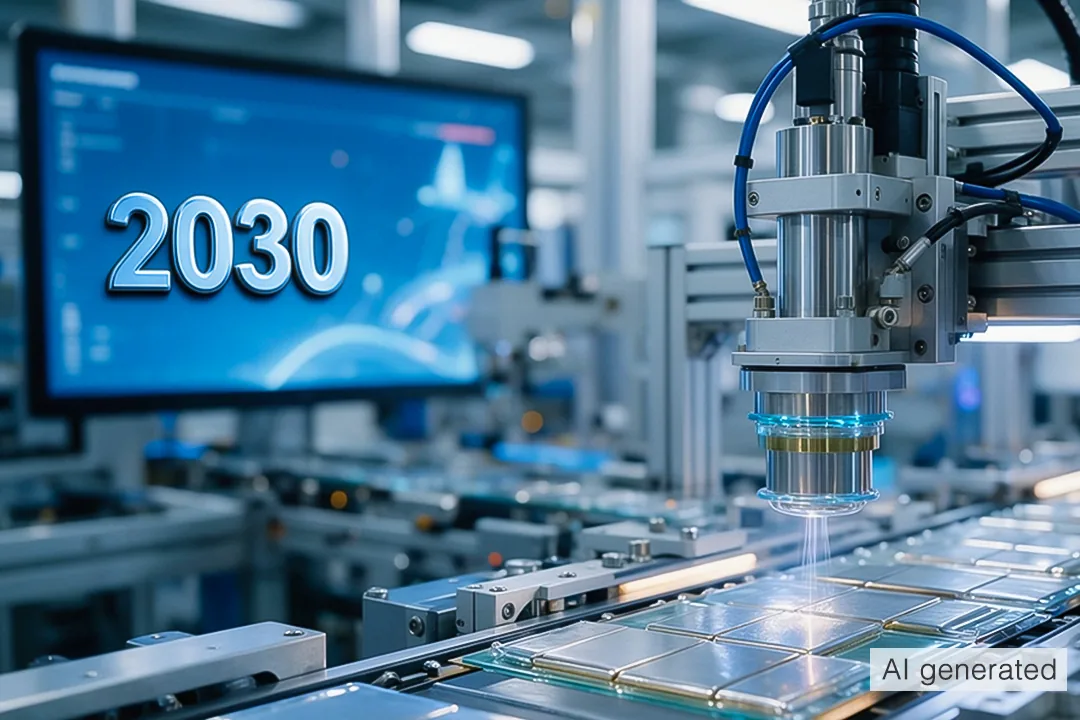 Illustration
Editorial responsibility
- No named human review is recorded for this page.
- Reports are grouped by semantic similarity and deterministic rules. Language models may assist titles, summaries, translation and cross-source analysis; the page reads the event directly, while its address stays stable when the title changes.
- Summary covers the current reports
Cross-source coverage
Reporting timeline
China's Seven Ministries Issue 15th Five-Year Plan for New Battery Industry
On September 28, seven Chinese ministries, including the Ministry of Industry and Information Technology and the National Development and Reform Commission, jointly released the '15th Five-Year Plan for the Development of the New Battery Industry.' The plan targets 2030 with goals including the initial large-scale application of all-solid-state batteries, a cycle life of 15,000 for long-life lithium batteries, and a defect rate at the PPB (parts per billion) level for leading companies. It outlines 19 key tasks across five areas: accelerating full-chain innovation, promoting industrial transformation, improving the industrial system, enhancing technology services, and raising the level of trade and investment cooperation. The plan emphasizes shifting from a focus on scale expansion to independent innovation across the entire chain. Experts cited, including Liu Wenqiang of the China Center for Information Industry Development, note that China's lithium battery production accounted for over 80% of the global total in 2025, but the industry must now define its own technological direction. The plan also calls for expanding application scenarios into areas such as aerospace, marine vessels, and brain-computer interfaces, and for building a comprehensive recycling system for used batteries.
Read sourceChina Issues 15th Five-Year Plan for New Battery Industry, Exploring Digital Passport
On September 28, seven Chinese government departments, including the Ministry of Industry and Information Technology, the National Development and Reform Commission, and the Ministry of Transport, jointly issued the '15th Five-Year Plan for the Development of the New Battery Industry.' The plan calls for improving product traceability and carbon footprint management. It emphasizes strengthening public service capabilities for full lifecycle traceability of new batteries, enhancing coding management, and establishing a digital identity management system for products such as new energy vehicle power batteries to achieve transparent and intelligent management across the entire industrial chain. The plan also proposes exploring an internationally accepted scheme for a digital passport for new batteries. Additionally, it aims to systematically build a carbon footprint accounting system for new battery products, develop a full lifecycle assessment model, continuously improve the product carbon footprint factor database, and promote international mutual recognition and sharing of data.
Read sourceChina Issues 15th Five-Year Plan for New Battery Industry, Exploring Digital Passport
On September 28, seven Chinese government departments, including the Ministry of Industry and Information Technology, the National Development and Reform Commission, and the Ministry of Transport, jointly issued the '15th Five-Year Plan for the Development of the New Battery Industry.' The plan calls for improving product traceability and carbon footprint management. It emphasizes strengthening public service capabilities for full lifecycle traceability management of new batteries, enhancing coding management, and establishing a digital identity management system for products such as electric vehicle power batteries. The goal is to achieve transparent and intelligent management across the entire industry chain. The plan also explores an internationally accepted digital passport scheme for new batteries. Additionally, it promotes the coordinated construction of a carbon footprint accounting system for new battery products, actively implements product carbon footprint management, builds a full lifecycle assessment model, continuously improves the product carbon footprint factor database, and pushes for international mutual recognition and sharing of data.
Read sourceShow 2 older updatesHide older updates
Seven Chinese Ministries Plan Battery Supply System Centered on Lithium with Sodium and Flow Batteries
On September 28, seven Chinese ministries, including the Ministry of Industry and Information Technology and the National Development and Reform Commission, jointly issued the 'Fifteenth Five-Year Plan for the Development of the New Battery Industry.' The plan calls for building a new battery product supply system primarily based on lithium batteries, with sodium batteries, flow batteries, and others developing in coordination. It aims to enrich high-end battery product offerings for diverse application scenarios, accelerating the high-end, diversified, and integrated development of new battery products while improving safety and reliability. Specific goals include enhancing the power and energy density of sodium batteries, developing high-efficiency flow batteries, and promoting iterations of hybrid supercapacitors. The plan also targets upgrades for thin and flexible consumer electronics batteries, optimization of high-safety, all-climate power batteries for new energy vehicles, and development of long-life, high-safety energy storage batteries for long-duration storage. Additionally, it seeks to improve supply levels for batteries used in low-altitude equipment, intelligent robots, aviation, and extreme environments such as deep sea and polar regions, while boosting the industrialization capacity of all-solid-state batteries, aqueous batteries, and ultra-fast charging batteries.
Read sourceSeven Chinese Ministries Plan Battery Supply System Led by Lithium, Supported by Sodium and Flow Batteries
On September 28, seven Chinese government ministries, including the Ministry of Industry and Information Technology and the National Development and Reform Commission, jointly issued the '15th Five-Year Plan for the Development of New Battery Industries.' The plan outlines a strategy to build a new battery product supply system primarily based on lithium batteries, with coordinated development of sodium batteries, flow batteries, and other technologies. It aims to enhance the power and energy density of sodium batteries, develop high-efficiency flow batteries, and advance hybrid supercapacitors. The plan also calls for upgrading consumer electronics batteries to be thinner and more flexible, optimizing automotive power batteries for high safety and all-weather performance, and developing long-life, high-safety storage batteries for long-duration energy storage. Additionally, it targets improving the supply of batteries for low-altitude equipment, intelligent robots, and extreme environments such as aviation, deep sea, and polar regions. The plan emphasizes accelerating the industrialization of all-solid-state batteries, aqueous batteries, and ultra-fast charging batteries.
Read source