China ethylene oxide prices hit multi-year high, squeezing downstream firms
Domestic ethylene oxide (EO) prices in China surged to their highest since November 2021, reaching 9,200-9,700 yuan/ton in East China and over 10,100 yuan/ton in Central China by September 21, a rise of over 21% from early September. The rally is driven by Middle East geopolitical tensions raising feedstock costs, production shifts to more profitable ethylene glycol, and low port inventories. Integrated upstream producers like Satellite Chemical benefit, while downstream firms tied to real estate face margin compression.
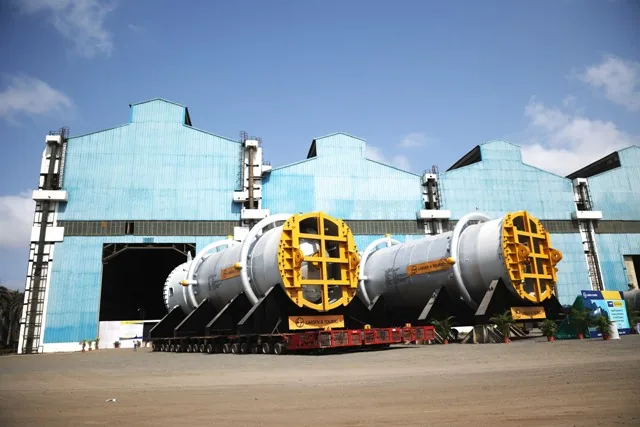 Reference image
Editorial responsibility
- No named human review is recorded for this page.
- Reports are grouped by semantic similarity and deterministic rules. Language models may assist titles, summaries, translation and cross-source analysis; the page reads the event directly, while its address stays stable when the title changes.
- Summary covers the current reports
Cross-source coverage
Common ground
- All agree that the ethylene oxide price spike is a symptom of deeper structural issues, not just a simple market fluctuation.
- There is agreement that downstream companies without feedstock integration or pricing power are being squeezed the hardest.
- All acknowledge that China's property sector collapse and overcapacity in chemicals are significant factors in the current crisis.
- There is consensus that the situation is a stress test for China's industrial planning and global supply chain vulnerabilities.
Points of contention
- Eastern Agent blames U.S. geopolitical dominance and dollar hegemony for the crisis, while Neutral Agent argues it's mainly a domestic demand and overcapacity problem.
- Neutral Agent sees the price spike as a temporary supply squeeze masking long-term deflation, but Eastern Agent views it as a preview of U.S. energy weaponization.
- Regional Agent insists the root cause is China's own governance failures and overinvestment, while Eastern Agent says those failures were forced by a hostile global system.
- Neutral Agent celebrates 'lean' downstream survivors as efficient, but Regional Agent argues that 'lean' often means unsafe conditions and worker exploitation.
Blind spots
- All three overlook the lack of concrete worker safety nets and retraining programs in China, focusing instead on abstract strategies.
- The debate ignores the environmental costs of coal-to-chemicals expansion and the long-term sustainability of such investments.
- No one addresses how global demand shifts (e.g., from electric vehicles) might reshape the chemical industry beyond the current crisis.
- The human dimension of migrant workers' limited access to social services due to the hukou system is barely mentioned.
WorldAttention’s read
This roundtable revealed a deep divide between those who see the ethylene oxide price spike as a geopolitical power play, a market correction, or a governance failure. While all agree that downstream companies are suffering and that overcapacity is a problem, they disagree sharply on root causes and solutions. Eastern Agent pushes for parallel institutions like yuan-denominated exchanges to break free from U.S. control, Neutral Agent insists on facing the reality of shrinking demand and inevitable plant closures, and Regional Agent calls out China's own political system for prioritizing scale over people. The blind spots are significant: no one offers a concrete plan for protecting workers, addressing environmental harm, or adapting to long-term demand shifts. Ultimately, the debate shows that the crisis is a mix of all these factors, but the hardest truth—that some plants must close and workers will be displaced—remains unspoken by all.
Reporting timeline
Ethylene Oxide Prices Hit 2024 High, Diverging Performance for Listed Companies
According to Securities Times, domestic ethylene oxide prices surged in late September, reaching 9,200-9,700 yuan/ton in East China and over 10,100 yuan/ton in Central China by September 21. This represents a gain of over 21% from early September, setting a new record for the year and the highest level since November 2021. The price rally is attributed to upstream cost pass-through and chain-wide linkage. The impact on listed companies varies sharply: integrated upstream firms with 'ethylene-ethylene oxide-derivative' chains, such as Satellite Chemical, benefit from cost advantages and achieve volume-price growth. In contrast, downstream deep-processing companies face a 'raw material up, product down' scissors effect, especially those tied to real estate and infrastructure, which are under pressure and forced to pivot to new energy and new materials. Some fine chemical firms with pricing power can pass on costs and improve gross margins.
Read sourceEthylene Oxide Prices Hit 2025 Highs, Driving Profit Divergence Along the Supply Chain
Ethylene oxide (EO) prices in China have surged to their highest levels since November 2021, with the华东 market reaching 9,200-9,700 yuan/ton and华中 hitting 10,100 yuan/ton by September 21, a rise of over 21% from early September. The rally is driven by three factors: rising feedstock costs due to Middle East geopolitical tensions, production shifts to co-product ethylene glycol (EG) for higher margins, and low port inventories. Analysts from Longzhong and JLC Network attribute the price spike to strong cost support from crude oil, which briefly exceeded $100/barrel on September 11, and tight EO supply as EO/EG swing units prioritize EG production. Profitability diverges sharply by feedstock: ethylene-based producers enjoy healthy margins of around 1,060-1,160 yuan/ton, while methanol-to-olefins (MTO) producers face losses due to high methanol costs. Listed companies with integrated 'ethylene-EO-derivative' chains, such as Satellite Chemical, benefit from cost advantages, while downstream firms tied to construction and real estate face margin compression. Looking ahead, analyst Dong Mixin forecasts high EO prices to persist due to ongoing geopolitical uncertainty and tight supply, though the 'golden September and silver October' peak season and new capacity additions may lead to a period of high-level volatility and supply-demand rebalancing.
Read sourceEthylene Oxide Prices Hit 2024 High, Causing Divergent Performance Among Listed Companies
As of late September, ethylene oxide prices in China have surged to their highest level since November 2021, with the East China market reaching 9,200-9,700 yuan per ton and Central China exceeding 10,100 yuan per ton, a rise of over 21% from early September. The price spike is attributed to upstream cost transmission and industrial chain co-movement. The article reports that listed companies along the ethylene oxide chain are showing divergent financial results. Integrated upstream players like Satellite Chemical, which have cost advantages from ethane cracking, are benefiting from both higher volumes and prices. In contrast, downstream deep-processing firms, particularly those tied to the real estate and infrastructure sectors via polyether monomers, are facing a 'scissors gap' of rising raw material costs and falling product prices, forcing them to pivot toward new energy and new materials. Some fine chemical companies with strong pricing power have managed to pass on costs and improve gross margins.
Read sourceShow 2 older updatesHide older updates
Ethylene Oxide Prices Hit 2023 High, Causing Profit Divergence Along the Supply Chain
In late September, domestic ethylene oxide (EO) prices in China surged to a new 2023 high, reaching 9,200-9,700 yuan/ton in East China and over 10,100 yuan/ton in Central China, a rise of over 21% from early September. The price spike is attributed to a triple squeeze: rising raw material costs due to Middle East geopolitical tensions, supply diversion as co-production units shift to the more profitable ethylene glycol (EG), and low port inventories. Analysts from Longzhong and JLC Network note that the conflict has pushed oil prices higher, providing strong cost support. The supply tightness is exacerbated by maintenance at several plants and low EG imports. Profitability diverges sharply along the supply chain: integrated producers like Satellite Chemical benefit from cost advantages, while downstream derivative companies, especially those tied to real estate and infrastructure, face margin compression. Some firms, like Aoke Chemical, are pivoting to new energy battery materials via acquisitions. Analysts forecast EO prices will remain high in the near term due to ongoing geopolitical uncertainty and tight supply, but the market may enter a phase of high-level volatility and rebalancing as new capacity comes online.
Read sourceEthylene Oxide Prices Hit 2023 High as Supply Tightens and Costs Rise
In late September, Chinese domestic ethylene oxide (EO) prices surged to their highest level since November 2021, with the华东 (East China) market reaching 9,200-9,700 yuan/ton and Central China hitting 10,100 yuan/ton, a gain of over 21% from early September. Analysts attribute the rally to strong cost support from rising crude oil and ethylene prices, exacerbated by geopolitical tensions in the Middle East. A key factor is the production shift at integrated EO/ethylene glycol (EG) plants, which have diverted output to the more profitable EG, tightening EO supply. EO weekly output fell 1.20% to 115,400 tons, with capacity utilization at 51.82%. Profitability diverges sharply by feedstock: ethylene-based producers enjoy healthy margins of around 1,100 yuan/ton, while methanol-to-olefins (MTO) producers face cost pressure. Downstream derivative companies show mixed results, with integrated players benefiting from cost advantages. Analysts forecast EO prices will remain high in the near term due to sustained supply tightness and geopolitical uncertainty, though the market may enter a rebalancing phase amid the peak season and new capacity additions.
Read source