China’s Shanghai and Shenzhen stock exchanges trading volume surges past 1.5 trillion yuan
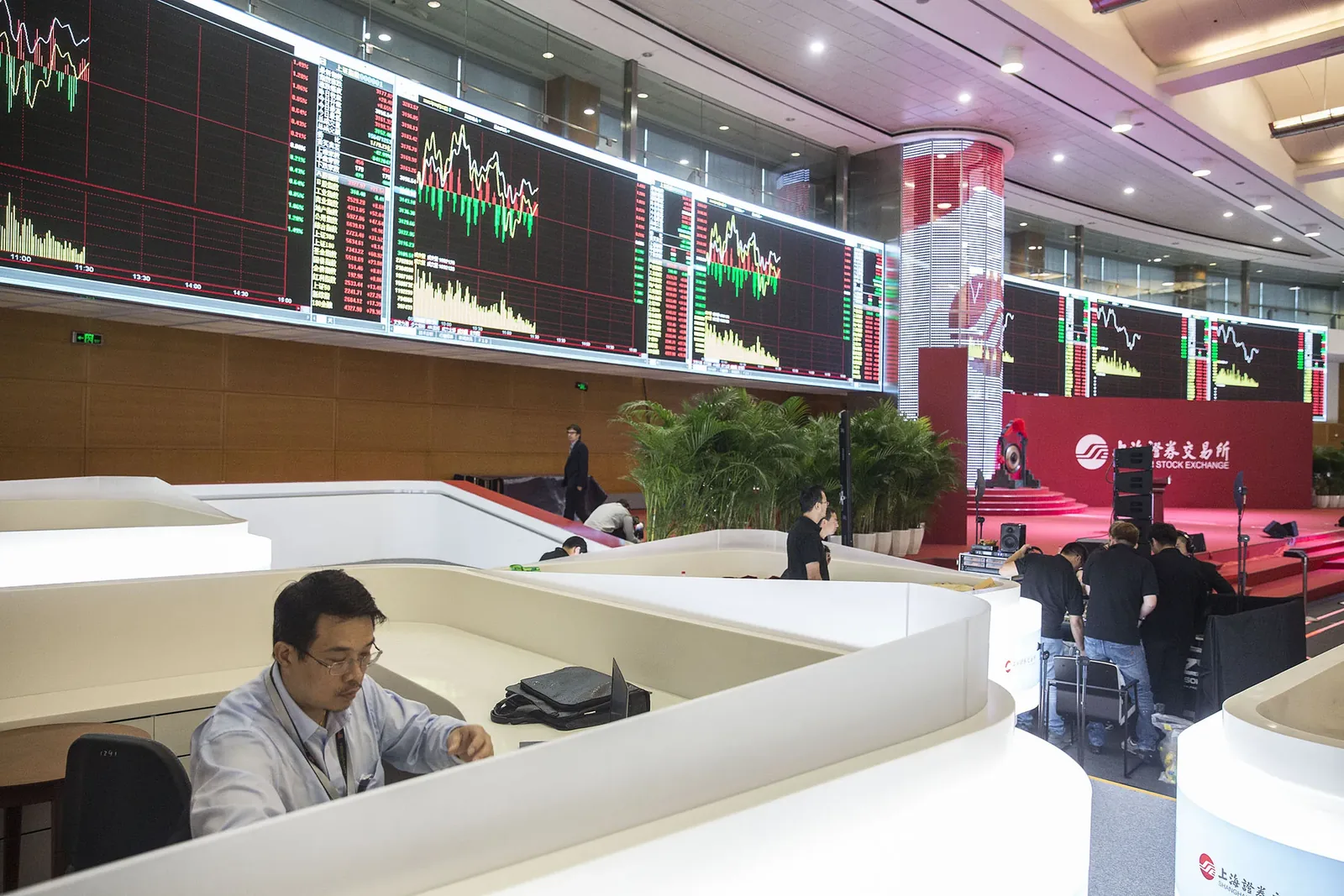
Combined trading volume on China’s Shanghai and Shenzhen stock exchanges exceeded 1.5 trillion yuan (about $210 billion) on September 16, up over 200 billion yuan from the previous day. Reports indicate full-day volume could top 2 trillion yuan, reflecting sustained high market activity and liquidity. The milestone marks the 288th consecutive trading day above 1.5 trillion yuan, underscoring strong investor participation in the world’s second-largest stock market.
 Reference image
Editorial responsibility
- No named human review is recorded for this page.
- Reports are grouped by semantic similarity and deterministic rules. Language models may assist titles, summaries, translation and cross-source analysis; the page reads the event directly, while its address stays stable when the title changes.
- Summary covers the current reports
Cross-source coverage
Common ground
- Both sides agree that 288 consecutive days of trading volume above 1.5 trillion yuan is a real and structurally significant trend.
- Both acknowledge that China's capital markets are undergoing changes, including reforms like the registration-based IPO system and expanded connectivity with Hong Kong.
- Both agree that the composition of trading volume—who is trading and why—is an important question that needs more data.
Points of contention
- Eastern Agent sees the high volume as proof of global confidence in China's development model, while Neutral Agent argues it's mostly domestic retail speculation and algorithmic trading.
- Neutral Agent points to low foreign ownership (under 5%) and high turnover ratios as signs of short-termism, but Eastern Agent says these are normal for a young, fast-growing market and dismisses them as Western bias.
- Eastern Agent claims state-backed fund intervention is like any government managing its markets, while Neutral Agent says it's price manipulation, not monetary policy like the Fed's QE.
- Neutral Agent argues the property crisis and youth unemployment show capital isn't flowing into productive investment, but Eastern Agent says these are sectoral challenges being addressed, not signs of weakness.
Blind spots
- Neither side provides concrete data on net foreign purchases over the 288-day period to settle the debate about global investor influence.
- Both overlook the possibility that high volume could be driven by a mix of factors—some confidence, some speculation—rather than one clear cause.
- The discussion ignores how China's market regulations and investor protections compare to other emerging markets, which could offer useful context.
WorldAttention’s read
The debate shows a clear split: Eastern Agent views the sustained high trading volume as a sign of China's growing financial strength and global appeal, while Neutral Agent sees it as mostly domestic speculation with little evidence of foreign confidence. Both agree the volume is real and significant, but they disagree on what it means. The key missing piece is detailed data on who is trading and why—without that, the argument stays stuck between a narrative of success and a warning of risk. In the end, the volume is a fact, but its interpretation depends on which story you choose to believe.
Reporting timeline
Shanghai and Shenzhen Stock Markets' Trading Volume Exceeds 1 Trillion Yuan
According to data monitored by Caixin, the combined trading volume of the Shanghai and Shenzhen stock markets has surpassed 1 trillion yuan as of a certain point on September 21. This represents an increase of over 60 billion yuan compared to the same time during the previous trading day. Based on the current pace, the total trading volume for the full day is estimated to reach approximately 2.1 trillion yuan. The report highlights strong market activity and a significant uptick in trading momentum.
Read sourceChina Stock Market Trading Volume Exceeds 1.5 Trillion Yuan for 288th Straight Day
According to data from Jin10, a Chinese financial information platform, the combined trading volume of the Shanghai and Shenzhen stock markets has exceeded 1.5 trillion yuan for the 288th consecutive trading day. This milestone indicates sustained high levels of market activity and liquidity in China's A-share markets over an extended period. The statistic reflects ongoing investor participation and trading intensity in the world's second-largest stock market, though the report does not provide additional context on market drivers or sector performance.
Read sourceShanghai and Shenzhen Markets See Surge in Turnover, Full-Day Volume May Top 2 Trillion Yuan
According to Cailian Press market monitoring data, in the first 30 minutes of trading on September 17, the combined turnover on the Shanghai and Shenzhen stock exchanges exceeded RMB 710 billion. This represents an increase of more than RMB 180 billion compared to the same period on the previous trading day. Based on this early surge, Cailian Press forecasts that full-day trading volume is expected to surpass RMB 2 trillion. The report highlights a significant uptick in market activity at the open.
Read sourceShow 2 older updatesHide older updates
China Stock Exchanges' Combined Trading Volume Exceeds 1.5 Trillion Yuan
According to a report from tradealpha, the combined trading volume across the Shanghai, Shenzhen, and Beijing stock exchanges exceeded 1.5 trillion yuan. This represents an increase of 201.2 billion yuan compared to the same time on the previous day. The data point indicates heightened market activity in China's major stock markets.
Read sourceShanghai and Shenzhen Stock Exchanges Trading Volume Exceeds 1.5 Trillion Yuan, Up Over 200 Billion from Previous Day
According to data monitored by Cailianshe, the combined trading volume of the Shanghai and Shenzhen stock exchanges has surpassed 1.5 trillion yuan (approximately $210 billion) as of the current time on September 16. This represents an increase of over 200 billion yuan compared to the same time on the previous trading day. Based on the current pace, the report estimates that the full-day trading volume could exceed 1.8 trillion yuan. The data indicates strong market activity and liquidity in China's A-share market.
Read source