CATL Stock Plunges 35% as Automakers Pursue ‘De-CATL’ Supply Chain Shift
CATL’s stock has fallen 35% from its May high, erasing 700 billion yuan in market value, despite strong profit growth. The decline is driven by a “de-CATL” trend where major Chinese automakers like Li Auto, Xiaomi, and Geely are diversifying battery suppliers or developing in-house batteries to reduce dependency, cut costs, and reclaim product control. CATL retains a dominant market share and manufacturing advantages, but faces a structural shift from monopoly to competitive leader.
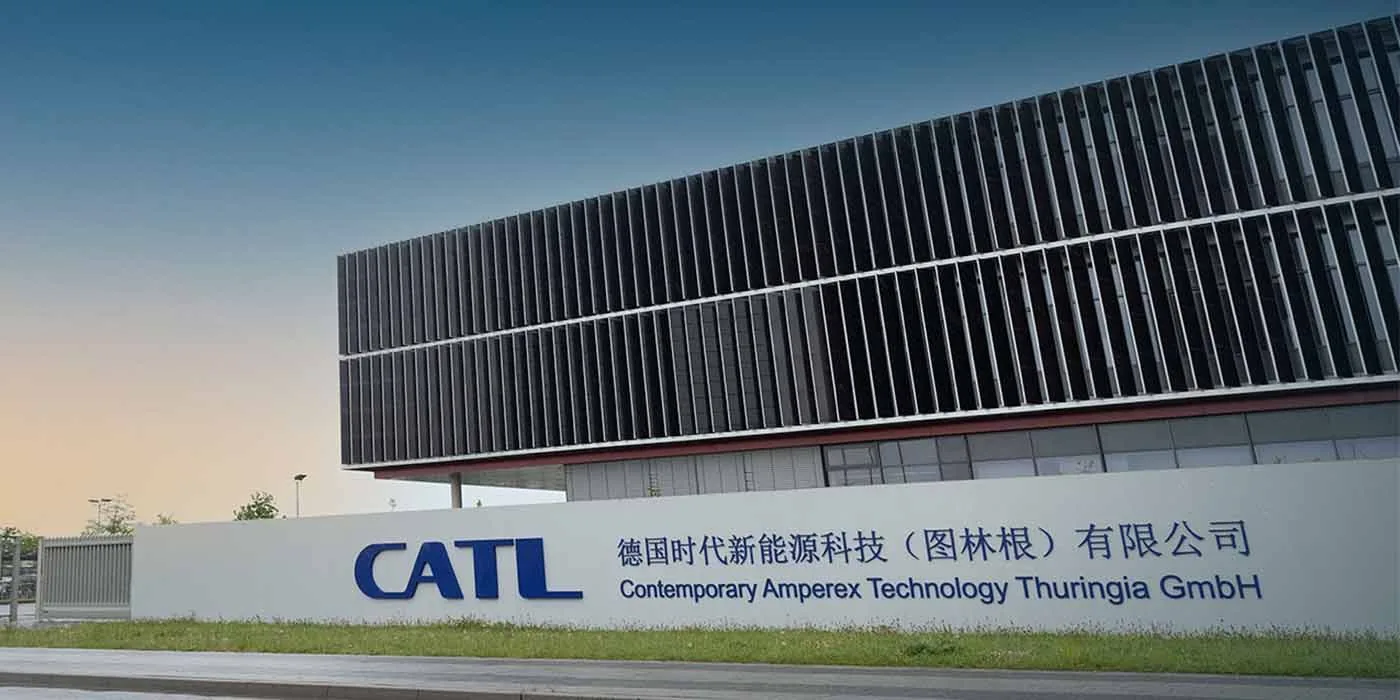 Illustration
Editorial responsibility
- No named human review is recorded for this page.
- Reports are grouped by semantic similarity and deterministic rules. Language models may assist titles, summaries, translation and cross-source analysis; the page reads the event directly, while its address stays stable when the title changes.
- Summary covers the current reports
Cross-source coverage
Common ground
- CATL is not collapsing; the 'de-CATLization' narrative is exaggerated and reflects normal market maturation.
- Automakers will likely self-develop 20-30% of their batteries to gain negotiating leverage, not fully replace CATL.
- CATL's 43 billion yuan profit versus automakers' combined 21 billion was an unsustainable imbalance that needed correction.
- The battery industry is entering a normal profit cycle as technology matures and competition increases.
Points of contention
- Whether automakers' battery ambitions are realistic or overly optimistic—some see it as industrial upgrading, others as expensive vertical integration.
- Whether the shift is a sign of Chinese industrial strength or a geopolitical vulnerability due to Western trade barriers.
- Whether the focus should be on market dynamics or on labor and environmental exploitation in the global supply chain.
- Whether CATL's dominance is being challenged by technology convergence or by unique Chinese industrial governance.
Blind spots
- The debate largely ignored the human and environmental costs of the battery supply chain, like cobalt mining in the DRC and lithium extraction in Chile.
- The impact on workers and communities in Ningde and other production hubs was treated as an afterthought rather than a central concern.
- Geopolitical factors, such as Western protectionism and trade policies blocking CATL's overseas expansion, were underplayed by some participants.
- The role of technology patent expirations and standardization in reducing CATL's moat was not fully explored until late in the discussion.
WorldAttention’s read
The 'de-CATLization' narrative is overblown—CATL remains a dominant player, but its supernormal profits are correcting as automakers develop 20-30% self-sufficiency to gain leverage. This is a healthy market maturation, not a crisis. However, the debate missed deeper issues: the human and environmental costs of the global battery supply chain, the real impact on workers, and how geopolitical tensions are reshaping the industry. The real story is about a technology entering a normal profit cycle, with automakers finally pushing back against a dominant supplier—a shift that benefits the industry's long-term resilience, even if it's less dramatic than the headlines suggest.
Reporting timeline
Supply Chain Reshaping: CATL Faces New Industry Cycle Amid 'De-CATL' Trend
On September 21, 2026, CATL (300750.SZ; 03750.HK) executed multiple market actions, including an 11 billion yuan share buyback for cancellation and price adjustments for its energy storage cells, with 280Ah and 314Ah cells seeing minor increases. The company's stock price fell below 300 yuan amid market concerns over the 'de-CATL' trend, where automakers like Li Auto and Xiaomi are diversifying battery suppliers to include Xinwangda and CALB. CATL's Chief Manufacturing Officer, Ni Jun, defended the company's specialization, arguing that battery manufacturing requires dedicated expertise. The article analyzes a fundamental shift in the EV supply chain, driven by automakers' desire to reduce dependency on a single supplier, regain pricing power, and manage costs, especially in the commercial vehicle segment where CATL's market share dropped from 61% to 54.5% in 2024-2025. Despite strong profitability (H1 2026 net profit up 41.98%) and high capacity utilization (95%), the industry is moving toward a more balanced, multi-supplier ecosystem, challenging CATL's dominant position. The article concludes that supply chain rebalancing is an irreversible trend, and future competition will hinge on ecosystem positioning and cooperation.
Read sourceAutomakers Distance Themselves from CATL as Battery Giant's Profits Spark Backlash
This article analyzes the growing trend of Chinese automakers reducing their dependence on CATL (Contemporary Amperex Technology Co., Ltd.), the dominant battery supplier. It reports that in 2026, companies like AITO, Xiaomi, and Li Auto have either introduced second-tier battery suppliers or announced plans for self-developed batteries. The primary driver is cost: CATL's net profit of 43.28 billion yuan in the first half of 2026 far exceeded the combined profit of 15 major listed automakers (21.05 billion yuan), creating a 'profit inversion' that automakers can no longer sustain amid price wars. Second-tier suppliers offer prices roughly 10% lower. Beyond cost, the article argues that automakers seek to reclaim product definition power. Relying on CATL's 'black box' battery solutions has led to product homogenization. Following BYD's success with its self-developed Blade Battery, companies like Li Auto and Xiaomi aim to integrate battery design with vehicle architecture for differentiation. The article forecasts that this 'de-CATL' trend will not destroy CATL, which still holds a 46.7% domestic market share, but will lead to a rebalancing of profit and power within the industry chain.
Read sourceCATL Faces Growing Competition as Chinese Automakers Shift to Self-Developed Batteries
This article from 21经济网, republished by Tencent Stock, analyzes the challenges facing battery giant CATL (Contemporary Amperex Technology Co.) as major Chinese electric vehicle makers pursue 'de-CATL' strategies. Despite reporting strong first-half profits of 43.28 billion yuan, CATL's market value has fallen by over 700 billion yuan from its May peak. Automakers including Li Auto, Xiaomi, Geely, NIO, and Leapmotor are investing in self-developed batteries or partnering with second-tier suppliers like Sunwoda and CALB. The article attributes this shift not only to cost concerns—noting that CATL's profits exceed those of 15 major listed automakers combined—but also to automakers' desire for greater control over battery definition, data, and integration. CATL's dominant market position (42.5% of August installations) and manufacturing advantages in consistency and quality control are acknowledged, but the article forecasts that as battery technology becomes more commoditized, automakers will increasingly reclaim definition rights, potentially reducing CATL's supply chain influence over the long term.
Read sourceShow 9 older updatesHide older updates
CATL Faces Growing Insecurity as Automakers Shift to Self-Developed Batteries
This article analyzes the challenges facing CATL (Contemporary Amperex Technology Co., Limited), the world's largest battery manufacturer, as major Chinese electric vehicle (EV) makers like Li Auto, Xiaomi, Geely, and Nio pursue 'de-CATL' strategies by developing their own batteries or partnering with second-tier suppliers. The analysis attributes this shift not only to cost concerns—noting CATL's net profit of 43.28 billion yuan in the first half of the year exceeded the combined profit of 15 major listed automakers—but also to automakers' desire for greater control over battery definition, data, and integration with vehicle design. CATL's dominance is supported by its manufacturing scale, quality control (with defect rates at PPB level), and strong consumer brand trust (81% in China). However, the article forecasts that as battery technology becomes more commoditized and manufacturing barriers lower, automakers will increasingly reclaim battery definition rights, potentially reducing CATL's long-term supply chain influence. The analysis cites industry sources and notes that while CATL's immediate position remains strong, the trend toward automaker-led battery development represents a structural shift in the industry.
Read sourceCATL Faces Growing Competition as Automakers Shift to Self-Developed Batteries
CATL, the world's largest battery maker, has seen its market value drop by over 700 billion yuan from its May peak, partly due to automakers reducing reliance on its batteries. The article argues that automakers' 'de-CATL' trend is driven not just by cost but by a desire for greater control over battery definition and data. Companies like Li Auto, Xiaomi, and NIO are investing in self-developed batteries or partnering with second-tier suppliers. While CATL retains advantages in scale, manufacturing consistency, and consumer brand trust, the article notes that battery manufacturing barriers are lowering, enabling automakers to pursue self-development. Analysts cited suggest CATL's long-term influence may diminish as automakers reclaim battery definition rights, though its near-term dominance remains strong with a 42.5% market share in August.
Read sourceCATL faces automaker battery self-development push as market dominance erodes
CATL (Contemporary Amperex Technology Co. Ltd.), the world's largest battery maker, has seen its market value drop by over 700 billion yuan from its May peak, triggered by automakers' moves to reduce reliance on its batteries. The article analyzes how automakers including Li Auto, Xiaomi, Geely, NIO, and Leapmotor are developing their own batteries or partnering with second-tier suppliers, driven not only by cost concerns but also by a desire to gain control over battery definition and data. CATL's dominance is supported by its manufacturing scale, quality control (PPB defect rate), and strong consumer brand trust (81% in China). However, the article notes that battery manufacturing barriers are lowering, and automakers increasingly want to integrate battery and vehicle development. While CATL's near-term position remains strong, the long-term trend suggests battery definition rights may shift back to automakers, potentially reducing CATL's supply chain influence.
Read sourceCATL's Market Value Drops 800 Billion Yuan Despite Record Profits as Automakers Push Back
This article analyzes the paradox of Contemporary Amperex Technology Co. Ltd. (CATL), the world's largest battery maker, which reported a net profit of 72.2 billion yuan in 2025 yet saw its market value evaporate by 800 billion yuan. The analysis attributes this to a fundamental shift in the automotive industry, where automakers, squeezed by high battery costs and thin profit margins, are actively pursuing a 'de-Ninghua' (de-CATL) strategy. This includes self-developing batteries, diversifying suppliers, and investing in competitors like BYD's FinDreams Battery. Despite these efforts, CATL's market share rebounded to 50.1% in early 2026, highlighting its deep technological moat, brand power with consumers (the 'CATL Inside' effect), and the high barriers to entry in battery manufacturing. The article identifies key risks for CATL, including the inability to retain cost benefits from falling lithium prices, founder share sales, industry overcapacity, and geopolitical uncertainties in overseas markets. The core thesis is that CATL is transitioning from being the 'only choice' to the 'best choice among options,' a shift that explains its declining valuation.
Read sourceCATL shares drop 35% as market fears 'de-Ningdeization' by automakers
CATL, the Chinese battery giant listed on the GEM, has seen its share price fall over 35% from a May high of 467.35 yuan to around 299 yuan, erasing 700 billion yuan in market value. The decline contradicts strong fundamentals, with interim revenue and net profit growing 54.8% and 41.98% year-on-year respectively. The article attributes the sell-off to market concerns over 'de-Ningdeization'—automakers moving away from CATL as a sole supplier to diversify battery sources, develop in-house batteries, or use second-tier suppliers to improve cost control and bargaining power. The analysis argues that while partial de-risking is occurring, CATL retains competitive advantages in capacity utilization (around 95%), scale, and technology. It suggests CATL can adapt by expanding energy storage revenue and overseas markets, and that self-developed batteries by automakers will take time. The piece concludes that CATL may transition from a 'monopolistic leader' to a 'competitive leader,' but the de-Ningdeization trend is not as dire as market pessimism suggests.
CATL Stock Falls 35% as Automakers Diversify Battery Suppliers, Raising De-CATLization Concerns
This article from NetEase Finance analyzes the 35% cumulative decline in CATL's stock price since May, despite strong interim earnings growth of 54.8% in revenue and 42% in net profit. The author attributes the drop primarily to market fears of 'de-CATLization'—automakers reducing reliance on CATL as a sole battery supplier. Automakers are increasingly adopting multi-supplier strategies or developing in-house batteries to control costs and enhance bargaining power, which could weaken CATL's pricing influence and future earnings growth. However, the article argues that de-CATLization is not as severe as feared, noting CATL retains advantages in global market share, capacity utilization (around 95%), and technology. It suggests CATL can strengthen its position through energy storage expansion and overseas markets. The piece concludes that while CATL may transition from a 'monopolistic leader' to a 'competitive leader,' its core strengths remain intact.
Read sourceCATL Stock Falls 35%; 'De-Ning' Trend Seen as Partial, Not Existential Threat
CATL (Contemporary Amperex Technology Co. Ltd.), the largest battery manufacturer on the ChiNext board, has seen its stock price drop 35% from a May high of 467.35 yuan to around 299 yuan, erasing 700 billion yuan in market value. This decline contrasts with strong financial performance, as CATL's mid-year report showed revenue and net profit growth of 54.80% and 41.98% year-on-year, respectively. The article attributes the sell-off to market fears of a 'de-Ning' trend, where automakers are moving away from CATL as a sole supplier to diversify sources or develop in-house batteries to control costs and gain bargaining power. However, the analysis argues that 'de-Ning' is a partial phenomenon, not an existential threat. CATL retains advantages in global market share, production scale, and technology. The article notes that automaker self-development of batteries is a long-term process, giving CATL time to enhance competitiveness through strategies like expanding energy storage revenue and overseas markets. The piece concludes that CATL may transition from a 'monopoly leader' to a 'competitive leader,' which could pressure its valuation and pricing power.
Read sourceCATL shares fall 35% as market fears 'de-Ning' trend among automakers
CATL (Contemporary Amperex Technology Co. Ltd.), the largest battery maker on China's ChiNext board, has seen its share price drop 35% from a May high of 467.35 yuan to around 299 yuan, erasing 700 billion yuan in market value. This decline contrasts with strong fundamentals: CATL's first-half revenue and net profit grew 54.80% and 41.98% year-on-year respectively. The article attributes the sell-off to market concerns over 'de-Ning' (去宁化), a trend where automakers reduce reliance on CATL as a sole supplier. Automakers are diversifying suppliers, developing in-house batteries, or turning to second-tier battery makers to cut costs and gain bargaining power. While CATL retains advantages in capacity utilization (around 95% in most years), scale, and technology, the article warns that if 'de-Ning' accelerates, CATL's pricing power and profit margins could erode, shifting its status from a 'monopoly leader' to a 'competitive leader'. However, the article notes that 'de-Ning' is partial and not as dire as feared, and CATL has time to find new growth avenues such as energy storage and overseas expansion.
Read sourceCATL's 35% Stock Drop Raises Questions About 'De-CATLization' Thesis
CATL, the 'gem of the ChiNext' board, has seen its stock price fall 35% from a May high of 467.35 yuan to 299 yuan, erasing 700 billion yuan in market value. This decline contrasts with strong fundamentals: CATL's mid-year report showed revenue and net profit growth of 54.80% and 41.98% year-on-year, respectively. The article attributes the sell-off to market fears of 'de-CATLization'—the trend of automakers moving away from CATL as a sole supplier to diversify suppliers, self-develop batteries, or use second-tier battery makers. This shift, driven by cost control and desire for bargaining power, could weaken CATL's pricing power and profit margins. However, the analysis argues that 'de-CATLization' is not absolute; CATL retains advantages in global market share, scale production, and technology. Automaker self-development of batteries is a long-term process, giving CATL time to adapt by expanding into energy storage and overseas markets. The article concludes that while CATL may transition from a 'monopoly leader' to a 'competitive leader,' the situation is less dire than market fears suggest.
Read source