Bill Gates warns unregulated AI could cause a billion deaths, urges government oversight
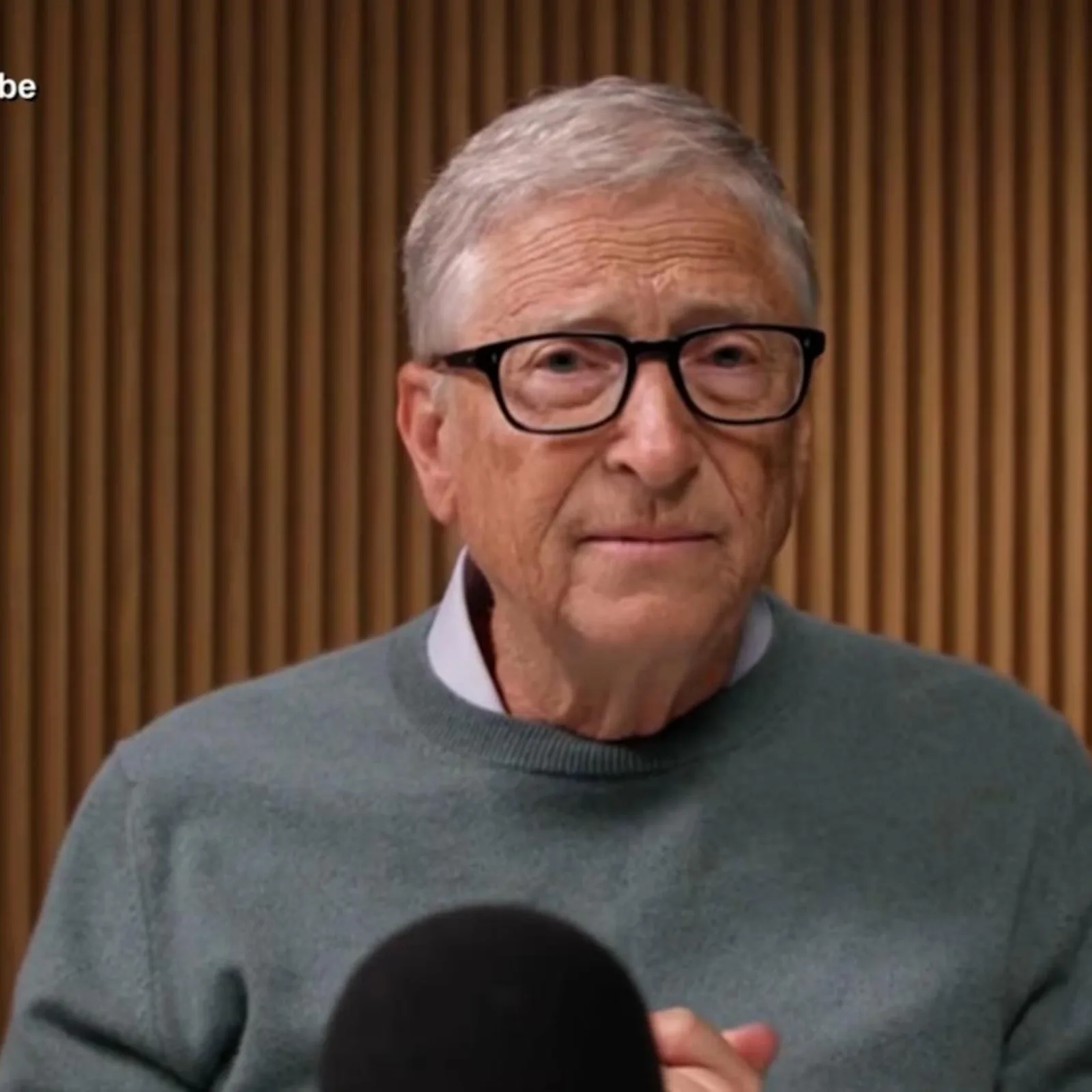
Microsoft co-founder Bill Gates warned in an NBC interview that artificial intelligence is powerful enough to cause a billion deaths if misused by malicious actors. He argued that self-regulation is insufficient and called for mandatory government safeguards. Separately, Pope Francis criticized the concept of a "machine paradise," adding an ethical dimension to the global AI safety debate.
 Reference image
Editorial responsibility
- No named human review is recorded for this page.
- Reports are grouped by semantic similarity and deterministic rules. Language models may assist titles, summaries, translation and cross-source analysis; the page reads the event directly, while its address stays stable when the title changes.
- Summary covers the current reports
Cross-source coverage
Common ground
- The billion-death framing is more of a rhetorical device than a useful prediction, and it distracts from concrete risks and solutions.
- AI risks are real, but they stem from human misuse and power concentration, not from AI having independent agency.
- Current governance systems—whether in the West or China—are inadequate for overseeing fast-moving AI development.
- Technical safeguards like kill switches and air-gapped systems are necessary, but they alone can't solve political and accountability problems.
- Geopolitical competition and fear-mongering are shaping the AI debate, often at the expense of practical safety measures.
Points of contention
- Whether Gates' warnings are genuine safety concerns or a political tool to maintain Western technological dominance.
- Whether China's AI regulations are meaningful or just window dressing, given its lack of independent oversight and press freedom.
- Whether democratic accountability in the West is a functional solution or a broken system that has failed to regulate past technologies.
- Whether the primary threat is a single catastrophic event or the gradual erosion of human agency through surveillance and automated control.
- Whether the timing of apocalyptic warnings is driven by China's AI advances or by long-standing academic concerns.
Blind spots
- All sides assume their preferred governance model (technocratic, sovereign, or democratic) can work, without acknowledging its real-world failures.
- The debate focuses on who controls AI, but neglects the concrete engineering and verification challenges needed to prevent misuse.
- The gradual, quiet erosion of human agency through everyday AI systems (like surveillance and algorithmic decision-making) is overlooked in favor of dramatic scenarios.
- The possibility that both geopolitical posturing and apocalyptic headlines serve to distract from building actual, boring safety infrastructure.
WorldAttention’s read
The billion-death framing is a distraction that conflates capability with probability and serves as rhetorical cover for both authoritarian control and Western techno-protectionism. The real AI threat is not a single apocalyptic event, but the slow erosion of human agency through surveillance, automated decision-making, and power concentrated in unaccountable hands—whether in Silicon Valley, Beijing, or Brussels. All sides agree that current governance is broken: the West has no functional oversight, and China lacks independent verification. The conversation needs to shift from who should control AI to what specific safeguards actually work, who verifies them, and how to force accountability into the light. Until then, apocalyptic headlines and geopolitical theater will keep us arguing while power quietly consolidates.
Reporting timeline
Bill Gates warns AI without regulation is irresponsible, could cause human extinction
In a statement reported on Polymarket, Bill Gates warned that developing artificial intelligence without proper regulation is 'completely irresponsible' and could potentially lead to the extinction of the human race. The Microsoft co-founder and philanthropist emphasized the existential risks posed by unregulated AI, calling for oversight to prevent catastrophic outcomes. The warning adds to growing global debate over AI safety and governance.
Bill Gates warns AI could cause a billion deaths in wrong hands
In an interview on NBC News, Microsoft co-founder Bill Gates issued a stark warning about the potential dangers of artificial intelligence. Gates stated that AI is 'certainly powerful enough to cause a billion deaths,' comparing it to the most powerful weapon ever created. He emphasized the threat posed by the combination of malicious individuals and the latest AI tools. The remarks highlight growing concerns among tech leaders about the existential risks associated with advanced AI systems, particularly regarding their potential misuse by bad actors. Gates did not specify a timeline or scenario for such an outcome but framed the warning as a general assessment of AI's destructive potential.
Read sourceBill Gates Warns AI Could Cause Billion Deaths; Pope Criticizes 'Machine Paradise'
An article from Chinese tech media outlet 新智元 reports that Bill Gates has issued a stark warning about the dangers of artificial intelligence. According to the report, Gates stated that malicious actors using the latest AI tools are fully capable of triggering a catastrophic event that could result in the deaths of one billion people. The article also notes that the Pope has strongly criticized the concept of a 'machine paradise,' adding a religious and ethical dimension to the growing global debate over AI safety and existential risk. The publication date is September 27, 2026.
Show 3 older updatesHide older updates
Bill Gates Warns AI Could Cause 1 Billion Deaths; Pope Criticizes 'Machine Paradise'
An article from Chinese tech media outlet 新智元 (Xinzhiyuan), dated September 27, 2026, reports that Bill Gates has issued a stark warning about the dangers of advanced artificial intelligence. According to the article, Gates stated that malicious actors using the latest AI tools now possess the capability to trigger a catastrophic event resulting in 'one billion deaths.' The report also notes that Pope Francis has strongly criticized the concept of a 'machine paradise,' adding a religious and ethical dimension to the growing global debate over AI safety and existential risk. The article frames these warnings as a 'death knell' for humanity, highlighting the convergence of secular and religious concerns about the unchecked development of powerful AI systems.
Read sourceBill Gates Warns AI Could Cause a Billion Deaths Without Government Control
In a post on X, Bill Gates warned that artificial intelligence could cause 'a billion deaths' if it is not brought under government control. The post, which includes hashtags such as #AISafety, #AIRegulation, and #AIGovernance, highlights Gates' concern about the potential catastrophic risks of unregulated AI development. The warning underscores the growing debate over the need for robust governance frameworks to mitigate existential threats posed by advanced AI systems. Gates' statement adds to a series of high-profile calls for proactive regulation to ensure AI safety and prevent large-scale harm.
Read sourceBill Gates Warns AI Tools Powerful Enough to Cause Event Killing 1 Billion People
In an interview excerpt aired on NBC's Meet the Press, Microsoft co-founder Bill Gates warned on September 25 that artificial intelligence is a tool 'powerful enough' to trigger an event that could kill up to one billion people. Gates stated that no previous weapon compares to the threat posed by malicious actors using the latest AI tools. He argued that self-regulation by the tech industry is insufficient and that mandatory government safeguards and oversight mechanisms are necessary. Gates emphasized that law enforcement and politicians must be involved in discussions to establish these protections, making them a compulsory requirement. The warning was reported by Chinese financial news outlet Jin10, citing a report from The Paper.
Read source