Michael Burry and Steve Eisman call AI safety warnings self-serving hype for IPOs
Investors Michael Burry and Steve Eisman, known from "The Big Short," argue that leading AI labs OpenAI and Anthropic are manufacturing doomsday panic about AI to push for regulation that protects incumbents and generates hype for upcoming IPOs. Burry posted four objections on September 14, 2026, claiming large language models are not true AI, a slowdown benefits current leaders, safety warnings serve as IPO promotion, and talk of a slowdown masks fading growth. Eisman similarly accuses the companies of trying to create a duopoly. Their criticism follows Anthropic CEO Dario Amodei's essay urging deliberate AI slowdown, endorsed by OpenAI's Sam Altman and Elon Musk.
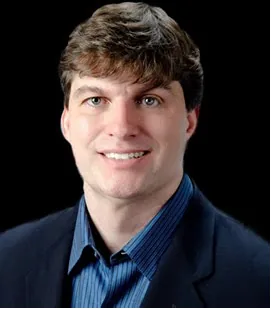 Reference image
Editorial responsibility
- No named human review is recorded for this page.
- Reports are grouped by semantic similarity and deterministic rules. Language models may assist titles, summaries, translation and cross-source analysis; the page reads the event directly, while its address stays stable when the title changes.
- Summary covers the current reports
Cross-source coverage
Common ground
- Michael Burry's critique of regulatory capture and IPO hype in the AI industry is structurally sound and widely acknowledged.
- The 'slow down for safety' narrative from major AI labs is seen as self-serving, benefiting incumbents over competitors.
- Autonomous weapons and AI systems are already causing real harm in places like Gaza, Yemen, and Libya, not just hypothetical future risks.
- The Global South is often treated as a testing ground or chess piece by both Western and Eastern powers, with little say in AI governance.
- Current governance frameworks—whether democratic oversight, state control, or multipolar competition—have failed to protect those already harmed by AI.
- Technical uncertainty about AGI's timeline is real, but it doesn't excuse ignoring present-day harms from AI technologies.
Points of contention
- Whether AI safety concerns are genuine or purely a PR/manufactured crisis to protect market positions.
- Whether Western democratic systems offer meaningful accountability or are just rituals that fail to stop harm.
- Whether China's AI development and Belt and Road exports are more ethical than Western practices, or just a different form of exploitation.
- Whether the primary threat is regulatory capture by corporations, geopolitical rivalry, or the exclusion of the Global South from decision-making.
- Whether the focus should be on future AGI risks or immediate harms from current AI applications like autonomous weapons and surveillance.
Blind spots
- The debate largely ignored the voices and experiences of people in the Global South who are already suffering from AI-driven violence.
- The economic bubble and market structure issues raised by Burry were sidelined in favor of moral and geopolitical arguments.
- The connection between capital markets funding AI development and the same capital funding autonomous weapons was not fully explored.
- The possibility of genuinely independent, globally inclusive oversight was mentioned but dismissed as impractical without concrete proposals.
- The role of open-source AI models and their potential to democratize access versus entrench new forms of control was underdiscussed.
WorldAttention’s read
This debate revealed a deep consensus that Michael Burry's critique of regulatory capture and IPO hype in AI is valid, but it also exposed a profound blind spot: the conversation focused on future hypotheticals and great-power competition while ignoring the real, ongoing harm from autonomous weapons and surveillance systems in places like Gaza, Yemen, and Libya. All sides agreed that current governance frameworks—whether Western democratic oversight, Chinese state capitalism, or multipolar competition—have failed to protect the Global South, which is treated as a testing ground rather than a participant. The core disagreement remains whether AI safety concerns are genuine or manufactured, and whether any existing system can offer meaningful accountability. Ultimately, the panel concluded that until the voices of those already suffering from AI-driven violence are centered, the debate remains noise.
Reporting timeline
Big Short Investor Steve Eisman Says AI Firms Manufacture Doomsday Panic for Regulation
Steve Eisman, the investor who inspired 'The Big Short,' argues that top AI labs like OpenAI and Anthropic are manufacturing a 'doomsday panic' about AI destroying humanity to push for regulation that would create a duopoly and protect their businesses. Eisman, a senior portfolio manager at Neuberger Berman, claims these companies realize their business has no moat and are trying to create a crisis to manipulate regulation. He points to recent statements from Anthropic researchers and CEOs calling for a slowdown in AI development as evidence. Eisman has reduced his AI investments, describing OpenAI and Anthropic as the 'Achilles' heel' of the industry due to the supply chain's reliance on them. He challenges them to delay their IPOs if the technology is truly dangerous. Fellow 'Big Short' investor Michael Burry shares similar views, calling the push to slow down 'self-serving' and arguing that large language models are not artificial general intelligence.
Read sourceMichael Burry Says AI Slowdown Would Be 'Self-Serving' for OpenAI and Anthropic
In a September 2026 article on Yahoo Finance, investor Michael Burry, known from 'The Big Short,' argued that calls for an AI slowdown by companies like OpenAI and Anthropic are 'self-serving.' Burry, writing on Substack, provided four reasons: large language models are not true AI or AGI; slowing benefits incumbents facing fast-rising competition; safety warnings serve as hype for IPOs; and it covers for real slowing growth as IPOs are delayed. The article notes that former employee Jacob Coxon resigned from Anthropic warning of extinction risk, and that OpenAI and Anthropic have committed to massive spending on AI infrastructure. Burry's skepticism contrasts with the public stance of these companies, which claim a slowdown is needed for safety. The piece also mentions OpenAI's reported losses of tens of billions in 2025 and potential revenue slowing, suggesting financial pressures may underlie the safety rhetoric.
Read sourceMichael Burry Calls AI Leaders' Slowdown Push Self-Serving, Maintains Short Positions
Investor Michael Burry, known for predicting the 2008 housing crash, has intensified his skepticism toward the artificial intelligence sector. In a September 14, 2026 post on X and his Substack 'Cassandra Unchained,' Burry argued that recent calls by AI executives to slow down development are self-serving. His comments followed a rare alignment among rival AI lab leaders: Anthropic CEO Dario Amodei published an essay titled 'We Must Pace the Frontier' urging deliberate slowdown, which was quickly endorsed by OpenAI's Sam Altman, Elon Musk, and Google DeepMind's Demis Hassabis. Burry, who has built short positions against Nvidia, Tesla, Micron, Applied Materials, Caterpillar, and a semiconductor ETF, laid out four reasons for his skepticism. He contends that large language models are not true artificial intelligence and will never achieve artificial general intelligence, and that a feedback loop of hype—where chip stocks rise because hyperscalers spend heavily partly because chip stocks keep rising—masks real demand. The China provision in Amodei's essay proved contentious, with Beijing's state-run Global Times dismissing it as a Cold War playbook, while President Trump stated the U.S. leads in AI and has no interest in slowing down.
Show 5 older updatesHide older updates
Big Short's Michael Burry Blasts AI Giants' Slowdown Call as Self-Serving Hype
On September 15, Cailian Press reported that leading AI industry figures from OpenAI, Anthropic, and other major companies recently called for slowing down technological development. Renowned investor Michael Burry, known for betting against the housing market in the 'Big Short,' criticized this move as 'self-serving,' arguing it aims to slow rapidly developing competitors and benefit incumbent firms. Burry challenged the fundamental premise, asserting that large language models are not artificial general intelligence (AGI), and therefore there is no AI development that needs slowing. He also suggested that discussing AI's potential dangers helps maintain investor enthusiasm as these companies prepare for IPOs.
Michael Burry Blasts AI Giants' Call for Slower Pace as Self-Serving Hype
On September 15, Cailian Press reported that leading AI companies including OpenAI and Anthropic called for slowing down technological development over the past weekend. Renowned investor Michael Burry, known for the 'Big Short,' challenged this stance, describing the push to decelerate progress as 'self-serving.' He argued that efforts by major AI firms could slow down rapidly growing competitors, benefiting incumbent companies. Burry also questioned the fundamental premise of their argument, asserting that large language models are not AGI, and therefore 'there is no AI whose development needs to be slowed down.' Additionally, he noted that discussing the potential dangers of AI helps maintain investor enthusiasm as these companies prepare for public offerings.
Michael Burry: AI apocalypse fears shield incumbents and inflate IPO hype
Investor Michael Burry argues that OpenAI and Anthropic are using fears of an AI apocalypse to protect established companies and generate hype for upcoming IPOs. He contends that current large language models will not evolve into artificial general intelligence, so there is no dangerous trajectory worth slowing down. Burry warns that a broadly imposed slowdown, through costly regulations like evaluations and audits, would disproportionately burden smaller competitors and act as barriers to entry for giant labs. He also states that warnings about AI becoming catastrophically powerful inflate perceptions of these companies' importance ahead of public listings and could provide cover for slowing growth.
Read sourceChinese Analyst: Anthropic Should Forgo IPO If Truly Wanting to Slow AI for Humanity
On September 15, Chen Guo, deputy director and chief strategy officer at East Money Securities Research Institute, posted on Weibo offering a skeptical analysis of U.S. AI company Anthropic's public calls for AI development slowdown. Chen argues that such calls are 'packaging' for capital market interests, not genuine altruism. He suggests that if Anthropic truly wanted to slow AI for humanity's safety, it should unilaterally abandon its IPO plans and 'become a Buddha' by renouncing worldly gains. Chen notes that even OpenAI's Sam Altman has said his IPO delay was not due to valuation issues. The analyst contends that pre-IPO calls for AI slowdown actually serve Wall Street's interests, which differ from Washington's geopolitical competition goals. Chen interprets the real motive as controlling capital burn and curbing irrational arms races among model companies, while also seeking to suppress open-source models from China (referred to as 'Dongda'). The commentary frames Anthropic's position as business-driven rather than safety-driven.
Read sourceMichael Burry Calls AI Slowdown Hype, Suggests It Aims to Boost IPOs
Investor Michael Burry criticized the push for an AI slowdown as self-serving hype, arguing that executives at OpenAI and Anthropic benefit from portraying their own technology as dangerously powerful. In a post on September 14, 2026, Burry made four objections: large language models are not true AI and will never reach AGI; a pause protects current leaders from rivals; safety warnings serve as promotional material for upcoming stock listings; and talk of a slowdown masks fading growth as IPOs slip away. The criticism followed an essay by Anthropic CEO Dario Amodei urging labs to slow capability gains and host independent evaluators. OpenAI CEO Sam Altman and Elon Musk backed the slowdown plan. Altman ruled out a 2026 IPO for OpenAI, citing safety, while Anthropic is reportedly steering toward a listing this autumn. Neither company is profitable, with Anthropic not expecting to break even before 2028 and OpenAI guiding toward 2030. Burry has expanded his Nvidia short position and bought December calls as a hedge.
Read source