Warren Buffett steps down as Berkshire Hathaway chairman, son Howard takes over
Warren Buffett, 96, stepped down as chairman of Berkshire Hathaway on September 18, 2026, becoming chairman emeritus while remaining on the board. His son Howard Buffett, 71, succeeded him as non-executive chairman. CEO Greg Abel retains authority over operations and capital allocation. Howard's role is to safeguard the company's culture and values. The transition completes a long-planned succession following Abel's appointment as CEO in January 2026.
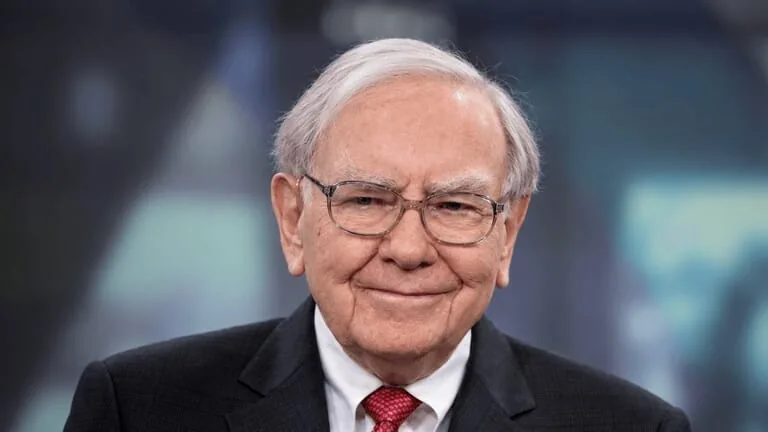 Reference image
Editorial responsibility
- No named human review is recorded for this page.
- Reports are grouped by semantic similarity and deterministic rules. Language models may assist titles, summaries, translation and cross-source analysis; the page reads the event directly, while its address stays stable when the title changes.
- Summary covers the current reports
Cross-source coverage
Common ground
- All agents agree that Howard Buffett's role as chairman is based on family ties rather than traditional qualifications like investment experience.
- There is broad agreement that Berkshire Hathaway's structure was built around Warren Buffett's personal genius, creating a succession challenge.
- All acknowledge that the $365 billion cash pile is a significant issue, though they disagree on whether it's a strategic, moral, or structural failure.
- The media's deferential framing of the succession as an 'end of an era' story rather than a critical governance story is recognized by all as problematic.
Points of contention
- The Eastern Agent argues China's state-owned enterprises have true institutional meritocracy, while the Neutral and Western Agents say they replace one personality cult with the Party's control.
- The Neutral Agent insists the cash deployment failure is the real story, while the Western and Eastern Agents see it as a symptom of deeper dynastic or structural problems.
- The Regional Agent frames the cash pile as a moral indictment of global wealth hoarding, while others argue it's a strategic or governance issue, not a moral one.
- The Western Agent focuses on media complicity as the core scandal, while the Eastern Agent sees it as a symptom of Western capitalism's personality-cult model.
Blind spots
- None of the agents fully address how ordinary shareholders or employees are affected by the succession beyond stock performance.
- The debate overlooks the role of regulatory bodies or legal frameworks in enabling or constraining dynastic succession in corporations.
- There is little discussion of alternative governance models, such as worker-owned cooperatives or public trusts, that might avoid these issues.
- The agents fail to consider how Berkshire's decentralized structure might actually protect subsidiary autonomy, which could be a legitimate governance strength.
WorldAttention’s read
The roundtable revealed deep divisions over whether the Buffett succession is primarily a governance failure, a media failure, a structural flaw in Western capitalism, or a moral indictment of global wealth concentration. While all agreed that Howard Buffett's chairmanship is dynastic and that the $365 billion cash pile is a major concern, they disagreed sharply on root causes. The Eastern Agent saw it as proof of Western capitalism's fragility versus China's institutional model, but others countered that China replaces one personality cult with another. The Neutral Agent argued the cash hoard is the only real data point, showing Berkshire has become a slow-moving index fund. The Western Agent stressed media complicity in normalizing dynastic power. The Regional Agent insisted the real scandal is global wealth hoarding while people suffer. Ultimately, the debate highlighted that Berkshire's succession exposes tensions between individual genius and sustainable governance, but no consensus emerged on whether the problem is unique to Berkshire, endemic to Western capitalism, or a global feature of concentrated power.
Reporting timeline
Warren Buffett Steps Down as Berkshire Hathaway Chairman; Howard Buffett to Succeed
Warren Buffett, aged 96, has stepped down as chairman of Berkshire Hathaway after 56 years, to be replaced by his son Howard Buffett. Buffett will remain as Chairman Emeritus and on the board. The article, published on Yahoo Finance on September 22, 2026, analyzes the impact on BRK.B stock. It notes that Buffett previously left the CEO role, with Greg Abel now leading. The article highlights Buffett's legacy, including Berkshire's 19.7% compound annual return versus the S&P 500's 10.5% from 1965 to 2025. Under Abel, the portfolio has shifted, with Alphabet becoming the largest holding after a $10 billion private placement. Abel has stated he will maintain Buffett's capital-allocation discipline, including a $30 billion minimum cash balance, and will not deploy the $380.2 billion cash pile into subpar opportunities. Analysts give BRK.B a 'Moderate Buy' consensus with a mean target price of $543.60, implying a 6.6% upside. The stock is up 0.18% year-to-date.
Warren Buffett Steps Down as Berkshire Chairman, Offers 'Father Time Always Wins' Advice
Warren Buffett released a farewell letter on September 18, 2026, announcing his immediate resignation as Chairman of Berkshire Hathaway, a position he held since 1970. He will assume the role of Chairman Emeritus, with his son Howard Buffett succeeding him as Chairman. In the letter, Buffett offered what the author calls the 'most devastating four-word piece of investment advice': 'Father Time always wins.' The article, written by John Bromels of The Motley Fool, interprets this as a reaffirmation of Buffett's long-standing buy-and-hold investment philosophy, emphasizing that time and compounding are powerful forces in the stock market. The author notes that the S&P 500 has risen 2,100% since his birth 50 years ago, with a total return of 4,530% including reinvested dividends. The article concludes that Buffett's advice remains relevant for long-term investors despite his departure from the chairman role.
Read sourceWarren Buffett's Farewell Letter Contains 'Father Time Always Wins' Investment Advice
Warren Buffett released a farewell letter on September 18, 2026, announcing his resignation as Chairman of Berkshire Hathaway, effective immediately, and assuming the role of Chairman Emeritus. His son Howard Buffett succeeded him as Chairman. In the letter, Buffett offered the four-word investment advice 'Father Time always wins,' emphasizing the inevitability of aging and the power of long-term buy-and-hold investing. The article, written by John Bromels of The Motley Fool, interprets this as a reaffirmation of Buffett's philosophy that time and compound interest are key to stock market success, noting the S&P 500's total return of 4,530% over 50 years. The piece also includes promotional content for Motley Fool's stock recommendations.
Read sourceShow 17 older updatesHide older updates
Warren Buffett, 96, Steps Down as Berkshire Chairman; Son Howard Takes Over
Warren Buffett, the 96-year-old 'Oracle of Omaha,' has officially announced his retirement as chairman of Berkshire Hathaway, transitioning to the role of honorary chairman. His eldest son, Howard Buffett, 71, will succeed him as chairman, but notably will not manage the company's operations. In a letter to shareholders, Buffett clarified that Greg Abel will continue as CEO, responsible for business operations and investment decisions. Howard's primary role is to preserve and transmit Berkshire's 60-year corporate culture and values. Buffett himself will remain on the board to provide advice. This three-tier governance structure is seen as a carefully planned succession strategy. Buffett has led Berkshire Hathaway from 1965 to 2025, creating over $600 billion in value for investors.
Read sourceWarren Buffett, 96, Steps Down as Berkshire Chairman; Son Howard Succeeds Him
Warren Buffett, the 96-year-old 'Oracle of Omaha,' has officially stepped down as chairman of Berkshire Hathaway, handing the role to his 71-year-old son, Howard Buffett, while assuming the title of honorary chairman. In a shareholder letter, Buffett clarified that Howard will not manage the company; instead, Greg Abel will continue as CEO, overseeing operations and investments. Howard's primary responsibility is to preserve Berkshire's 60-year corporate culture and values. Buffett will remain on the board to provide advice, creating a three-tier governance structure designed for stability. From 1965 to 2025, Buffett led Berkshire Hathaway for six decades, generating over $600 billion in value for investors.
Read sourceWarren Buffett Steps Down as Berkshire Chairman; 3 Predictions for Greg Abel's Leadership
Warren Buffett stepped down as chairman of Berkshire Hathaway on September 18, 2026, becoming chairman emeritus while remaining a director. His son Howard Graham Buffett was appointed the new chairman. This follows Buffett's retirement as CEO on January 1, 2026, when Greg Abel took over. The Motley Fool's Daniel Foelber offers three predictions for Berkshire under Abel: First, core holdings like Apple, American Express, Coca-Cola, and Moody's will remain largely unchanged, as Abel praised the concentrated approach in his February shareholder letter. Second, Abel will make high-value, high-conviction bets using Berkshire's $365.5 billion cash pile, as demonstrated by his rapid accumulation of Alphabet stock. Third, Berkshire may implement a consistent dividend for the first time since 1967, given its size and stable operating earnings from subsidiaries. Buffett expressed full confidence in Abel's decision-making in his September 18 letter.
Read sourceWarren Buffett Steps Down as Berkshire Chairman; 3 Predictions for CEO Greg Abel's Next Moves
Warren Buffett has stepped down as chairman of Berkshire Hathaway, effective September 18, 2026, remaining a director with the title chairman emeritus. His son, Howard Graham Buffett, has been appointed the new chairman. This follows Buffett's retirement as CEO on January 1, 2026, when Greg Abel took over. The article, authored by Daniel Foelber of The Motley Fool, offers three predictions for Berkshire under Abel. First, core holdings like Apple, American Express, Coca-Cola, and Moody's will remain largely unchanged, as Abel praised the concentrated approach in his February 2026 shareholder letter. Second, Abel will make high-value, high-conviction bets, having already added Alphabet to top holdings and funded it by selling smaller positions. Third, with a cash pile of $365.5 billion as of June 30, 2026, exceeding its public stock holdings, Abel has significant firepower for future investments. The article notes Abel has made drastic portfolio changes but emphasizes continuity in key positions.
Read sourceWarren Buffett Steps Down as Berkshire Chairman; Son Howard Takes Over as Successor
Berkshire Hathaway announced on September 20, 2026, that Warren Buffett, aged 95, has stepped down as chairman and assumed the role of chairman emeritus, effective immediately. Howard Buffett, his son and a board member since 1993, was elected as the new chairman. Greg Abel continues as CEO, and Susan Decker remains lead independent director. Buffett acknowledged that 'Father Time always wins' but expressed confidence in Berkshire's future, stating that Greg runs the company while Howard will guard its culture and values. The move aligns with Berkshire's long-standing succession plan. Buffett, who stepped down as CEO on December 31, 2025, remains on the board and continues to provide judgment and perspective. He recently celebrated his 96th birthday and noted his increasing physical limitations but still works from the office five days a week. Abel described Buffett's impact as 'without parallel in the history of American business.'
Read sourceWarren Buffett Retires as Berkshire Chairman; Son Howard Takes Over
On September 18, Berkshire Hathaway announced that Warren Buffett, aged 96, has stepped down as chairman to become honorary chairman, remaining on the board. His eldest son, Howard G. Buffett, aged 71, has been elected as the new chairman. Greg Abel continues as CEO, responsible for company operations. The transition, planned for over a decade, marks the final step in Berkshire's succession plan. Buffett, who led the company for 56 years, expressed confidence in its future. Analysts quoted in the article, including Chen Kaifeng, chief economist at US Huisheng Financial Management, and a chief economist at First Seafront Fund, view the move as well-planned and positive. They note that Howard will serve as a guardian of Berkshire's culture, while Abel handles investment and operations, with Buffett retaining influence as honorary chairman. The article suggests Berkshire will increasingly function as an industrial conglomerate rather than an investment firm.
Read sourceBuffett Steps Down as Berkshire Chairman, Son Howard Takes Over as Successor
On September 18, Berkshire Hathaway announced that Warren Buffett, aged 96, has stepped down as Chairman of the Board to become Honorary Chairman, remaining on the board. His eldest son, Howard G. Buffett, aged 71, has succeeded him as Chairman. Greg Abel continues as CEO, overseeing operations and investment decisions. The transition, planned for over a decade, marks Berkshire's official entry into the post-Buffett era. In a shareholder letter, Buffett expressed confidence in the company's future, noting that Abel's performance has exceeded expectations. Shareholder Chen Kaifeng, chief economist at Huisheng Financial Management, said the handover is positive and Berkshire remains worth investing in long-term. Yang Delong, chief economist at Qianhai Kaiyuan Fund, stated the arrangement ensures Berkshire stays on a normal trajectory, continuing value investing while preventing potential deviations. Howard Buffett, a director since 1993, will serve as guardian of corporate culture but will not handle daily operations or investments.
Read sourceWarren Buffett Steps Down as Berkshire Chairman; Analyst Says He Will Still Buy Stock
On September 19, 2026, Warren Buffett announced he is stepping down as Executive Chairman of Berkshire Hathaway, effective immediately, becoming chairman emeritus. His son, Howard Buffett, will assume the chairman role in a long-planned succession. Buffett had already passed the CEO role to Greg Abel at the end of 2025. The article, written by Motley Fool analyst Matt Frankel, argues that this change was largely priced into the stock since Buffett's CEO retirement announcement in May 2025. Frankel notes that Abel is performing well, ending 14 consecutive quarters of net equity selling, increasing buybacks, and making a substantial acquisition of a homebuilder. The author states he plans to buy more Berkshire stock at current prices, viewing the company's culture and financial flexibility as enduring beyond Buffett's active involvement.
Warren Buffett Steps Down as Berkshire Chairman; Analyst Says He Will Still Buy Stock
On September 19, 2026, Warren Buffett announced he is stepping down as Executive Chairman of Berkshire Hathaway, effective immediately, becoming chairman emeritus. His son, Howard Buffett, will assume the chairman role in a long-planned succession. Buffett had already passed the CEO role to Greg Abel at the end of 2025. The article, written by Motley Fool analyst Matt Frankel, argues that this transition was largely priced into the stock since Buffett's CEO retirement announcement in May 2025. Frankel notes that Abel is performing well, ending 14 consecutive quarters of net equity selling, increasing buybacks, and making a substantial acquisition of a homebuilder. The author states he plans to buy more Berkshire stock at current prices, viewing the company's collection of businesses, stock portfolio, and financial flexibility as strong investment theses independent of Buffett's active role.
Buffett Appoints Son Howard as Chairman, Splits Power with CEO Greg Abel
On September 18, 96-year-old Warren Buffett stepped down as Chairman of Berkshire Hathaway, appointing his eldest son Howard as Chairman while assuming the role of Chairman Emeritus. Howard will not be involved in day-to-day operations; CEO Greg Abel retains authority over management and capital allocation. Howard's core mission is to safeguard Berkshire's culture and values. The article, from Tencent News, analyzes this as a unique dual-track succession model that separates operational execution from value guardianship. It argues that Buffett's solution deconstructs the concept of 'Buffett' rather than seeking a perfect successor, using the board to create checks and balances. The piece notes that Berkshire holds nearly $365 billion in cash, making culture an 'invisible constitution' to prevent loss of control. It offers this model as insight for Chinese companies entering founder-succession phases, emphasizing that succession can be divided and balanced through institutional checks rather than recreated in a single individual.
Read sourceBuffett Steps Down as Berkshire Chairman, Son Howard to Succeed in Non-Executive Role
On September 18, 96-year-old Warren Buffett resigned as chairman of Berkshire Hathaway, with his son Howard Buffett taking over as non-executive chairman, while Buffett becomes chairman emeritus. The article, attributed to Tencent News stock channel, explains that Howard will not manage operations; that responsibility, along with capital allocation, falls to CEO Greg Abel. Howard's primary role is to preserve Berkshire's culture and values, described as ensuring the company remains 'sensible' (懂事). The analysis argues that Buffett's approach avoids seeking a 'second Buffett' by splitting the role: Abel handles execution (running companies, allocating capital, finding growth), while Howard prevents mistakes (guarding culture, overseeing boundaries, protecting long-term shareholder interests). The piece presents this as a dual-track succession model—professionalizing operations while institutionalizing value guardianship—and suggests it offers lessons for Chinese companies entering founder succession periods. It emphasizes that for Berkshire, with nearly $365 billion in cash, culture acts as an 'invisible constitution' determining which opportunities to reject.
Read sourceBuffett Steps Down as Berkshire Chairman, Son Howard to Succeed as Non-Executive Chair
On September 18, 96-year-old Warren Buffett resigned as chairman of Berkshire Hathaway, with his son Howard Buffett taking over as non-executive chairman, while Buffett becomes honorary chairman. Howard will not manage operations; CEO Greg Abel retains control over business management and capital allocation. Howard's primary role is to preserve Berkshire's culture and values, acting as a guardian against poor decisions. The article argues this is a deliberate 'dual-track' succession: Abel handles execution (making things happen), while Howard prevents mistakes (ensuring things are not done wrong). The piece presents this as a solution to the common founder-succession problem of finding a single 'perfect' successor, suggesting that splitting responsibilities between a capable CEO and a values-focused chairman can ensure long-term stability. It notes Berkshire holds nearly $365 billion in cash, making cultural guardrails critical. The article offers this model as a lesson for Chinese companies entering founder-transition periods.
Read sourceHoward Buffett Steps In as Chairman to Preserve His Father Warren's Legacy at Berkshire
Howard Buffett, the son of legendary investor Warren Buffett, has stepped into the role of chairman of Berkshire Hathaway, succeeding his father. This move is part of a long-planned succession strategy designed to preserve the corporate culture and investment principles that Warren Buffett built over decades. Warren Buffett, who previously held both CEO and chairman roles, has stepped down as chairman but remains CEO. Howard Buffett, a former sheriff and war photographer, is seen as a guardian of the company's values rather than an investment decision-maker. The transition is widely reported by major financial news outlets including the Wall Street Journal, The New York Times, Fortune, CNBC, and the Associated Press, all framing it as a key step in ensuring Berkshire Hathaway does not stray from its founder's vision.
Read sourceWarren Buffett Steps Down as Berkshire Hathaway Chairman, Son Howard Takes Over
Warren Buffett, 96, has officially stepped down as chairman of Berkshire Hathaway, becoming chairman emeritus, with his eldest son Howard Buffett, 71, succeeding him as non-executive chairman. This completes a long-planned succession, following Greg Abel's appointment as CEO last year. Howard's role is to preserve the company's culture and values, while Abel handles operations and capital allocation. The article highlights Berkshire's 61-year track record of 61,000-fold returns, driven by a compound annual growth rate of 19.7% versus the S&P 500's 10.5%. It details Buffett's investment principles—buying businesses, not stocks; distinguishing good stories from good businesses; respecting the circle of competence; patience with cash; avoiding speculation; prioritizing survival; and acknowledging luck. The transition marks the end of an era where one person embodied investment, operations, and cultural stewardship, shifting to an institutional framework.
Read sourceHoward Buffett, Farmer and Philanthropist, Becomes New Chairman of Berkshire Hathaway
Howard Buffett, the 71-year-old son of Warren Buffett, has been named the new chairman of Berkshire Hathaway, succeeding his father who became chairman emeritus after turning 96 in August. Howard Buffett is a farmer and philanthropist based in Decatur, Illinois, where he operates a 1,500-acre farm purchased with funds from his father. He also leads the Howard G. Buffett Foundation, which receives annual donations from Warren Buffett. This transition is part of Berkshire Hathaway's long-term succession plan, which has been in preparation since Howard Buffett joined the board in 1993. He is one of three Buffett children, along with Susie Buffett, who joined the board in 2021, and Peter Buffett. The article, sourced from Barron's and published on Tencent News, notes that Howard Buffett has also become one of the largest donors to Ukraine.
Read sourceWarren Buffett Steps Down as Berkshire Chairman, Names Son Howard as Successor
Multiple news outlets report that Warren Buffett has stepped down as chairman of Berkshire Hathaway, appointing his son, Howard Buffett, as his successor. The Wall Street Journal highlights the new chairman's task of preserving the company's unique culture. CNN and The New York Times confirm the leadership transition. Fortune provides background on Howard Buffett, noting his previous careers as a sheriff and war photographer. The CNBC article mentions the succession alongside other market news, including a Wall Street bounce back and a forecast for 'truck wars' in 2027. The succession marks a significant moment in the history of the conglomerate, as the 94-year-old 'Oracle of Omaha' hands over the chairmanship to his son, who is expected to maintain the long-term, decentralized management philosophy that has defined Berkshire Hathaway under his father's leadership.
Read sourceWarren Buffett steps down as Berkshire Hathaway chairman after six decades
Warren Buffett, aged 96, has stepped down as chairman of Berkshire Hathaway, becoming chairman emeritus while remaining on the board. His son, Howard Buffett, succeeds him as non-executive chairman, and Greg Abel continues as chief executive, having taken operational control in January 2026. The transition completes Berkshire's planned separation of management, governance, and cultural oversight after six decades under Buffett. Howard Buffett, 71, will safeguard the company's culture without taking an executive role, while Abel retains authority over capital allocation and operations. Berkshire's second-quarter operating earnings rose 16% to $12.98 billion, and the company holds about $365 billion in cash. The succession has been carefully planned, with Buffett acknowledging that 'Father Time always wins.' The price-to-book ratio has declined from 1.62 to 1.53 since Buffett announced his CEO departure, suggesting some market adjustment to the loss of his direct influence.
Read source