Beijing court rejects first LP lawsuit to dissolve PE fund controlling listed company
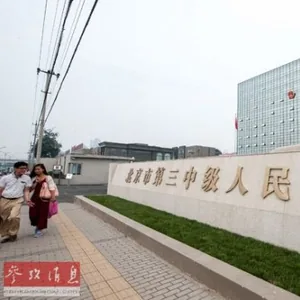
A Beijing court dismissed a lawsuit by 12 limited partners (LPs) seeking to dissolve Beijing Zhide Depu Equity Investment Center, a private equity fund that holds a controlling stake in listed company Zhide Shares. The fund's term expired in December 2024 but the general partner had not liquidated its holdings. The Beijing Third Intermediate People's Court ruled in March 2025 that the dissolution request falls outside civil litigation scope, requiring internal resolution per the partnership agreement. Legal experts note such cases rarely succeed on term expiry alone.
 Reference image
Editorial responsibility
- No named human review is recorded for this page.
- Reports are grouped by semantic similarity and deterministic rules. Language models may assist titles, summaries, translation and cross-source analysis; the page reads the event directly, while its address stays stable when the title changes.
- Summary covers the current reports
Cross-source coverage
Common ground
- There is a fundamental structural mismatch between the short life of a private equity fund and the long timeline needed to turn around a listed company.
- The 19.82% threshold of LP capital was too small to force a fund dissolution under the partnership agreement.
- China lacks a deep secondary market for selling stakes in control-oriented funds, which leaves small investors with few options.
- The court's ruling was legally correct based on the contract the investors signed.
- The case highlights a power imbalance between the GP and small LPs, especially when state-backed capital is the majority investor.
Points of contention
- Regional Agent sees the case as a sign of structural injustice and a betrayal of trust, while Eastern Agent sees it as healthy market maturation and contract enforcement.
- Eastern Agent defends state capital as a stabilizing force for long-term industrial goals, but Regional Agent argues it leaves small investors without recourse.
- Neutral Agent focuses on the lack of a secondary market as the core problem, while Regional Agent insists the real issue is power and accountability.
- Eastern Agent claims the GP's nine-month delay could be rational turnaround effort, but Regional Agent and Neutral Agent view it as parasitic fee collection.
- Regional Agent invokes colonial legacy and authoritarian logic, which Eastern Agent and Neutral Agent reject as inaccurate framing for China's domestic legal system.
Blind spots
- No one fully addressed the human cost for the 12 individual investors who lost their money and had no effective remedy.
- The debate overlooked the need for mandatory liquidation triggers or automatic exit mechanisms that don't rely on LP voting power.
- There was little discussion of how to hold GPs accountable for inaction beyond reputational consequences.
- The role of regulatory oversight or potential legal reforms to protect minority LPs was not explored in depth.
WorldAttention’s read
This case is not a simple story of good versus bad, but a clear warning about the risks small investors face when they put money into control-oriented private equity funds. The court correctly enforced the contract, but the contract itself was written to favor the GP and the largest investors. The real problem is a lack of liquidity options and automatic protections for minority LPs, which leaves them trapped when a GP drags its feet. To fix this, China needs to build a secondary market for fund stakes, create mandatory liquidation triggers, and give small investors a real voice in exit decisions. Without those changes, the system will keep serving the powerful while leaving the rest to bear the losses.
Reporting timeline
First Case: 12 LPs Sue to Dissolve Fund, Highlighting Exit Dilemma for PE-Held Listed Firms
This article from Securities Times analyzes the first case in China where 12 limited partners (LPs) jointly sued to dissolve a private equity fund that holds a controlling stake in a listed company, Beijing ZG Technology (智度股份). The fund, Beijing ZG Deep Equity Investment Center, reached its expiration date in December 2024 but had not liquidated its shares. The LPs' lawsuit was dismissed by the Beijing Third Intermediate People's Court, which ruled the matter was not within the scope of civil litigation, emphasizing internal resolution mechanisms. Legal expert Chen Chaoming notes that such cases require evidence of 'expiration + persistent deadlock + no alternative resolution' for success. The article highlights the structural conflict between GP and LP interests in such funds, where GPs may delay liquidation to seek higher valuations, while LPs seek timely exits. It outlines four key risks: internal governance, information disclosure, control stability, and limited exit paths. The piece concludes with five lessons for funds and LPs, including the need for pre-set exit mechanisms in partnership agreements and realistic liquidity expectations for control-oriented funds.
First Case: 12 LPs Sue to Dissolve Fund Holding Listed Company, Exposing Exit Dilemma
This article from Securities Times (via Tencent Stock) reports on a landmark legal case in China where 12 limited partners (LPs) of Beijing Zhicheng Depu Equity Investment Center (LP), the controlling shareholder of Zhicheng Shares (formerly Sida High-Tech), filed a lawsuit to dissolve the fund after its term expired in December 2024. The fund held a controlling stake in the listed company but had not exited. In March 2025, the Beijing Third Intermediate People's Court dismissed the case, ruling that the dissolution request was not within the scope of civil litigation, emphasizing that internal partnership mechanisms should be exhausted first. The article, citing legal expert Chen Chaoming of Yingke Shenzhen, analyzes the structural conflict between GPs (who control exit timing) and LPs (who seek timely returns), the four key risks of such fund-controlled listed company structures (internal governance, disclosure, control stability, and exit path constraints), and five lessons for future transactions. It notes that 11 such control-change deals involving private equity funds were announced in 2025, with state capital as the main funding source.
First Case: 12 LPs Sue to Dissolve Fund, Highlighting Exit Dilemma for PE-Controlled Listed Firms
This article from Securities Times analyzes the first known case in China where 12 limited partners (LPs) of a private equity fund, Beijing Zhide Depu Equity Investment Center, sued to dissolve the fund after its term expired. The fund holds a controlling stake in listed company Zhide (formerly Star High-Tech). In March 2025, a Beijing court dismissed the lawsuit, ruling that the dissolution of a partnership is not within the scope of civil litigation and should be resolved through internal mechanisms. The article, citing lawyer Chen Chaoming, highlights the structural conflict between general partners (GPs), who may delay exit to seek higher valuations, and LPs, who seek timely liquidation. It notes that such 'holding-type' funds face inherent term mismatches (fund life of 5-7 years vs. longer industry integration cycles) and four key risks: internal governance, disclosure/related-party transactions, control stability, and limited exit paths. The article provides five lessons for future funds, including the need for preset exit mechanisms in partnership agreements and alignment of exit expectations between GPs and LPs.
Read sourceShow 2 older updatesHide older updates
First Case: 12 LPs Sue to Dissolve Fund, Highlighting Exit Dilemma for PE-Held Listed Firms
This article from Securities Times (via Tencent Stock) reports on a landmark legal case in China where 12 limited partners (LPs) of Beijing ZG Digital Depp Equity Investment Center (LP) filed a lawsuit to dissolve the fund after its term expired in December 2024, while it still held a controlling stake in ZG Digital (formerly SDIC Gaoke). The Beijing Third Intermediate People's Court dismissed the case in March 2025, ruling that the dissolution request was not within the scope of civil litigation, emphasizing that internal partnership mechanisms should be exhausted first. The article highlights the growing trend of private equity funds acquiring controlling stakes in A-share listed companies, citing 11 such transactions in 2025. Legal expert Chen Chaoming from Yingke Shenzhen identifies four key risks: internal governance, information disclosure and related-party transactions, control stability, and limited exit paths. He provides five recommendations for funds and LPs, including designing flexible term structures, establishing operable extension mechanisms, and aligning exit expectations between GPs and LPs. The case underscores the structural conflict between fund lifecycles (typically 5-7 years) and the longer timelines needed for industrial integration and value enhancement.
Read sourceFirst LP Lawsuit to Dissolve PE Fund Holding Listed Company Highlights Exit Dilemma
A Beijing court has rejected a petition by 12 limited partners (LPs) to dissolve Beijing Zhide Depu Equity Investment Center, the controlling shareholder of Zhide Shares. This is the first known case in China where LPs collectively sued to dissolve a fund used to control a listed company. The fund's term expired in December 2024, but the GP had not initiated liquidation. The court ruled the dispute falls outside civil litigation scope, advising internal resolution per the partnership agreement. Legal expert Chen Chaoming notes that LP dissolution suits based solely on term expiry rarely succeed; courts require evidence of 'term expiry + persistent deadlock + no alternative resolution.' The case underscores structural risks in PE-controlled listed companies: governance conflicts between GPs and LPs, information asymmetry, control instability, and limited exit paths. Chen warns that fund terms (typically 5-7 years) mismatch the longer cycles needed for industrial integration and value creation. He recommends pre-set exit mechanisms, operable extension rules, and alignment of exit expectations between GPs and LPs before acquiring control.