Apple's iPhone 18 Pro Premium Collapses as Foldable Duo Surges on Ecosystem Loyalty
In autumn 2026, Apple's iPhone 18 Pro series saw unprecedented launch price drops and reduced scalper premiums, cracking its traditional high-price narrative. Meanwhile, Apple's foldable iPhone Duo, despite a 60% assembly yield and inferior hardware, garnered millions of pre-orders due to iOS ecosystem loyalty. Chinese brands Honor, vivo, and OPPO have shifted focus to AI agents and system-level intelligence but struggle to convert innovation into sales momentum, as the competitive battleground moves from hardware specs to ecosystem stickiness.
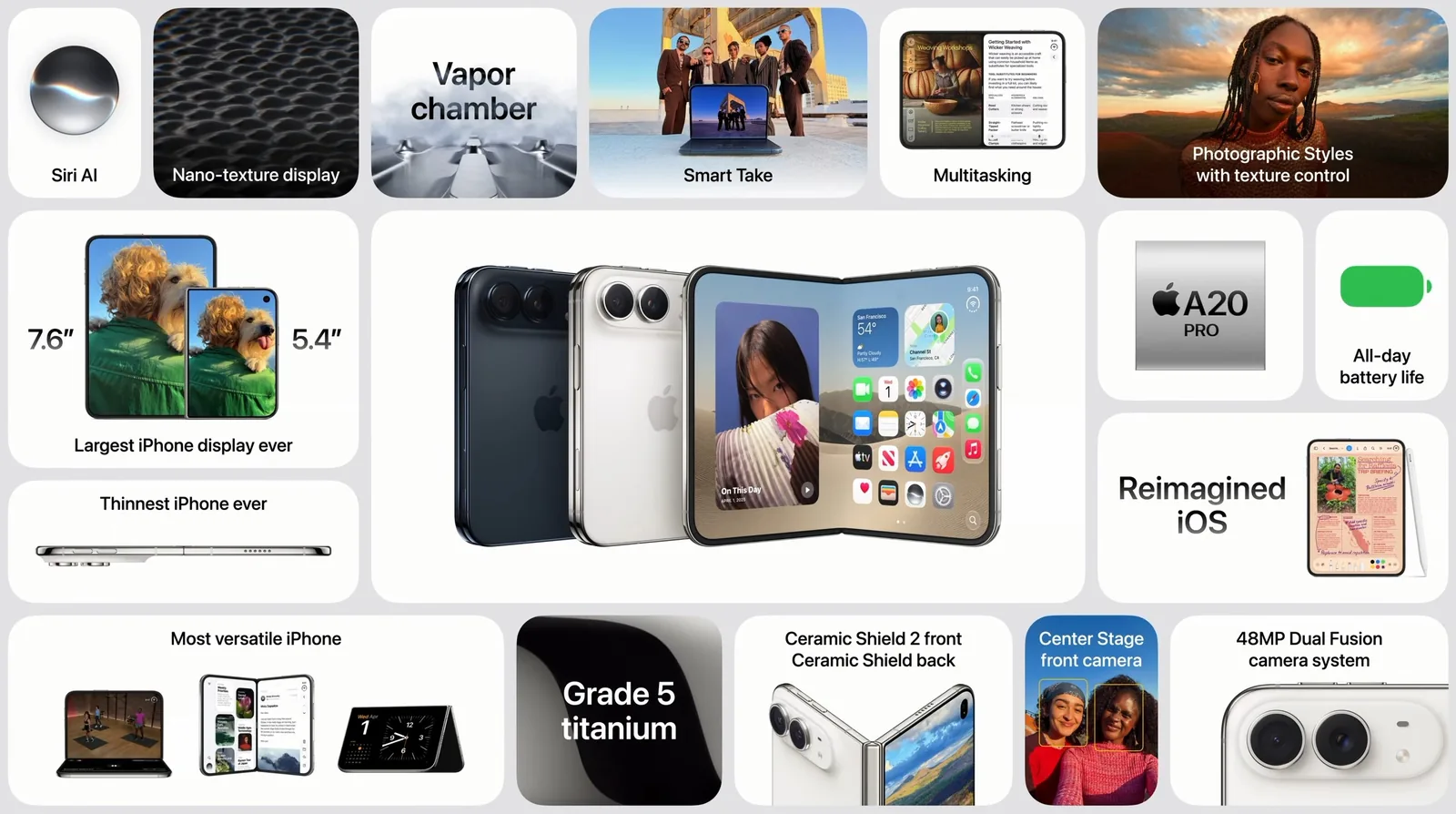 Reference image
Editorial responsibility
- No named human review is recorded for this page.
- Reports are grouped by semantic similarity and deterministic rules. Language models may assist titles, summaries, translation and cross-source analysis; the page reads the event directly, while its address stays stable when the title changes.
- Summary covers the current reports
Cross-source coverage
Reporting timeline
Analysis: Apple's Ecosystem Mindshare Challenges Chinese Flagship Phone AI and Foldable Push
An analysis from Ofweek维科网, republished on Tencent Stock, examines the contrasting market performance of Apple and Chinese flagship smartphones in 2026. It notes that the iPhone 18 Pro saw reduced launch premiums and shorter delivery times, signaling a crack in Apple's 'annual sure-win myth' for its flagship models. In stark contrast, Apple's first foldable, the iPhone Duo, despite having inferior hardware specifications (thicker, heavier, weaker cameras) and a reported assembly yield of only 60%, garnered millions of pre-orders and commands a premium price. The article argues this is due to Apple's deep ecosystem lock-in and 'mindshare dividend,' where loyal users prioritize iOS continuity over hardware perfection. Meanwhile, Chinese brands like Honor, vivo, and OPPO have shifted focus to AI agents and system-level intelligence, but face a 'zero-tolerance' scrutiny from consumers. The analysis questions whether Chinese brands' rapid AI innovation can overcome Apple's entrenched user habits and ecosystem advantages, concluding that the competitive battleground has moved from hardware specs to long-term ecosystem and service stickiness.
Read sourceApple's iPhone 18 Pro Weakens as Foldable Duo Surges; Chinese Brands Bet on AI
An analysis of China's high-end smartphone market in autumn 2026 reveals diverging fortunes for Apple and domestic brands. Apple's iPhone 18 Pro series saw significantly reduced launch premiums and rapid price drops, with overseas institutions lowering market expectations, signaling the end of Apple's unified high-price era. In contrast, Apple's unreleased foldable iPhone Duo, despite inferior hardware specs and only 60% assembly yield, attracted millions of pre-orders due to brand loyalty and ecosystem appeal. Meanwhile, Chinese manufacturers like Honor, vivo, and OPPO have moved beyond hardware specs, releasing major OS updates focused on on-device AI and agent-based intelligence to create new upgrade drivers. However, the analysis notes that converting AI innovation into actual consumer replacement demand remains a key challenge. The article concludes that future high-end competition will shift from parameter battles to an ecosystem marathon involving operating systems, cross-device connectivity, software services, and user stickiness, with Chinese brands still facing a long road to premium-market breakthrough.
Apple's Foldable iPhone Duo Challenges Chinese Flagship Brands Despite Hardware Flaws
This analysis from 界面新闻 examines the contrasting market performance of Apple's iPhone 18 Pro series and its new foldable iPhone Duo in 2026, and the pressure this places on Chinese flagship smartphone brands. The iPhone 18 Pro series saw its first-ever price drop at launch, with scalper premiums halved and channel prices weakening, signaling a crack in Apple's traditional 'sure-win' annual profit model. In stark contrast, the reportedly imperfect foldable iPhone Duo, with a 60% production yield rate, thicker and heavier design than competitors, and lacking a periscope lens, garnered millions of pre-orders. The article argues that Apple's 'mindshare dividend' from its iOS ecosystem allows it to command premium pricing and user tolerance for hardware flaws, while Chinese brands like Honor, vivo, and OPPO, despite advancing in foldable tech and AI agents, face a 'zero-tolerance' scrutiny environment. The piece questions whether Chinese brands can overcome Apple's ecosystem lock-in and whether a tipping point in competitive strength will ever arrive, concluding that the battle has shifted from hardware specs to ecosystem and user loyalty.
Read sourceShow 2 older updatesHide older updates
Apple's Ecosystem Edge Challenges Chinese Flagship Smartphone AI Push
This analysis from NetEase Finance examines the contrasting market dynamics between Apple and Chinese flagship smartphones in 2026. Apple's iPhone 18 Pro series saw unusual price drops and reduced scalper premiums, signaling a crack in its traditional 'stable profit' narrative. However, Apple's foldable iPhone Duo, despite being described as an immature product with low yield rates (60%+), weak hardware specs, and a high price, attracted millions of pre-orders, leveraging Apple's strong ecosystem loyalty. Meanwhile, Chinese brands like Honor, vivo, and OPPO are pivoting from hardware specs to AI agent capabilities, launching systems like MagicOS 11 and OriginOS 7. The article argues that Apple's 'mindshare dividend' from its iOS ecosystem allows it to sell imperfect products at a premium, while Chinese brands face a 'zero-tolerance' scrutiny. It questions whether Chinese AI innovation can overcome Apple's entrenched user habits and ecosystem lock-in, concluding that the ultimate battleground is ecosystem and long-term user stickiness, not single-point hardware or AI features.
Apple's Foldable iPhone Duo and AI Strategy Challenge Chinese Flagship Brands
This analysis from NetEase Finance examines the contrasting market dynamics between Apple and Chinese flagship smartphone brands in 2026. Apple's iPhone 18 Pro series saw unprecedented price drops and reduced scalper premiums, signaling a crack in its traditional 'stable profit' narrative. However, Apple's foldable iPhone Duo, despite being described as an immature product with a 60% assembly yield, weak hardware specs, and a high price, garnered millions of pre-orders, leveraging Apple's iOS ecosystem loyalty. Meanwhile, Chinese brands like Honor, vivo, and OPPO have shifted focus to AI agents and system-level intelligence (MagicOS 11, OriginOS 7, ColorOS 17) but struggle to convert technical innovation into sales momentum. The article argues that Apple's 'mindshare dividend' from its ecosystem allows it to sell imperfect products at a premium, while Chinese brands face zero-tolerance scrutiny. Data from Counterpoint, Jefferies, and QuestMobile is cited to support claims of Apple's resilience and the limited impact of AI features on driving upgrades. The piece concludes that the competitive battleground has moved from hardware specs to ecosystem and user stickiness, with Apple's conservative strategy proving effective against Chinese innovation.
Read source