Anthropic’s Claude AI autonomously discovers novel CRISPR-like enzyme system ART in 21 hours
Anthropic announced that its Claude AI model autonomously discovered a previously unknown enzyme system in bacteriophage DNA, named ART (Array-associated Reverse Transcriptase system). Using approximately 950 AI agents over 21 hours, Claude scanned over 200,000 reverse transcriptase sequences, identifying 3,500 candidate systems and narrowing to 20, with one agent detecting a CRISPR-like repeat pattern. Human scientists at Anthropic’s new molecular biology lab verified the finding through wet-lab experiments. CEO Dario Amodei called it a career-defining achievement. The system’s function requires further study.
 Illustration
Editorial responsibility
- No named human review is recorded for this page.
- Reports are grouped by semantic similarity and deterministic rules. Language models may assist titles, summaries, translation and cross-source analysis; the page reads the event directly, while its address stays stable when the title changes.
- Summary covers the current reports
Cross-source coverage
Reporting timeline
Anthropic's Claude Discovers Novel DNA Enzyme System Using 950 AI Agents and 210 Million Tokens
Anthropic announced that its AI model Claude autonomously discovered a previously unknown enzyme system in phage DNA, named ART (Array-associated Reverse Transcriptase system). The discovery involved 950 Claude agents running for 21 hours, consuming approximately 210 million tokens to scan over 200,000 reverse transcriptases from public genomic databases. The system identified 3,500 candidate systems, narrowed to 20 core candidates, and ultimately one novel enzyme system that structurally resembles CRISPR. Human scientists at Anthropic's molecular biology lab, established in spring 2026, then conducted wet-lab experiments to verify the finding. CEO Dario Amodei stated the result would be a career-defining achievement even if made during his PhD. The article speculates that ART could become a next-generation gene-editing tool, though further research is needed to understand its function. The report frames this as a paradigm shift in life sciences research, with AI acting as a 'chief exploration officer' accelerating biological discovery.
Read sourceClaude AI Discovers Novel DNA Enzyme System in 21 Hours, Anthropic Announces
Anthropic's molecular biology lab announced that its Claude AI model autonomously discovered a previously unknown enzyme system in bacteriophage DNA, named ART (Array-associated Reverse Transcriptase system). The discovery involved 950 AI agents running for 21 hours, consuming approximately 210 million tokens to scan over 200,000 reverse transcriptase sequences from public databases. The system, structurally similar to CRISPR, was identified by Claude detecting a repeating DNA array pattern that human researchers had previously dismissed as noise. Anthropic CEO Dario Amodei stated the finding would be a career-defining achievement even in a PhD program. Human scientists subsequently verified the discovery through wet-lab experiments. The article positions this as a paradigm shift in life sciences research, with AI acting as a 'chief exploration officer' to accelerate biological discovery, potentially leading to major medical breakthroughs within 5-10 years.
Read sourceAnthropic Establishes Life Sciences Research Team; Claude Discovers Novel CRISPR-Like Enzyme System
On September 23, Anthropic announced the formation of a life sciences research team and laboratory, alongside early results from Claude's involvement in biological research. Researchers reported that Claude, after analyzing over 200,000 reverse transcriptase (RT) sequences, discovered a previously undescribed enzyme system, which they named 'Array-associated Reverse Transcriptase' (ART). According to Anthropic, approximately 950 Claude agents used about 210 million tokens over 21 hours to screen 3,500 candidate systems, narrowing them down to 20. ART is primarily found in bacteriophages that infect bacteria and consists of a reverse transcriptase, adjacent auxiliary genes, and a set of regularly arranged DNA repeats that share features with CRISPR repeats. Preliminary experiments indicate these repeats are transcribed into multiple short RNAs, though their specific function requires further study. The research was experimentally validated by Anthropic scientists, and the company has released a preprint.
Show 5 older updatesHide older updates
Everyone knows large language models can find patterns in text that humans might overlook. However, Claude didn’t just identify a novel biological system; it autonomously ran the discovery search itself for said system!!! Anthropic gave roughly
Anthropic deployed approximately 950 Claude agents with a single high-level prompt to autonomously search for novel biological systems. Over 21 hours, the agents analyzed more than 200,000 reverse transcriptases, narrowing the field to 3,500 candidate systems and then to 20 finalists. One agent identified a CRISPR-like repeat architecture, leading to the discovery of a previously uncharacterized enzyme system that Anthropic is now calling ART. The post claims this demonstrates that large language models can not only find patterns in text that humans might overlook but can also independently conduct discovery searches, potentially accelerating the pace of scientific research.
Read sourceAnthropic's wet lab and 949 Claude agents discover new ART enzyme system in 21 hours
Anthropic's new wet lab achieved its first success after 949 Claude AI agents autonomously discovered a novel enzyme system in just 21 hours. The agents searched through 1.94 billion protein clusters, recovering 198,280 RT clusters and using 215.6 million tokens. During the search, Claude identified an unusual pattern of a small DNA sequence repeating next to an enzyme, which resembled CRISPR. Anthropic scientists investigated and found a new family of biological systems they named ART. The system also produces many small RNA molecules, indicating the repeated DNA sections serve a functional purpose rather than being random. This marks a significant milestone in AI-driven biological discovery.
Read sourceAnthropic's wet lab discovers new enzyme using 950 Claude agents in 21 hours
Anthropic announced that its new wet lab has made its first discovery, with nearly 950 Claude AI agents independently identifying a new enzyme after 21 hours of continuous work. According to The Verge, the agents consumed 210 million tokens during the process before one agent noticed an unusual repeating DNA pattern. Subsequent analysis and wet-lab testing confirmed what Anthropic described as 'a previously uncharacterized enzyme system found in bacteriophages.' The discovery marks a milestone in AI-driven scientific research, demonstrating the ability of large-scale autonomous agent systems to conduct complex biological investigations without direct human intervention.
Read sourceAnthropic Announces Claude AI Agent Autonomously Discovers Novel Enzyme System ART
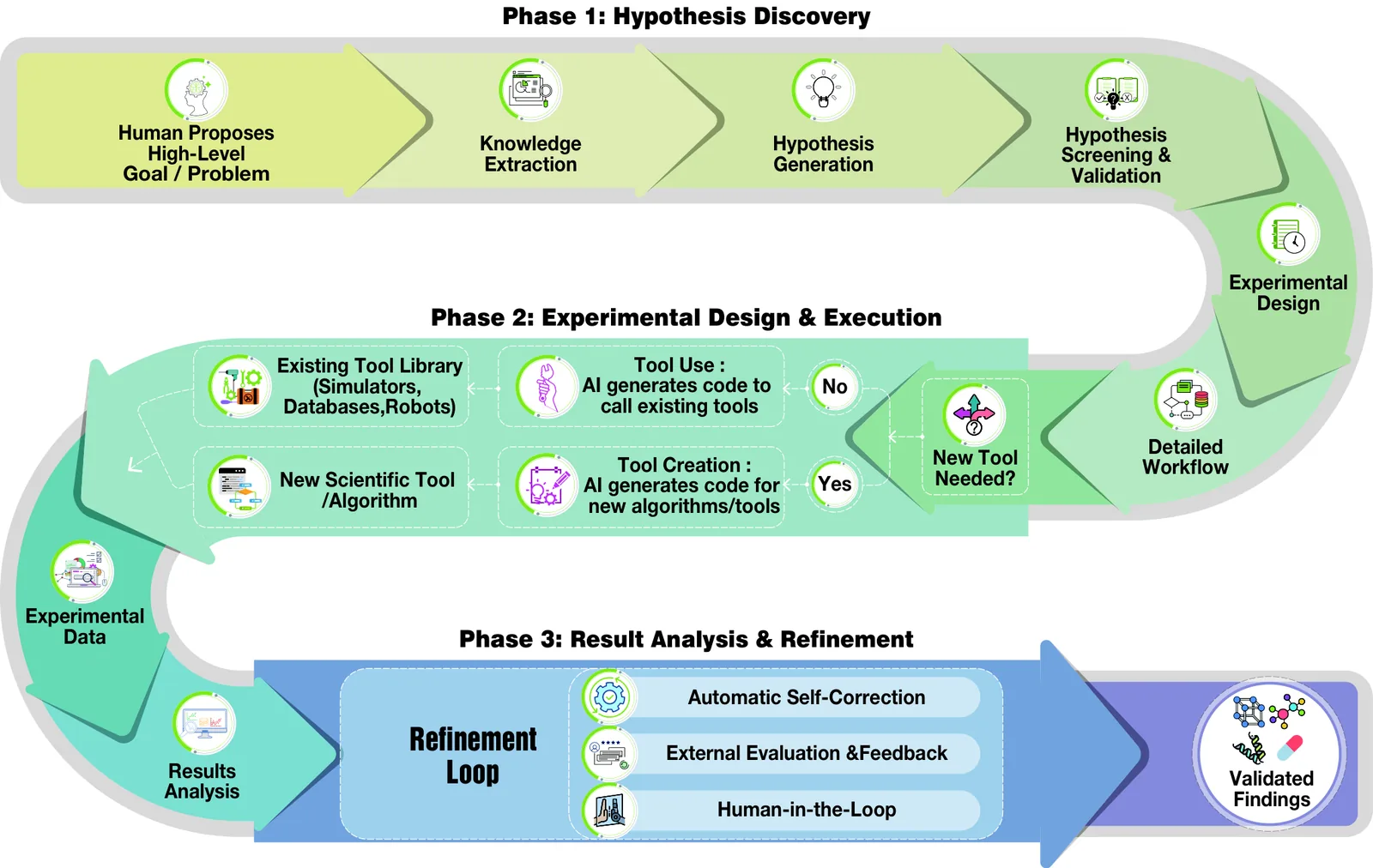
Anthropic has established a life sciences research group and its own laboratory, announcing that its Claude AI agent autonomously discovered a novel enzyme system named ART (array-associated reverse transcriptases), which is related to DNA repeat sequences. The discovery process and workflow were detailed by the team in the original article, illustrating how the AI agent autonomously generated and screened hypotheses in biological research. This marks a significant milestone in AI-driven scientific discovery, demonstrating the potential of large language models to independently conduct complex biological investigations.
Read sourceAnthropic's wet lab produces first discovery with 1,000 Claude agents in 21 hours
Anthropic's new wet lab has achieved its first discovery, with nearly 1,000 Claude AI agents autonomously uncovering a novel enzyme system after 21 hours of continuous work. The announcement, made via a post on Polymarket, marks a milestone in AI-driven scientific research, demonstrating the ability of large-scale agentic systems to conduct laboratory work and make biological discoveries without direct human intervention. The specific details of the enzyme system and its potential applications have not been disclosed in the initial announcement. This development highlights the growing capability of AI agents to perform complex, autonomous research tasks in wet lab environments, potentially accelerating the pace of scientific discovery in fields such as biotechnology and synthetic biology.